Why can’t you un-fry an egg?
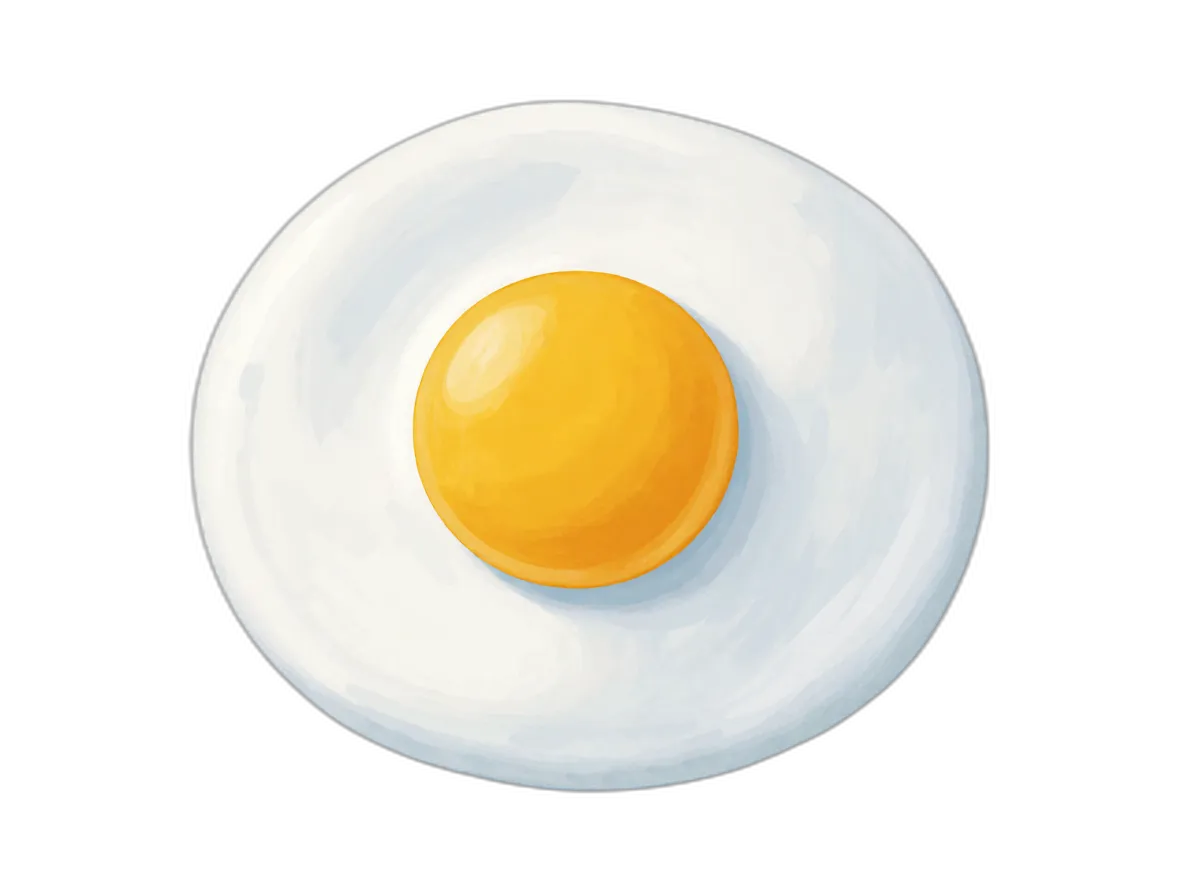
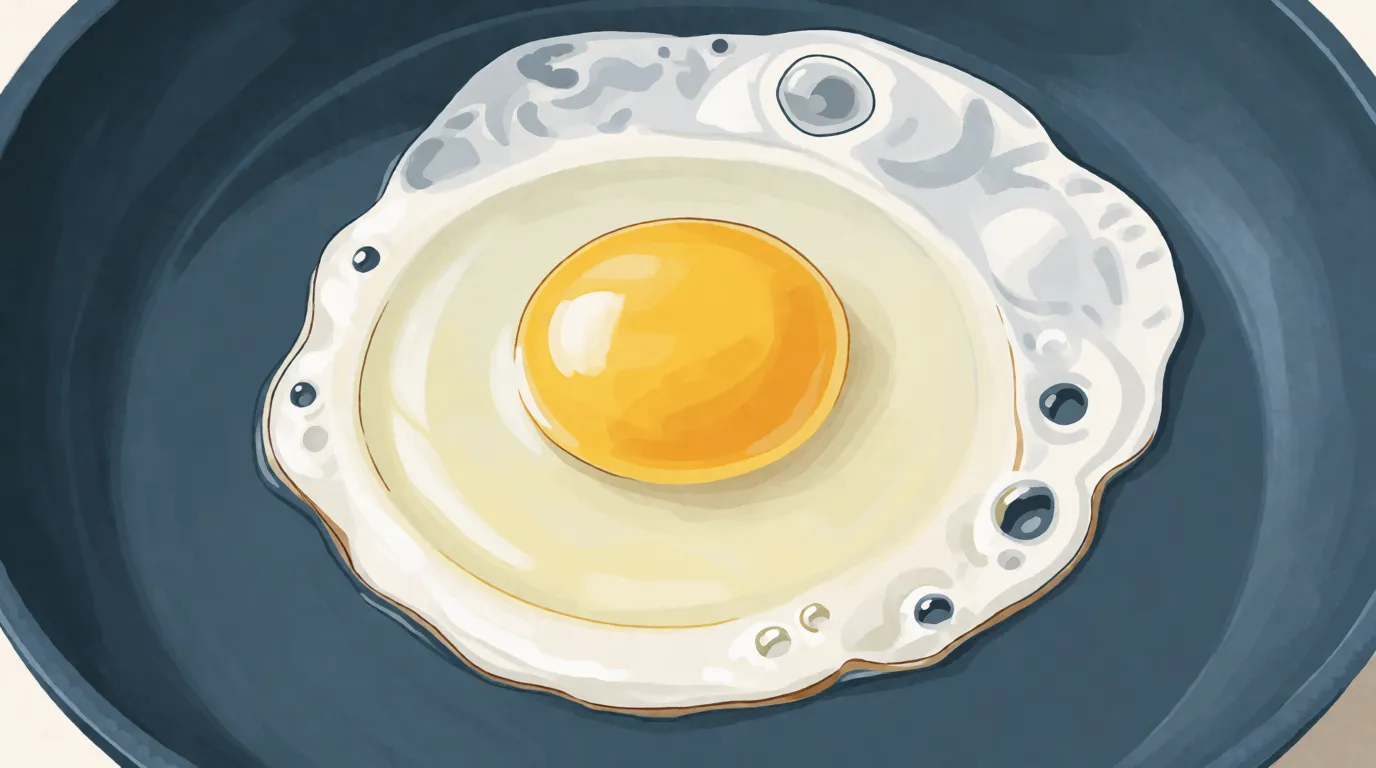
Butter melts and then sets again, over and over, as many times as you like. Water freezes and thaws without complaining. Crack an egg into a hot pan, though, and the clear jelly turns into white rubber within seconds, and no amount of cooling will bring it back. Nothing was added. Nothing evaporated. The same material is sitting there, behaving completely differently.
Egg white is a crowd of tightly folded chains. Heat opens the folds, the exposed insides grab each other, and the tangle is what you eat.
An egg white is water with folded chains in it
Egg white is nearly nine-tenths water. Almost everything else in it is protein: enormously long molecules built from small units joined end to end, like beads on a string. A molecule is the smallest complete piece a substance can be divided into, and a protein is among the largest any living thing manufactures.
The important detail is that these strings do not float about loose. Each one is folded up into a compact ball, the same way a long cable can be coiled into a tidy bundle. Every protein of a given kind folds into precisely the same shape.
The folding is maintained by numerous weak attractions between different portions of the string. Weak is the word to remember. No individual attraction amounts to much, and the shape survives purely because there are so many of them.
One egg white contains roughly 3.5 g(⅛ oz) of protein, spread through about 30 g(1 oz) of water.
Folded like that, the balls slip past one another easily, so raw egg white pours. They are also transparent, because nothing in the liquid is large enough to scatter light, meaning bounce it off in random directions.
Heat shakes the folds apart
Warmth is movement. Heating anything makes its molecules jiggle harder, and past about 62 °C(144 °F) the jiggling in an egg white beats the weak attractions holding the folds together.
The balls come undone. Long strings that were packed away neatly unravel into the water, waving about. Chemists call that unfolding denaturation, which sounds violent and only means the shape has been lost.
Here is the part that decides everything. The inside faces of a folded protein are sticky — they are the parts that avoid water, which is exactly why they were tucked inward in the first place.
Folded, a protein keeps its sticky side hidden. Opened up, every one of them is offering it to every neighbor.
Unfolded strings drift into each other, the exposed sticky patches meet, and they hold on. Then they meet a third string, and a fourth, and within seconds the entire liquid is one enormous tangled net with water trapped in its holes.
That net is the cooked white. It holds its shape and traps the water, so the egg is not dry. It also scatters light in every direction, which is exactly why it turns from clear to opaque white.
Cooling does not untangle anything
Now the question the whole article turns on. Why does cooling not put it back?
Because cooling only removes the jiggling, and the jiggling was never what held the net together. The sticky patches are gripping each other directly, and letting the pan go cold does nothing to unstick them.
Worse, cooling makes it more permanent. Molecules move less, so the chances of a tangle happening to shake itself free drop even further, and the arrangement settles in.
Melting butter is a completely different kind of change. Butter fat consists of small molecules sliding past each other, and cooling simply permits them to line up again. That is a reversible change: nothing had to be untied, so nothing needs untying.
The egg that got un-boiled
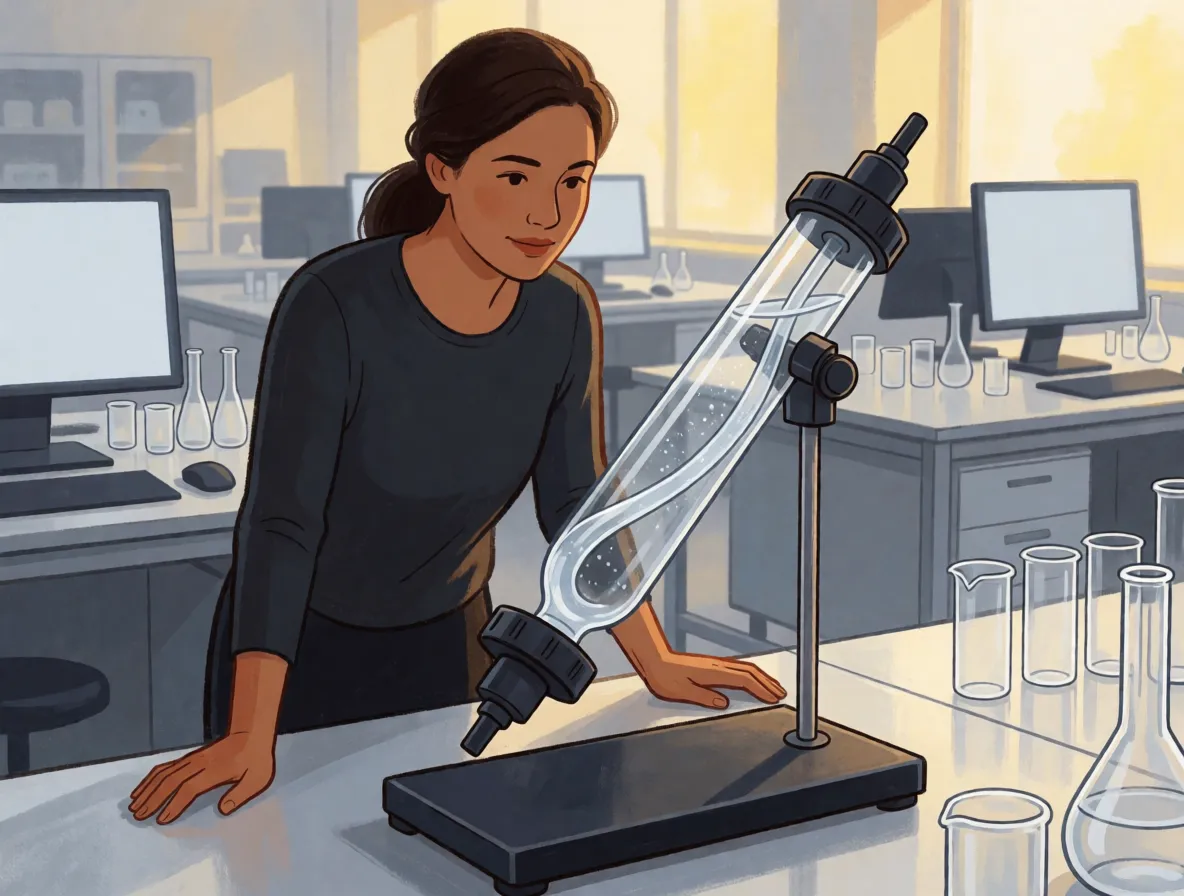
They were not doing it for breakfast. Laboratories that grow useful proteins, including some cancer drugs, frequently end up with tangled useless material. A fast method for untangling it is worth a great deal.
Why folding back is possible at all
There is a deeper reason the un-boiling works, and it was established sixty years earlier. In 1961, about when your grandparents were at school, Christian Anfinsen took a protein, unfolded it completely, then carefully removed the chemical holding it open.
It folded itself back up, unaided, into exactly its original working shape.
That result told everybody something important: the instructions for the shape are written into the string itself, in the order of its beads. No machinery folds a protein. Given the chance, it finds its own way.
So a cooked egg is not destroyed. Every string in it still knows what shape it should be. They simply cannot get there, because each one is stuck to several neighbors and would have to let go of all of them at the same moment.
Watch the change happen at different temperatures
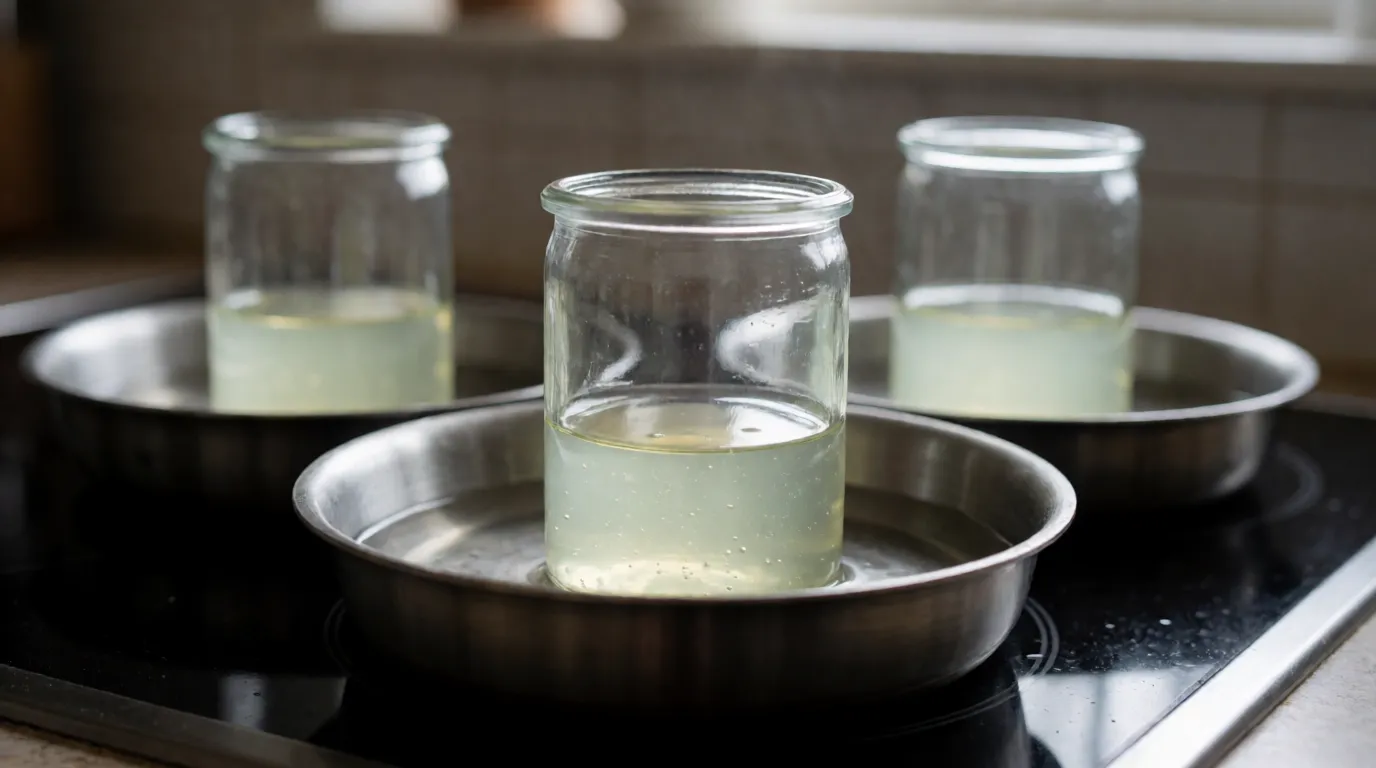
The coolest jar remains liquid however long you leave it, demonstrating that the change is not merely a question of patience. The hottest solidifies within a couple of minutes.
The cooling step is the one that matters. Nothing goes backward, ever, and the jar that set at 75 degrees is exactly as solid an hour later as it was coming out of the pan.
A one-way street with a back road
Cooking an egg is not a mysterious destruction. It is a rearrangement: identical strings, attached to different partners, in a knot that is effortless to tie and extraordinarily difficult to untie.
That is what makes it feel permanent. Every stage happens spontaneously, whereas reversing it requires millions of separate releases occurring simultaneously, which is precisely the arrangement heat cannot organize.
Getting there needed a chemical to hold the strings apart and a machine to spin them back into shape. Which is quite a lot of trouble for something you could have avoided by not turning the pan on.