Why does blowing kill a candle but feed a fire?
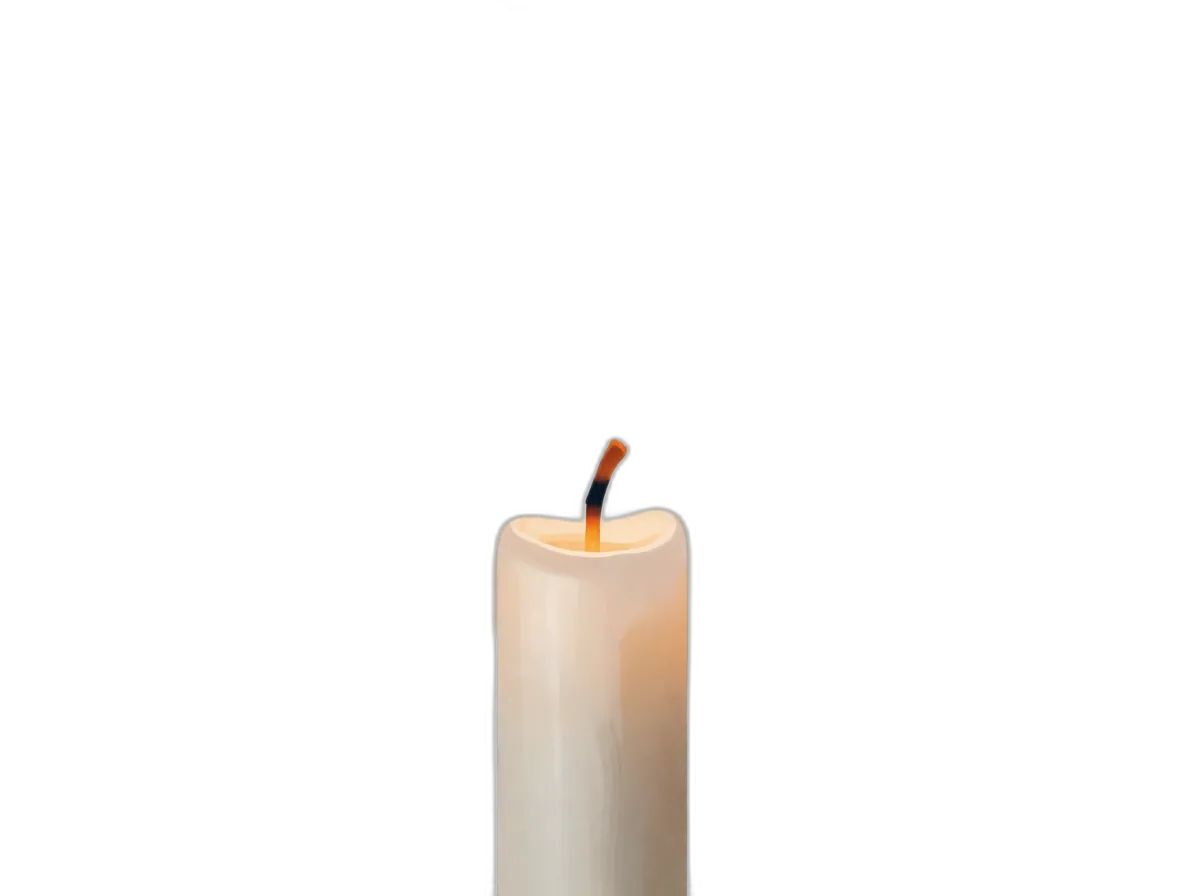
You lean over a cake, blow once, and eleven candles go out together. An hour later somebody is kneeling at a campfire blowing into the base of it, and the whole thing flares up orange and roars. Same lungs, same breath, same air. One fire cannot survive it and the other one is delighted by it. What is actually different about the two?
A candle flame is not burning the candle. It is burning a gas the candle is manufacturing, one second at a time, and that supply is startlingly easy to interrupt.
Solid wax cannot burn at all
Hold a lit match against the side of a candle and nothing happens. The paraffin wax turns shiny, it drips, and the match goes out. Solid wax will not catch, and neither will liquid wax.
Burning is combustion: a substance combining violently with oxygen, the gas that makes up about a fifth of the atmosphere. For combustion to happen at all, the substance has to meet the oxygen molecule by molecule, which solid blocks are hopeless at.
So the wax first has to become vapor, meaning wax heated until it turns into a gas and spreads out through the surrounding air. Every flame you have ever seen is a gas burning. Wood, oil and paper are all delivering gas to their flames.
A candle therefore has a delivery problem. The fuel is a solid block sitting well below the flame, and the flame demands a continuous supply of gas.
The cotton rope is a ladder, not the fuel
Watch a burning candle for a minute and you will notice a small pool of clear liquid around the base of the wick, the rope of threads standing up through the middle. The flame’s heat melts the wax nearest to it, and only that wax.
The wick does the carrying. It is a braid of cotton fibers with microscopic gaps running along it, and liquid climbs those gaps entirely by itself, exactly the way water creeps upward through a paper towel. That climbing is called capillary action.
Liquid wax arrives at the top of the wick, where the temperature is highest, and boils into vapor. The vapor mixes with air and burns in a thin shell around the outside of the flame. Look closely and the middle of a candle flame is noticeably darker: it is packed with vapor that has not reached any oxygen yet.
Now notice what pays for all of it. The burning shell supplies the heat that melts the pool, the pool feeds the wick, and the wick feeds the burning shell. A candle is a loop running about 1 cm(½ in) across.
Break the loop anywhere and the flame ends. It cannot restart itself, because restarting it needs the heat that only the flame was making.
Your breath breaks the loop in two ways at once
Blow at a candle and two things happen in the same instant. The moving air sweeps the shell of hot vapor sideways and away from the wick, so the combustion has nothing available to consume. Simultaneously, that rush of air chills the wick top, which had been sitting at roughly 600 °C(1,100 °F).
Blowing does not attack the flame. It removes the flame’s next second of fuel and cools the thing that was manufacturing it.
Cold wick, no vapor. No vapor, no combustion. No combustion, no heat, and the wick has no possible way of getting hot again. The entire shutdown takes a fraction of a second, and none of it involves running out of anything.
Blow a candle out and watch the white thread rising afterward. It is wax vapor, still being manufactured for a second or two by the leftover warmth, condensing into droplets too small to see individually as it cools. That is why the thread is visible at all.
A campfire has no delivery to interrupt
A campfire is not a loop balanced on a thread. Underneath the flames sits a bed of charcoal, the black solid remaining when wood has been cooked hot enough to drive off everything capable of turning into gas.
Charcoal glows rather than flames, because it burns on its surface without producing much vapor. It also holds a colossal store of heat, and one breath cannot cool a glowing log by any measurable amount.
So the fuel supply comfortably survives your puff, and the extra oxygen you delivered makes the whole bed burn faster. The identical action wrecks the small fire and feeds the large one.
Two hundred years of trimming the wick
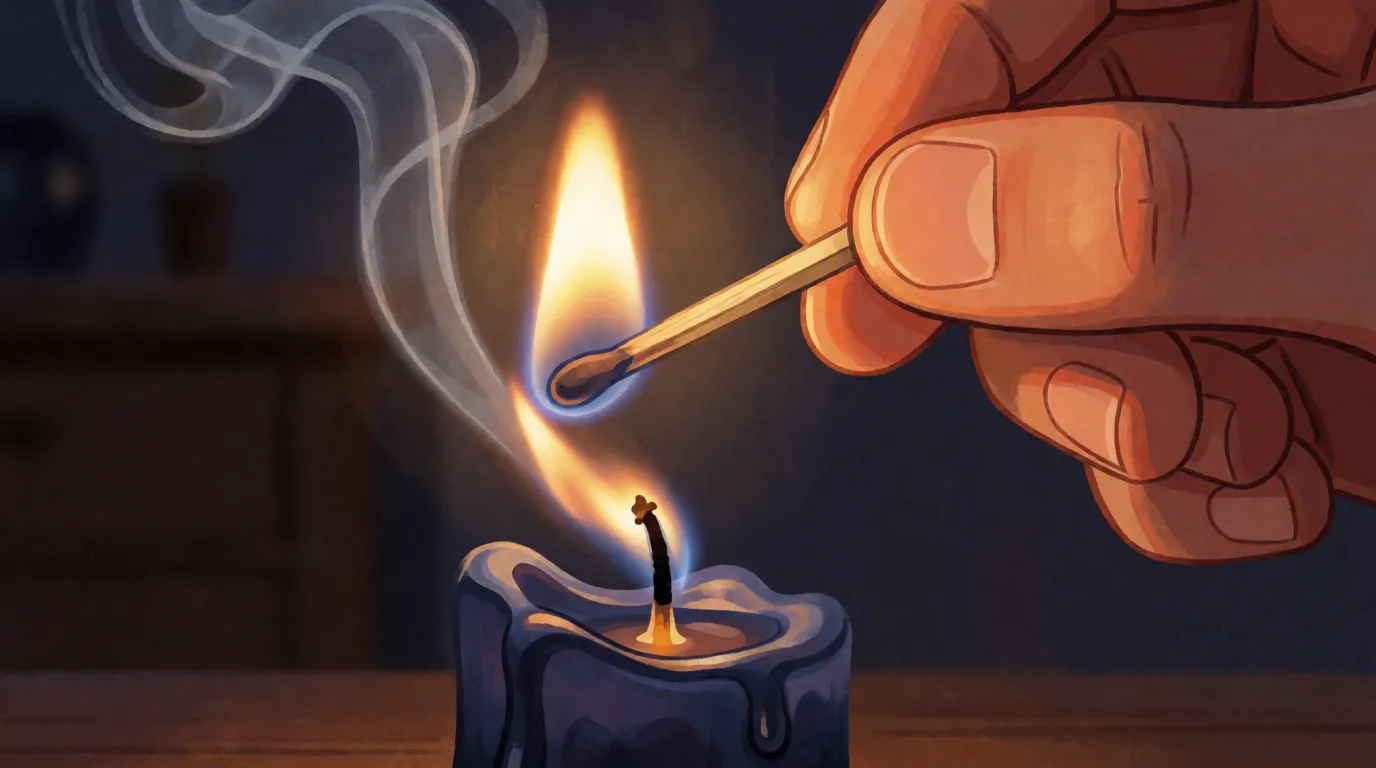
Candles were once a nightly chore, and the reason was the wick. Old wicks stood up straight inside the dark middle of the flame, where there is barely any oxygen, so the tip never burned away. It grew into a long smoldering stub that smoked, dripped and dimmed the light.
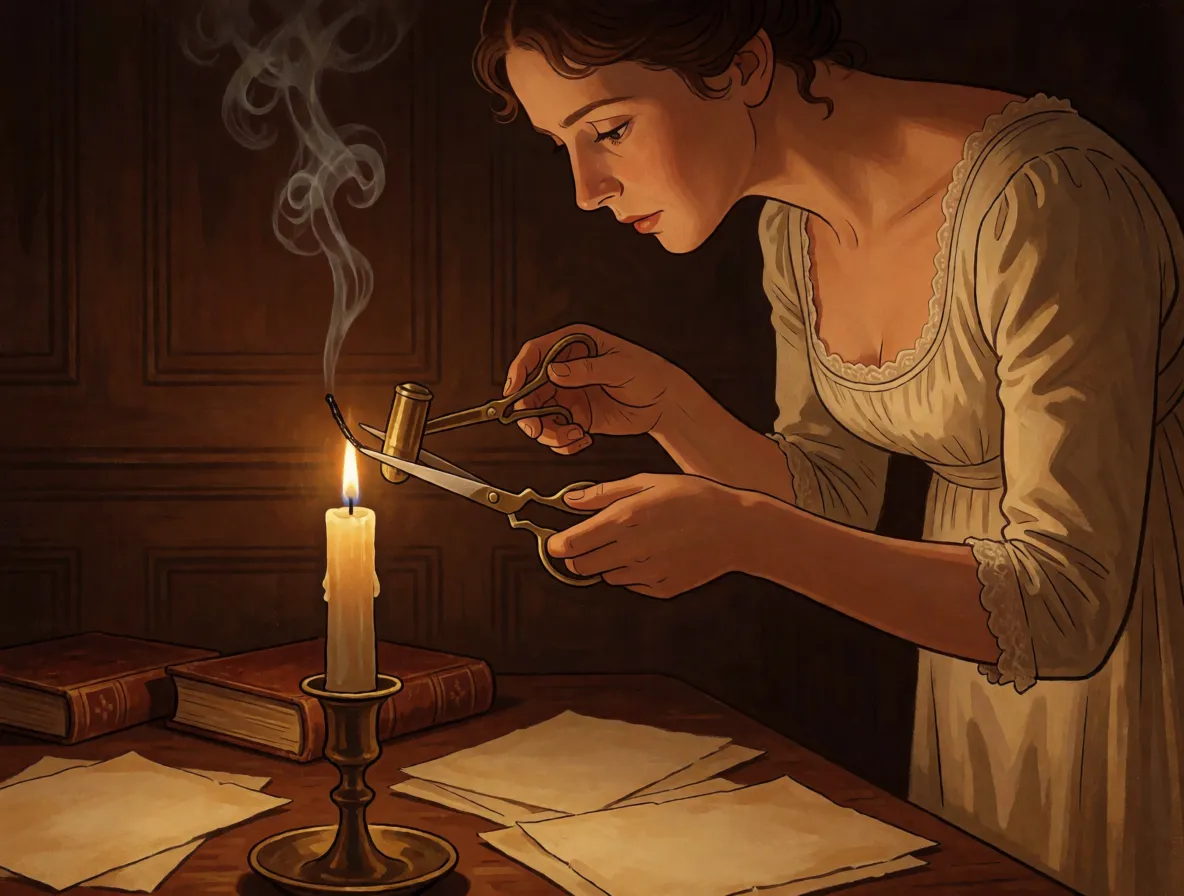
Every household kept snuffers for it: scissors with a small box on the blades to catch the trimmings. You cut the wick back roughly three times an hour, all evening, or you sat in a stink and a haze.
The remedy arrived in 1825, about eight generations before you were born, and it was not a new fuel or a new flame. A French politician named Jean-Jacques Cambacérès patented a wick whose threads were plaited instead of twisted. A plaited wick curls sideways as it burns, which delivers the tip out of the dark middle and into the burning shell, where it is destroyed automatically.
One braid abolished a chore that every family in Europe had performed every evening for centuries. Nobody needed to understand the chemistry to benefit, which was fortunate, because the chemistry was barely fifty years old. Antoine Lavoisier had only established in 1777 that combustion means combining with oxygen from the air.
Understanding arrived last of all, and it arrived as a Christmas present. Over the winter of 1860, Michael Faraday gave six lectures to an audience of children at the Royal Institution in London, dismantling a single candle in front of them. The pool, the wick, the dark middle, the relighting demonstration with the smoke: all of it is in there.
Prove that the smoke is the fuel
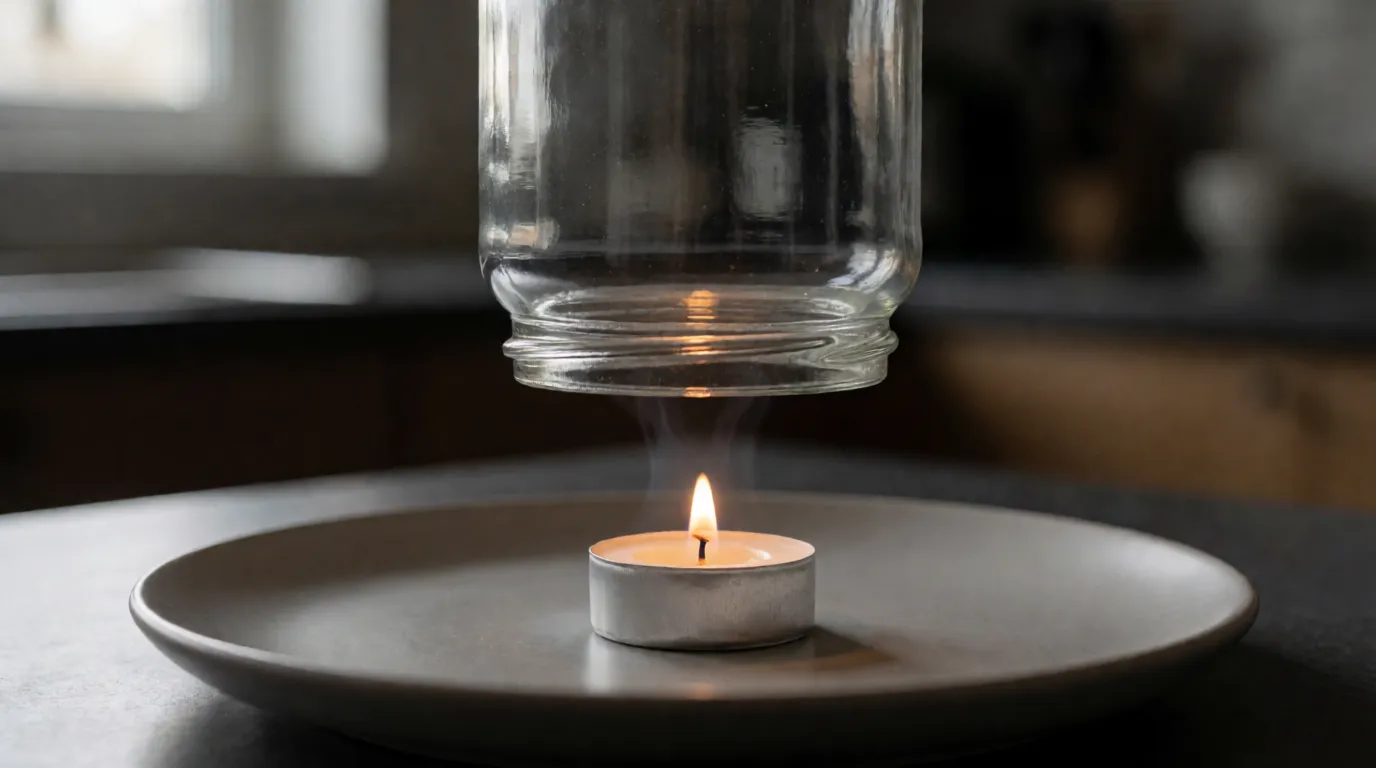
The jar takes somewhere between ten and thirty seconds, depending on its size, and the flame shrinks and yellows on the way down. Your breath took perhaps a tenth of a second. Those are not the same process wearing different clothes.
Smothering against blowing, both measured in seconds. Two completely different mechanisms.
And the relighting trick settles the rest. Fire crossed a gap of empty air to reach the wick, which it could only do by traveling along something burnable. The white thread was fuel the whole time.
The flame was always somewhere else
Look at a candle now and the odd part is obvious. The flame is not touching the wick at all: there is a small dark gap underneath it, full of vapor waiting for air.
Nothing in that flame is the candle. The candle is a fuel tank and a pump. The fire is happening in the air just above it, in a shell no thicker than a sheet of paper, supplied one second at a time.
That is why one breath is enough. You never had to overpower the fire. You only had to interrupt the delivery for long enough that the wick went cold — and a campfire, sitting on a bed of glowing charcoal, has no delivery to interrupt.