Why does toast taste different from bread?
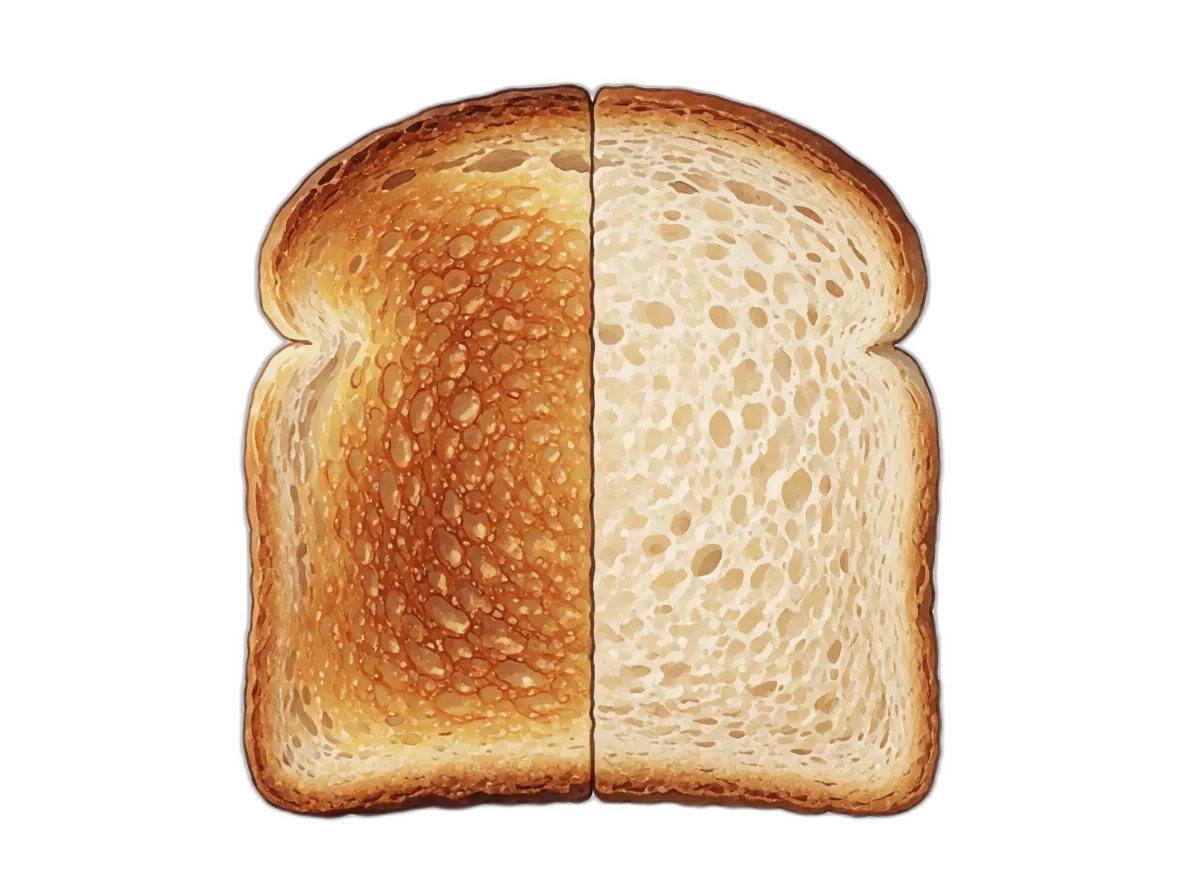
Push a slice of bread into the toaster and nothing goes in with it. No butter, no sugar, no cinnamon. Two minutes later the whole kitchen smells like toast, and the slice that pops up is browner, drier and lighter than the one you put in. It lost weight and gained a flavor. Where did that flavor come from?
The heat adds nothing to your bread. It assembles something new out of two ingredients already sitting inside the slice, and it can only manage that on the outside.
Toast comes out lighter than it went in
Weigh a slice of bread, toast it, and weigh it again. It has lost weight. Nothing dripped off and nothing was added, so something escaped as a gas.
That something is water. Bread is far wetter than it feels. A standard slice of white sandwich bread weighs about 28 grams(1 oz), and a little over a third of that weight is ordinary water.
Every slice of bread you have ever eaten was carrying about two teaspoons of water.
Two teaspoons is a lot to conceal inside something that feels dry to your fingers.
So the toaster removed water and delivered nothing in return, yet the slice tastes of more than it did before. Whatever makes toast taste like toast was assembled from the material left behind.
The two things in a slice that can join
Flour is not simply white powder. Roughly a tenth of its weight is protein, the stretchy material that makes dough springy and holds a loaf together.
A protein is one enormous molecule, meaning a fixed group of atoms locked into a single shape. This particular molecule is built like a bead necklace. The beads are amino acids, and nature uses only about twenty different varieties of them.
Most of each bead is occupied holding the necklace together. A few beads, though, carry a spare arm dangling sideways with no job whatsoever. On the tip of that arm sits a nitrogen atom, and nitrogen is unusually eager to grab things.
The second ingredient is sugar. Plain bread never tastes sweet and genuinely does not contain much. It contains some, though. Yeast releases a little while the dough is rising, and the flour arrives with a little of its own.
Sugar and spare arms sit side by side in every slice, all day, doing absolutely nothing. They will only combine if you make them ferociously hot, and a toaster has real difficulty managing that.
Wet bread cannot get hotter than boiling
Lick a fingertip and hold it up. It turns cold, while the dry skin beside it does not. Nothing touched it: water evaporated, and evaporating water carries energy away with it.
That is all evaporation is: liquid escaping as an invisible gas, stealing heat as it goes.
The surface of a slice in a toaster evaporates furiously. The glowing wires pour heat in. The boiling water hauls heat straight back out. While any water remains, the two roughly cancel, and the surface sits stuck near 100 °C(212 °F).
That is nowhere near hot enough for sugar and a spare arm to combine. They need a temperature closer to 140 °C(285 °F), and no wet surface ever reaches it.
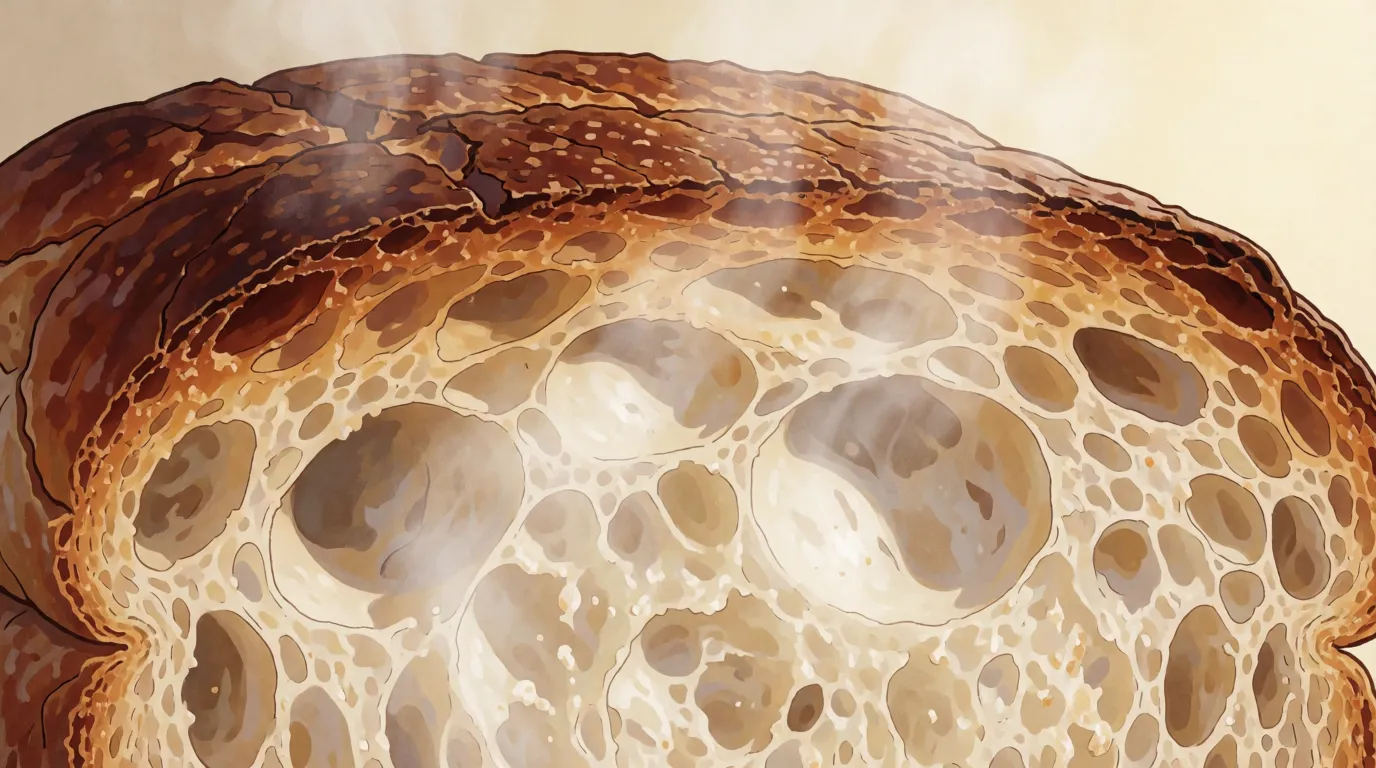
So a toaster spends most of its time merely drying. Only when the outermost layer finally runs dry does its temperature come unstuck and climb. The interior never runs dry. It stays soaked, stays pinned at boiling, and stays bread.
Next time you have hot toast, tear a slice in half and inspect the torn edge. The brown stops within a millimeter of the surface, and everything behind it is pale. Drying is the starting gun, not the race. The race begins the instant the surface goes dry, and finishes inside a minute.
A sugar grabs the spare arm
Once the dry surface climbs past that temperature, sugar and spare arm finally meet properly. The sugar attaches to the nitrogen, and the pair fuse into one new molecule. Chemists call everything that follows the browning reaction: sugar and protein combining in dry heat, and generating flavors the food never had.
That first join is the only orderly step; everything after it is a pile-up.
The newly fused molecule is unstable. It rearranges, then shatters into smaller pieces, and those pieces are violently reactive, seizing whatever is nearest, including each other. Every collision generates something new, and every new thing can shatter and combine again.
Sugar browns with no assistance at all. Heat it alone past about 170 °C(340 °F) and it darkens by itself into caramel, the sticky brown sauce poured over ice cream. That is caramelization, and no protein is involved anywhere in it.
One join at the beginning, and seconds later there are hundreds of different molecules on the surface of your bread. That is why toast does not taste of any single thing. It tastes of a crowd.
Some float to your nose, the rest go brown
Those hundreds of new molecules vary enormously in size, and size decides where each one finishes up.
The small light ones are volatile, meaning light enough to drift off a warm surface into the air. Those are the ones your nose collects. More than five hundred different aroma molecules have been identified in bread.
One of them does most of the work. In 1985 Peter Schieberle, in Munich, examined the crust of a wheat loaf smell by smell and identified the molecule responsible for toastiness. Its chemical name is 2-acetyl-1-pyrroline, so call it the popcorn molecule, since it is also what makes popcorn smell like popcorn.
The heavy molecules cannot travel anywhere. They stay on the surface seizing each other, assembling into larger and larger tangles. Those tangles are melanoidins, and melanoidins are brown. The longer a toaster runs, the bigger they grow and the darker your breakfast becomes.
Smell and color are therefore a single event, sorted by weight. The volatile half reaches you across the kitchen. The heavy half remains behind, which is how you can tell from the doorway that breakfast is nearly ready.
Everything that makes toast taste like toast lives in a brown skin about a millimeter deep. The rest of the slice never stopped being bread.
The doctor who was not thinking about breakfast
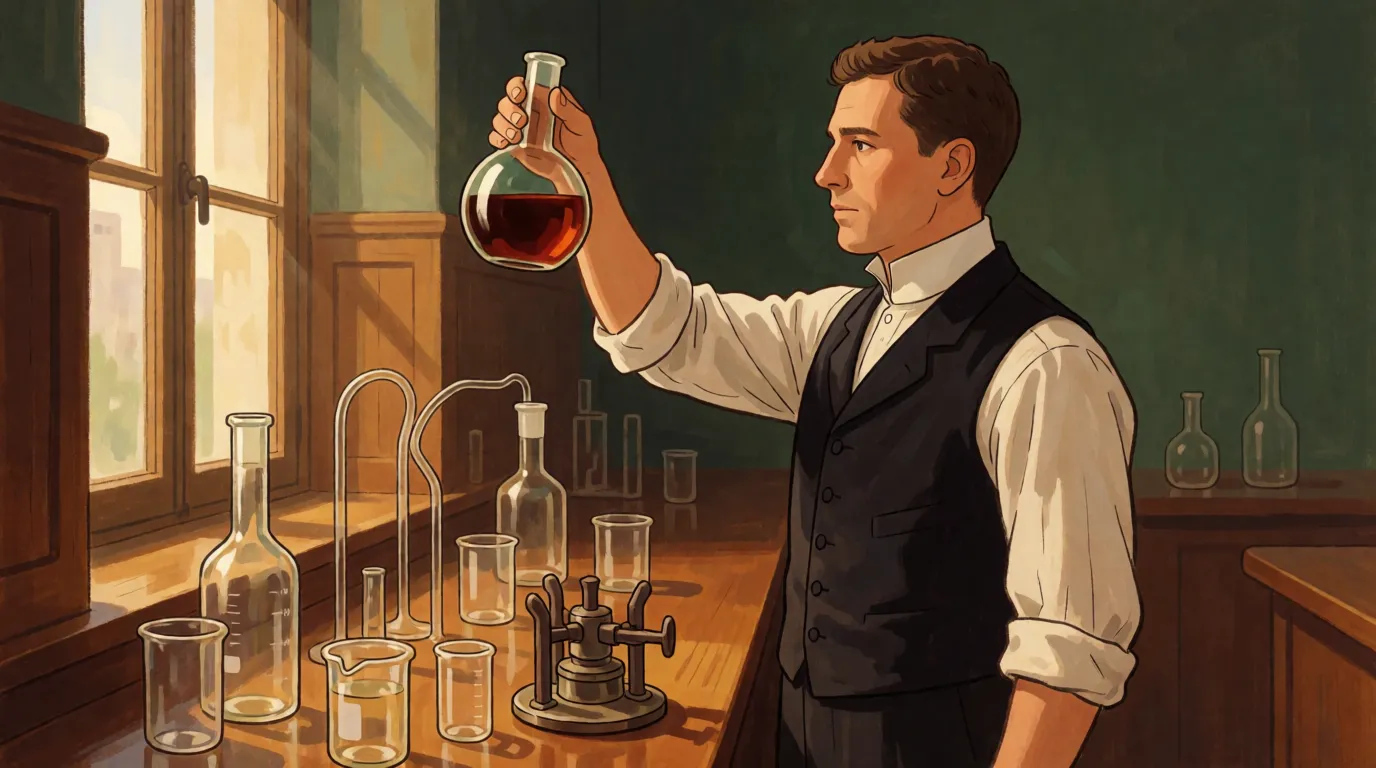
All of this was worked out backwards, by a man with no interest in breakfast. In 1912, when your great-great-grandparents were children, a French physician named Louis-Camille Maillard was attempting to build proteins from scratch. He was thirty-four, he worked at a medical school in Nancy, and his real specialty was kidneys.
Building a protein means joining amino acids together, so he heated them with sugar to discover whether that would help. It did not: he got brown liquid and a powerful aroma instead. He described the result to the French Academy of Sciences, returned to kidneys, and died in 1936 having never cooked anything for science.
Cooks ignored him for forty years. What eventually revived the discovery was a thoroughly dull problem: dried food browning in storage. Powdered egg and powdered milk, stacked in sacks on shelves, gradually turned tan and began tasting stale, with nobody cooking them at all.
In 1953 John Hodge, a chemist at a government food laboratory in Peoria, Illinois, published a map of the entire process. Every stage in order, from the first join to the brown tangles. His job had been to prevent browning. The map he drew is the reason anybody can now explain why you want it.
Test it on one slice
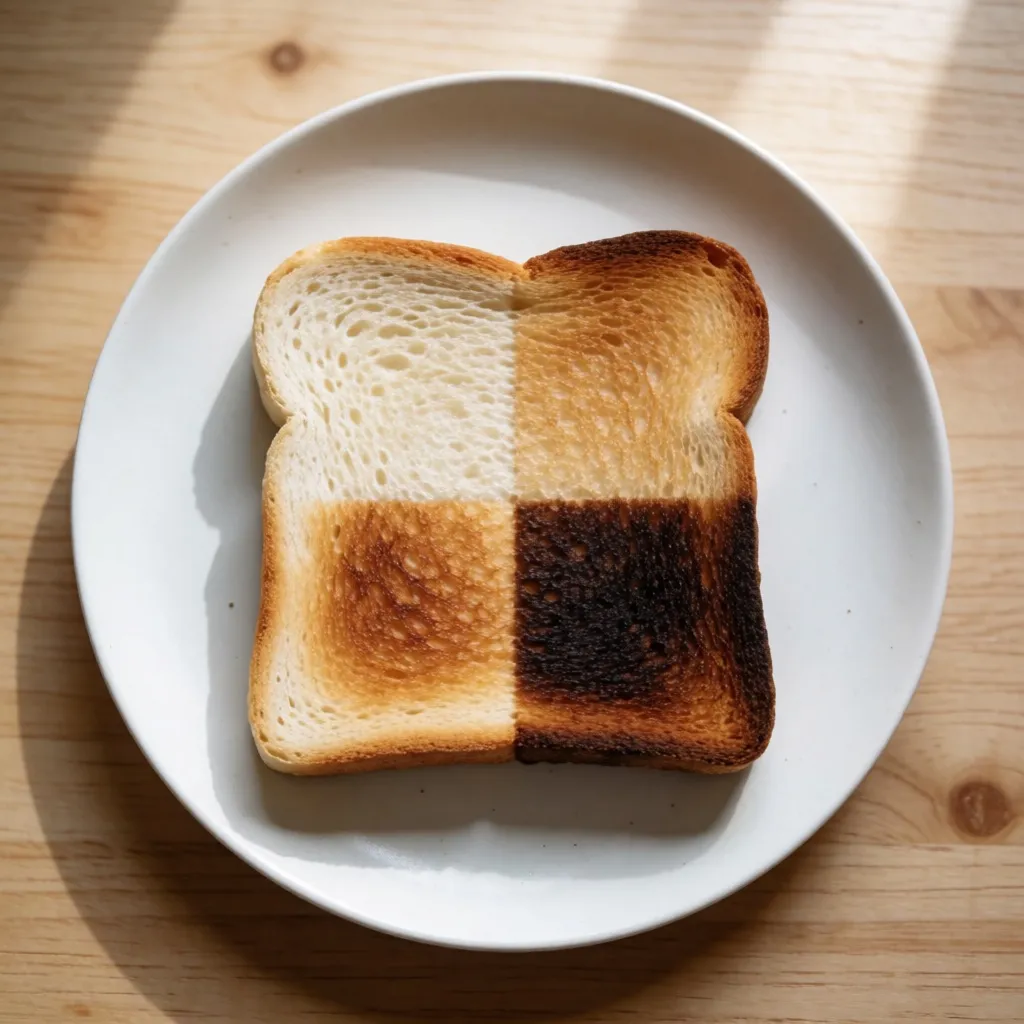
Milk normally wins. It delivers sugar and protein together, painted directly onto the surface, so that quarter browns first and darkest. The sugar-water quarter browns as well, then smells sweeter than its neighbors, which is caramel rather than toast. The plain-water quarter arrives last, because you handed it extra water to boil away first.
The crust was there all along
Look at the loaf itself. Every slice already arrived with a brown edge on three sides, manufactured in a bakery oven by this identical reaction. The surface dried, grew hot, and generated new molecules while the middle stayed pale and soft. Your toaster simply repeats the trick on the two cut faces.
The same brown skin covers a roast potato, a steak from a hot pan, the outside of a cookie, a roasted coffee bean and chocolate. Every one is sugar discovering a spare arm in dry heat. Every one smells like nothing else on earth.
Nothing was added to your slice this morning. The toaster extracted two teaspoons of water and left behind a food that had not existed before you pushed the lever down.