Why can’t you remember being a baby?
You learned to walk, learned to talk, met your family, had a first birthday and presumably enjoyed it. Two years of solid work, and there is nothing in there at all. Not a room, not a face, not one afternoon. The obvious explanation is that babies are not making memories yet, which would be tidy. It is also wrong, and the experiments that proved it involved a ribbon tied to an ankle.
Those memories were made. They lasted for weeks, and something inside a growing brain gradually erased almost all of them.
Babies remember things, and it is easy to prove
A two-month-old cannot answer questions, so for a long time nobody could tell what one remembered. Then Carolyn Rovee-Collier, an American psychologist, worked out how to ask without using words. She began in 1969, about when your grandparents were at school.
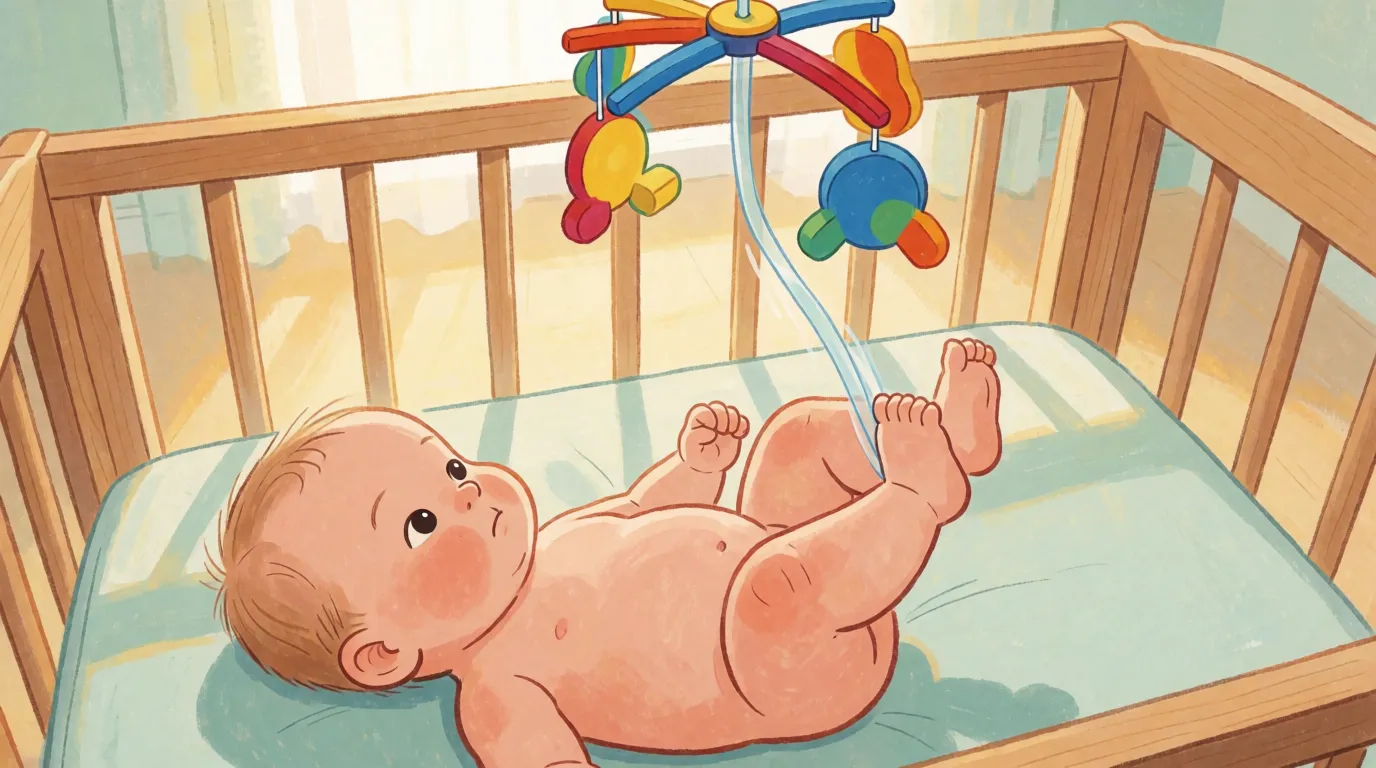
She laid babies under a colorful mobile hanging about 30 cm(12 in) above them, and tied a ribbon from one ankle to it. Kick, and the mobile jiggles. Every baby discovers this within minutes and starts kicking cheerfully.
Then she took the ribbon away and came back days later, with the mobile hanging still. A baby who remembers starts kicking at once. A baby who has forgotten lies there looking at it.
Two-month-olds remembered for a day or two. Six-month-olds remembered for around two weeks. Older babies held on for longer still, and every one of them was storing something real about a particular afternoon.
So the memories exist. Whatever happens to yours, it happens after they are made, which changes the question entirely.
Two different jobs, both called remembering
Some of what you learned as a baby is still with you. Walking, chewing, gripping a spoon, understanding what a face is: all of that was learned early and none of it has gone anywhere.
The kind that vanishes is different. Episodic memory means a particular episode with a time and a place attached — one afternoon, one room, one thing that happened once. That is what you cannot reach.
Episodes get assembled and filed by a curled structure buried on each side of your brain called the hippocampus. It is about 4 cm(1½ in) long and shaped like a seahorse, which is what its name means.
A memory is a pattern, and patterns can be disturbed
A hippocampus is built from neurons, the branching cells that carry signals through your brain. A cell is the smallest living unit a body is assembled from.
A memory lives as a particular pattern of connections between a particular group of those neurons. Nothing is written down anywhere; the pattern is the memory.
That is where the trouble starts. A pattern of connections is only useful for as long as the connections stay put.
A growing brain keeps rewiring the filing cabinet
Most of your body stops making new cells of a given kind fairly early. The hippocampus does not. It goes on producing brand-new neurons, and in a baby it does so at an enormous rate.
Making new brain cells is called neurogenesis, though new-cell growth says it just as well. Each new neuron has to be wired into the existing circuit, and wiring it in means altering connections that were already there and already meant something.
Every new cell has to be plugged into the pattern. Plugging it in is what takes the pattern apart.
So a baby’s hippocampus is filing memories into a cabinet being rebuilt around them, week after week. The pattern that was a birthday gets edited by arrivals that know nothing about birthdays, and eventually there is not enough left to find.
In 2014 a team in Canada tested this directly, and their result is why the idea is taken seriously. Working with mice, they speeded up new-cell growth in adults after a memory had formed, and those adults forgot things they would normally have kept.
Then they ran it backward. In infant mice, where the rate is naturally enormous and memories normally vanish fast, they slowed the growth down, and the young mice held on to memories they should have lost.
New-cell growth is not the only suspect. Filing an episode properly also needs language to describe it, and a sense of yourself as somebody things happen to. Both of those arrive slowly, between the ages of two and four.
The forgetting happens later than anybody expected
The strangest finding in this whole subject is about when the memories disappear, and it is not when you would guess. Small children can remember being very small.
Patricia Bauer and a colleague in the United States proved it the patient way. In work published in 2014, they recorded children aged three chatting about things that had recently happened, then went back years later and asked the same children about the same events.
How much of their own three-year-old material the same children could still recall, out of a hundred events.
Children of five, six and seven still had most of it. Children of eight and nine had lost more than half. The memories were not missing from the start. They survived for years and then went, at an age when nobody thinks of themselves as a baby any more.
The name for that whole disappearance is childhood amnesia, and across the world adults’ earliest genuine memory usually lands somewhere around three and a half years old.
The oldest explanation was the wrong one
There is a live argument going on about a remaining possibility, which is worth knowing about because it is genuinely unfinished. Recent work using brain scanners on babies suggests some early memories may be encoded and simply unreachable afterward, rather than destroyed.
If that holds up, part of Freud’s picture gets rescued for entirely different reasons. Nobody has settled it, and that is the honest position rather than a tidy ending.
Collect the ages and find the edge
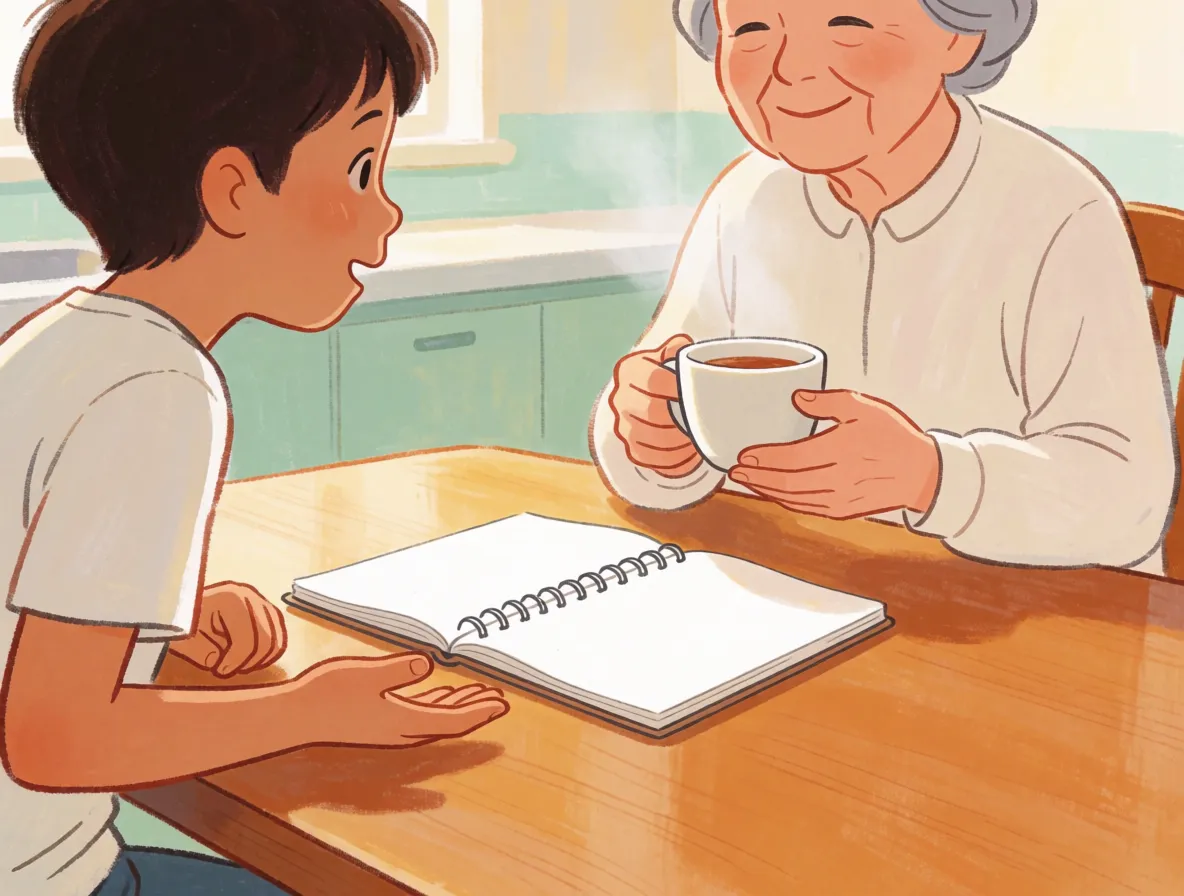
Most groups land close to three and a half years, matching the figure from proper studies of thousands of people. You will probably also find one person insisting they remember being one, and it is worth being gentle about that.
A memory you have seen a photograph of
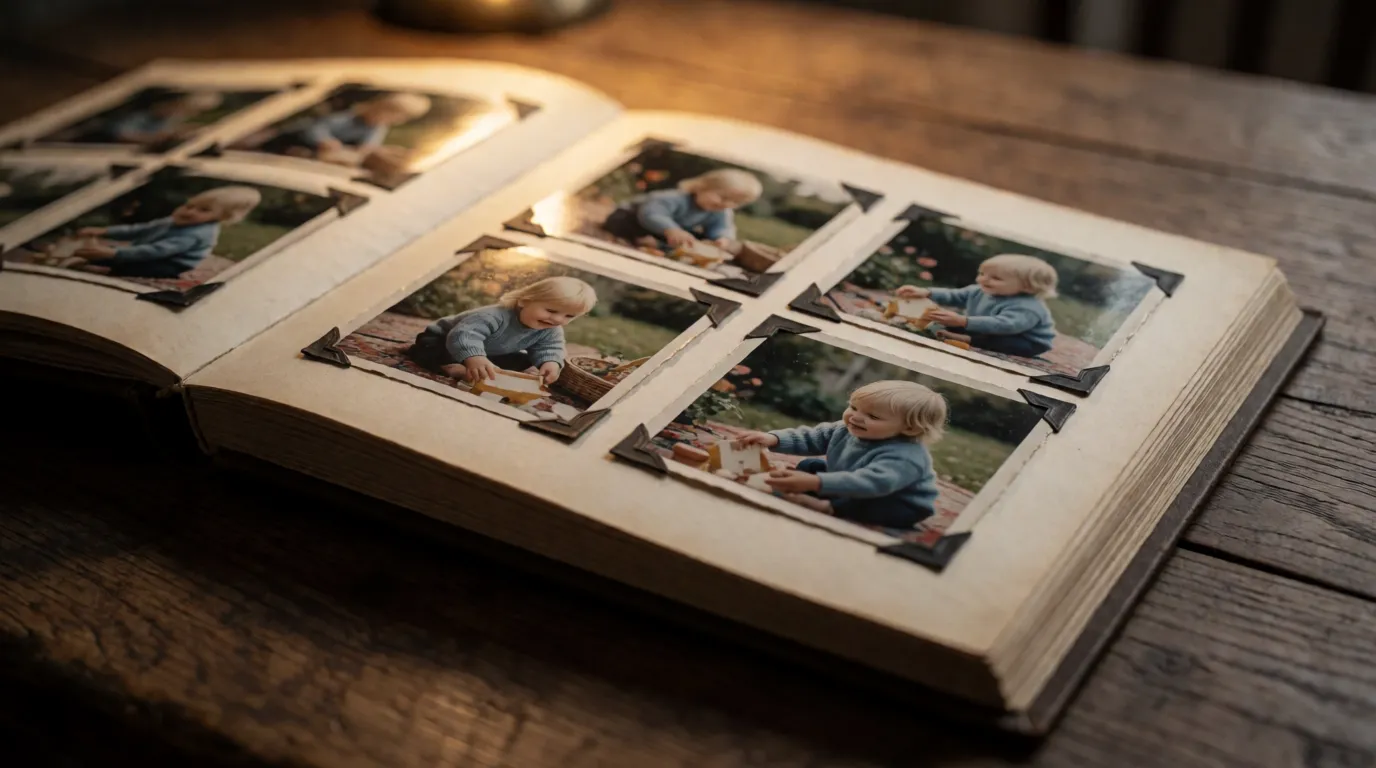
The photograph question is the sharp end of the experiment. A story told about you often enough, or a picture looked at often enough, produces something that feels exactly like a memory from the inside and was assembled much later.
Nothing was wasted
It is tempting to feel cheated, as though two years were deleted. They were not. Everything those years were for is still here, doing its job.
You are reading this because of language work done before you can remember. You can walk across a room without thinking about it. You recognize the people you love in under a second. None of that is stored as episodes, so none of it was lost when the episodes went.
What disappeared was the diary, not the education. And it disappeared because the part of you that keeps diaries was still being built, by a process that could not add a single new cell without disturbing the pages already written.