Why does time feel faster as you get older?
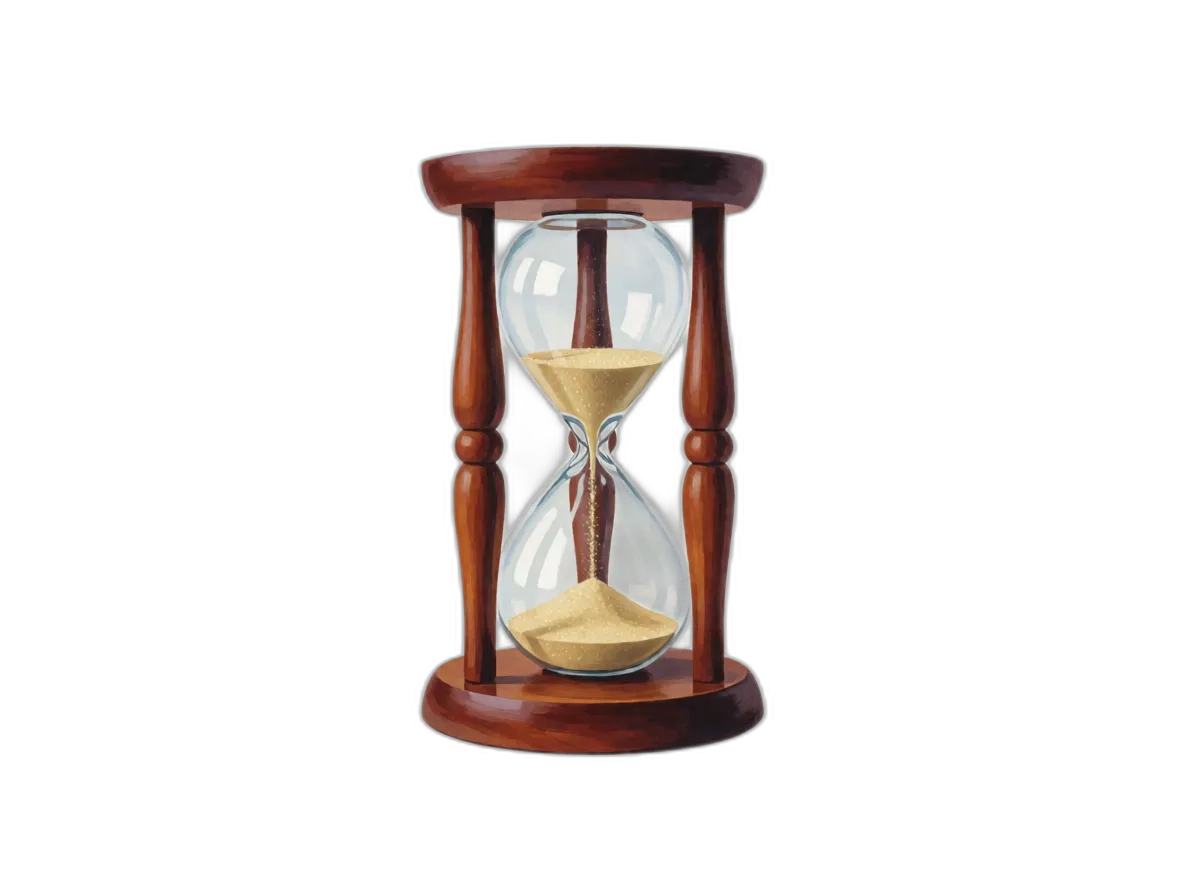
Ask any adult about last year and they will tell you it went by in a flash. Ask a nine-year-old about last summer and they will describe something that lasted approximately a century. Both of them had exactly the same number of days, measured with exactly the same clocks. So one of them is judging the length of a year by something other than its length.
Looking back, you judge how long a period was by how much of it you can remember. Routine leaves almost nothing behind, and adult years are mostly routine.
There are two different questions about time
Ask somebody how long a minute feels while it is happening, and you are asking about prospective timing: judging a stretch of time from inside it, as it passes. Most people get within 10 seconds(a slow breath) of a true minute.
That kind of judgement barely changes with age. Ask a child and an adult to close their eyes and say when a minute has gone, and both will be roughly as accurate as each other.
The complaint about time speeding up is about something else entirely. It is retrospective timing: deciding, afterward, how long a period was.
Those two are answered by different machinery. The first watches a clock ticking somewhere in your head. The second consults your memory, and asks how much happened.
Memory is not a recording
Your brain does not store the whole of an experience. It picks out things worth keeping, and the process of writing an event into memory is called encoding.
What gets encoded is overwhelmingly whatever was new. A first flight, a new school, a route you had never walked: all of these leave detailed marks, because your brain has no existing version to file them under.
Repeats leave almost nothing. Every Tuesday you have spent walking the same way to the same building is stored once, roughly, and the individual days blur into a single approximate memory.
That property of being new is novelty, and it is the currency retrospective timing runs on. A period stuffed with novelty leaves a thick file. A period of repeats leaves a thin one.
You are not measuring the year. You are measuring the size of the file it left behind.
Which explains the ages perfectly
Now put the two together and the pattern falls out. At nine, most of a year is made of things you have never done before, so it leaves an enormous number of separate marks.

At forty, most of a year is a repeat of the year before: the same journey, the same building, the same rooms. Almost none of it earns a separate entry, so looking back, there is very little there.
The clocks were identical. The files are wildly different sizes, and the one that consults the file reports a short year.
That also explains something people notice without explaining it: a holiday somewhere unfamiliar feels long afterward, even though it was one week. It was one week of nothing but novelty.
The other explanation, which is older
There is a competing account, and it has been around since 1877, roughly six generations before you were born. Paul Janet in France proposed that each year is judged against how much life you have already had.
The idea has an older ancestor. William James, writing his great survey of psychology in 1890, described adult years as growing hollow and emptying of content, which is the memory account in Victorian clothing.
One year as a share of a life already lived, at two different ages.
To a ten-year-old, a year is a tenth of everything that has ever happened to them. To a fifty-year-old it is a fiftieth, so it ought to feel five times smaller, which is the proportional theory.
It is neat and it may well contribute. It is also harder to test than the memory account, because it makes fewer predictions you can check. Most researchers now treat the memory explanation as doing more of the work.
Neither is settled. This is a field where careful people still disagree, and anybody who tells you the question is closed has skipped some reading.
Time does not actually slow down

That result ties the whole subject together. A frightening moment is pure novelty, so it encodes densely and reads as long afterward. An ordinary Tuesday encodes almost nothing and vanishes.
Test it on the way home

Most people overestimate the new route and underestimate the familiar one, often by several minutes in each direction. Your legs and the stopwatch are the controls, and only the novelty changed.
That gap is the entire mechanism, running at walking speed rather than over decades. You are watching your own retrospective judgement being made out of memories rather than minutes.
What you can actually do about it
Nothing here is about slowing down time, and any advice that claims to is promising something impossible. What you can change is how much of it leaves a mark.
The mechanism suggests exactly one intervention, and it is not a trick. Do unfamiliar things. New routes, new places, new skills and new people all encode densely, and a year containing them is remembered as a longer year.
There is something reassuring in that. The summer that felt endless when you were nine was not longer, and you were not enjoying it more than an adult would. You were simply paying attention to almost every hour of it, because almost every hour of it was new.