Why won’t a wheel full of weights turn forever?
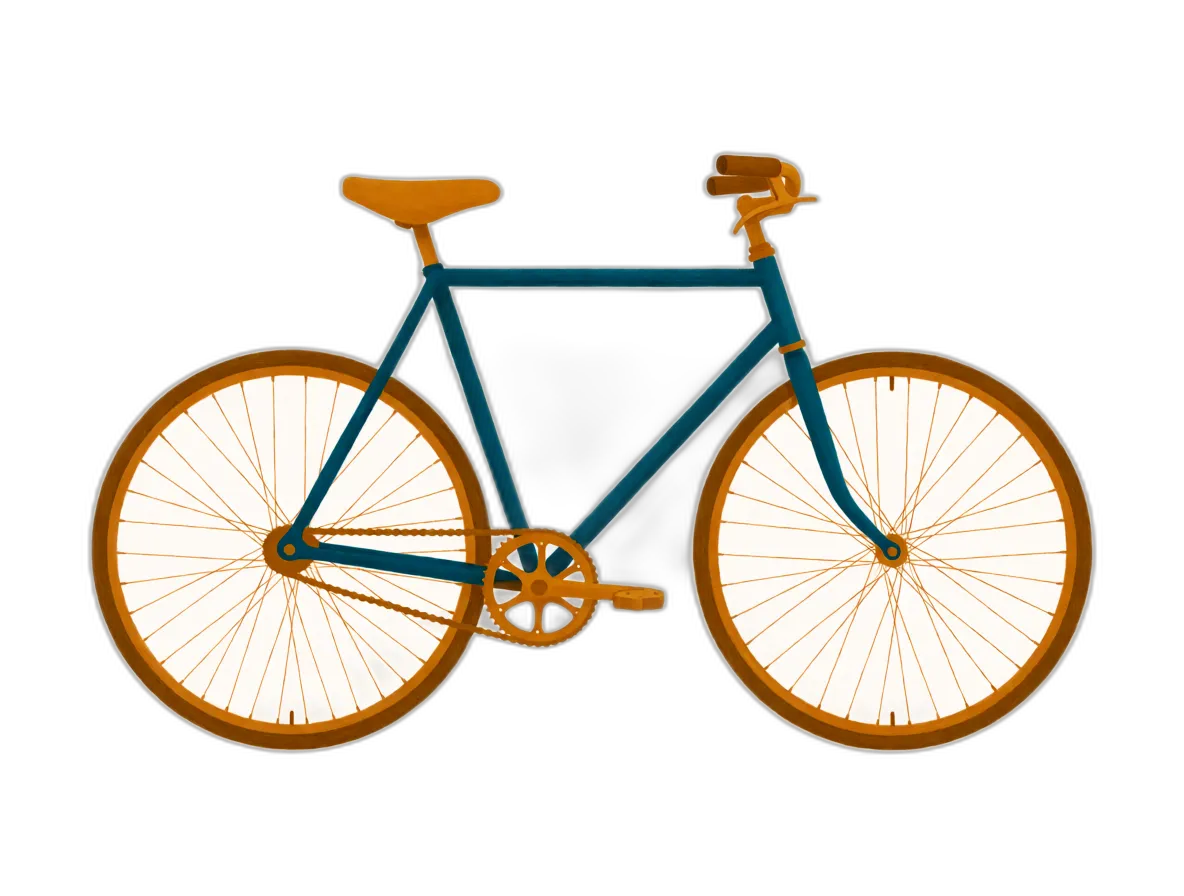
Turn a bicycle upside down and spin the back wheel. It runs for most of a minute, gradually slows, and stops. Now imagine weights bolted around that rim on hinges, swinging out on the way down and folding in on the way up. Whichever way that wheel points, one side of it is the heavy side, so it ought to keep falling for ever. Engineers have drawn it for eight hundred years and not one has ever run. So what stops it?
Nothing stops it, and that is the strange part. The wheel is perfectly allowed to turn, and usually it does turn, once. Then it settles and never moves again. The reason hides at the top of the circle.
Eight hundred years of the same drawing
People have been chasing the perpetual motion machine since the Middle Ages: a machine that keeps itself going for ever, fed with nothing. It may be the most tested impossible idea in engineering history, and the favorite design has barely changed.
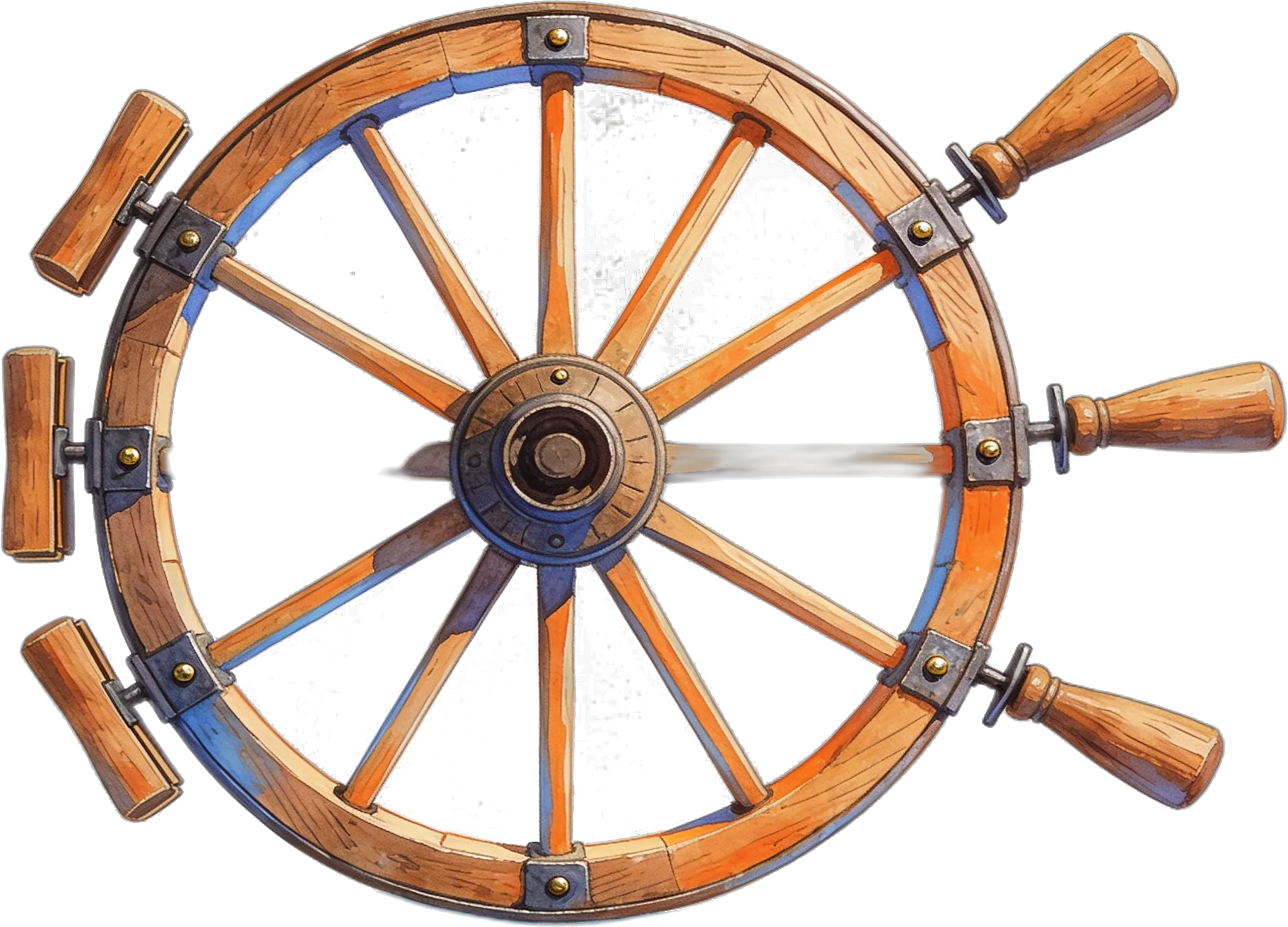
A wheel revolves on an axle, the rod through its middle. Around the rim hang heavy hammers on hinges. Going down, each hammer flops outward, away from the axle. Coming up, it folds back against the rim. That is an overbalanced wheel, built so the heavy side is always the falling side.
The oldest surviving drawing sits in a medieval notebook. Villard de Honnecourt, a French cathedral builder, sketched it around 1230, and engineers copied his manuscript for five centuries afterward. His wheel carries seven hammers, and he insisted the number be odd. With seven, he argued, four hammers are always falling and only three rising, so the wheel can never balance.
Villard was counting the wrong thing. But everyone who copied him began from one sensible idea: a weight further out has more effect than a weight tucked in. That part is entirely true, and it deserves checking first.
Far out beats close in
Hold a heavy book against your chest, then hold it straight out with your arm locked. The book has not gained a gram. Your shoulder is already complaining.
That is leverage: a weight has more turning effect the further it sits from the point it turns around.
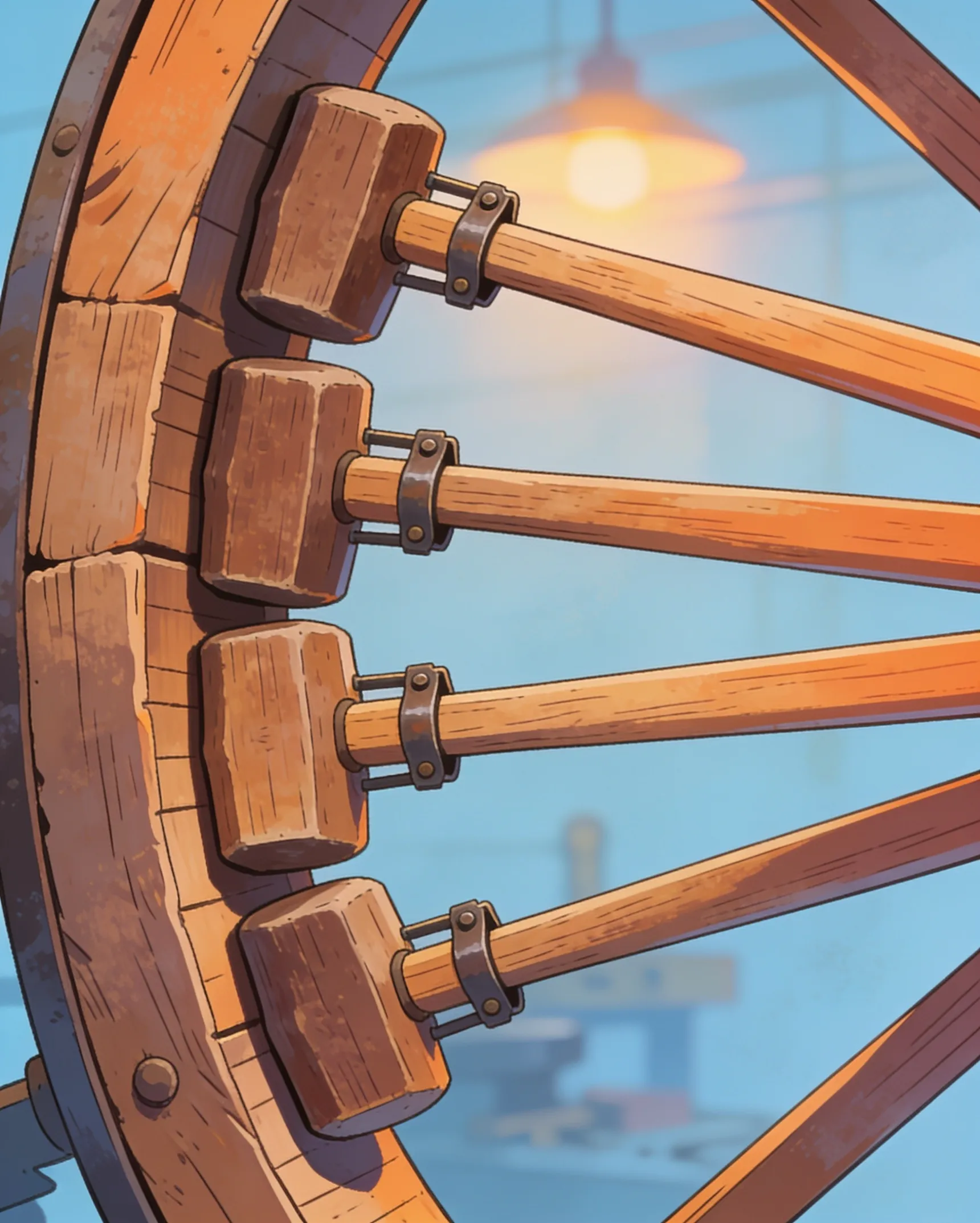
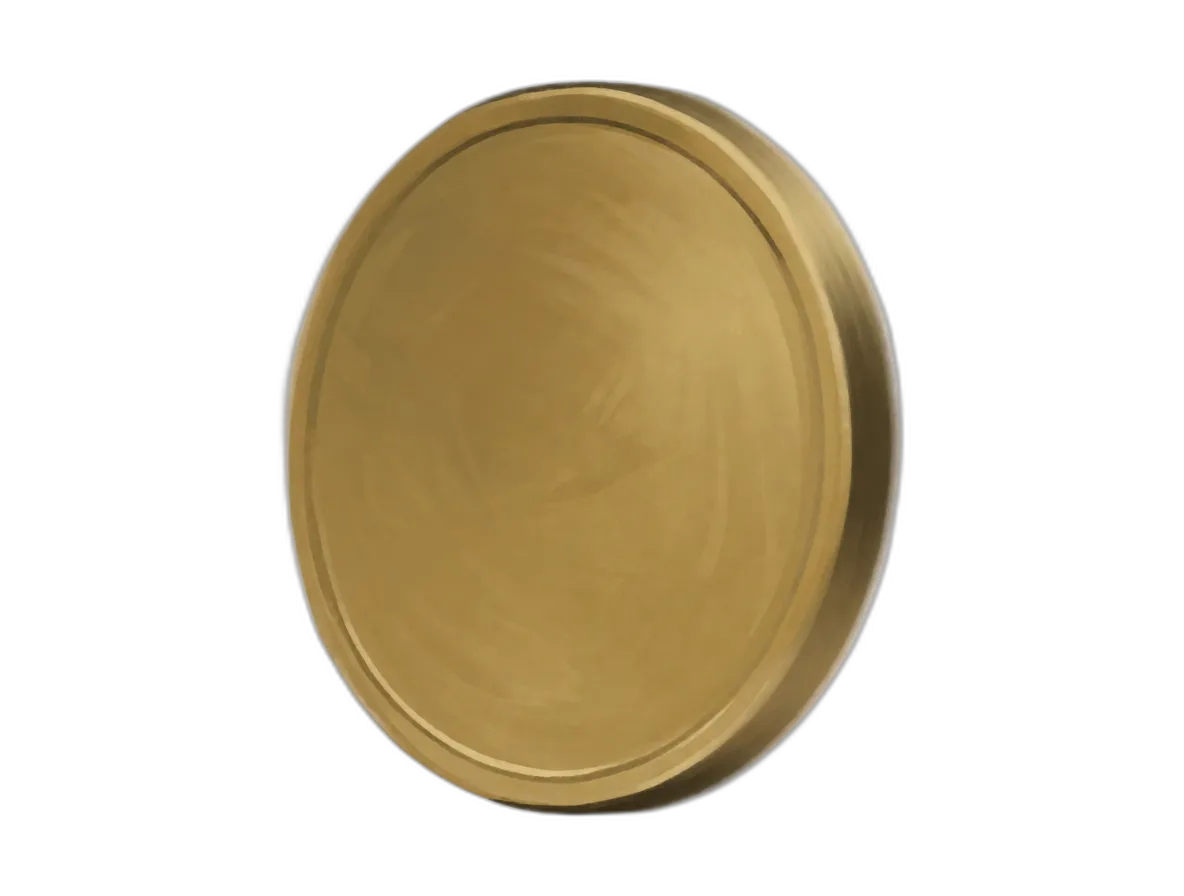
That distance from the axle out to a weight has a name: the radius. Turning effect is weight multiplied by radius. A coin at a radius of 30 cm(12 in) pushes three times as hard as an identical coin at 10 cm(4 in).
So the builders were right about leverage. Freeze the wheel at any instant and the swung-out hammers genuinely do out-pull the folded-in ones, in every photograph you take.
The trouble never appears in a photograph. It appears the moment you follow one hammer through an entire revolution.
A wheel always comes back
Watch a single hammer for one revolution. It starts at the top, rides down the right, swings around the bottom, climbs the left and arrives back at the top. Everything returns to where it began.
So the hammer finishes at exactly the height it started. Every centimeter it fell, it also climbed. Not roughly. Exactly.
Going down the right, the hammer is swung out at a radius of 30 cm(12 in). Top to bottom of that circle is two lots of thirty, so it falls 60 cm(2 ft).
Climbing the left it is folded in, at a radius of only 10 cm(4 in). That circle is smaller, and the whole climb lifts the hammer just 20 cm(8 in).
Sixty down, twenty up. A revolution must come out even, so forty centimeters of climbing are missing somewhere.
The two lifts nobody counts
They happen at the top and at the bottom, and both go upward.
Look at the top. The hammer arrives folded in, ten centimeters above the axle. It swings out, and now it sits thirty centimeters above. Swinging outward at the top of a circle means rising, and the wheel pays twenty centimeters for it.
The bottom is the identical event upside down. The hammer arrives swung out, thirty centimeters below the axle. It folds in and hangs only ten centimeters underneath. Folding inward at the bottom lifts it another twenty.
Twenty at the top, twenty at the bottom, twenty up the left, against one fall of sixty.
Three hundred years of ingenious hinges, and the circle closes on every last one of them.
You can move those swings anywhere around the circle. Flop the hammers out lower down and the climb at the top shrinks. So does the fall, however, because the hammer now spends less of its revolution at the wide radius. Work through any arrangement of hinges, arms, ramps or springs anybody has ever drawn. They all reach the same answer: zero.
It turns once, and then it is finished
Build one anyway and something really does happen: released, the wheel usually swings some way around before halting. That single movement convinced people for centuries.
Every object has a center of gravity, one point where all its weight acts as though gathered together. Hang hammers unevenly and that point sits off to one side of the axle. Let go, and the wheel rolls until the point is as low as it can possibly get. There is nowhere lower, so it stops.
That is a single fall, spent once, like a marble rolling into a dip.
Then there is friction, the dragging between two surfaces sliding across each other. It quietly ended the spin on your upturned bicycle, and it is the excuse people reach for whenever a perpetual wheel disappoints.
So the wheel gets one shove, spends it finding its lowest point, and stops. Which leaves an awkward question: how did somebody once keep one revolving inside a sealed room?
The wheel in the locked room
In 1717, long before your great-great-grandparents were born, Johann Bessler was living in a castle at Kassel in Germany, the guest of a prince who collected machinery. In his rooms stood an enormous wheel, 3.6 m(12 ft) in diameter, wrapped in waxed linen so no spectator could see the mechanism, and it revolved on its own. Witnesses described about eight weights landing softly, one after another, always in the direction the wheel was turning. Bessler said only that his invention could never reach equilibrium, which is a long word for balance.
The prince had the windows fastened and the door carefully locked, then pressed his own seal onto it. Several weeks later the seals were broken, and the wheel was still revolving.

Meanwhile in London the explanation had already been published. John Desaguliers told the Royal Society, where England’s scientists met, in 1721 that a machine driven by falling weights must keep lowering its center of gravity to continue. No wheel can lower it for ever, because a wheel comes back. He demonstrated it in front of them, and hardly anybody cared. A sealed room in a German castle makes a better story than arithmetic.
In 1727 Bessler’s housemaid, Anne Rosine Mauersberger, ran away and made her confession. The wheels had always been turned by hand from the room next door: sometimes by her, sometimes by Bessler’s wife or brother, sometimes by Bessler himself.
There was a person behind the wall all along. Desaguliers was right, and his argument is small enough to test on a kitchen table.
Find your wheel’s favorite spot
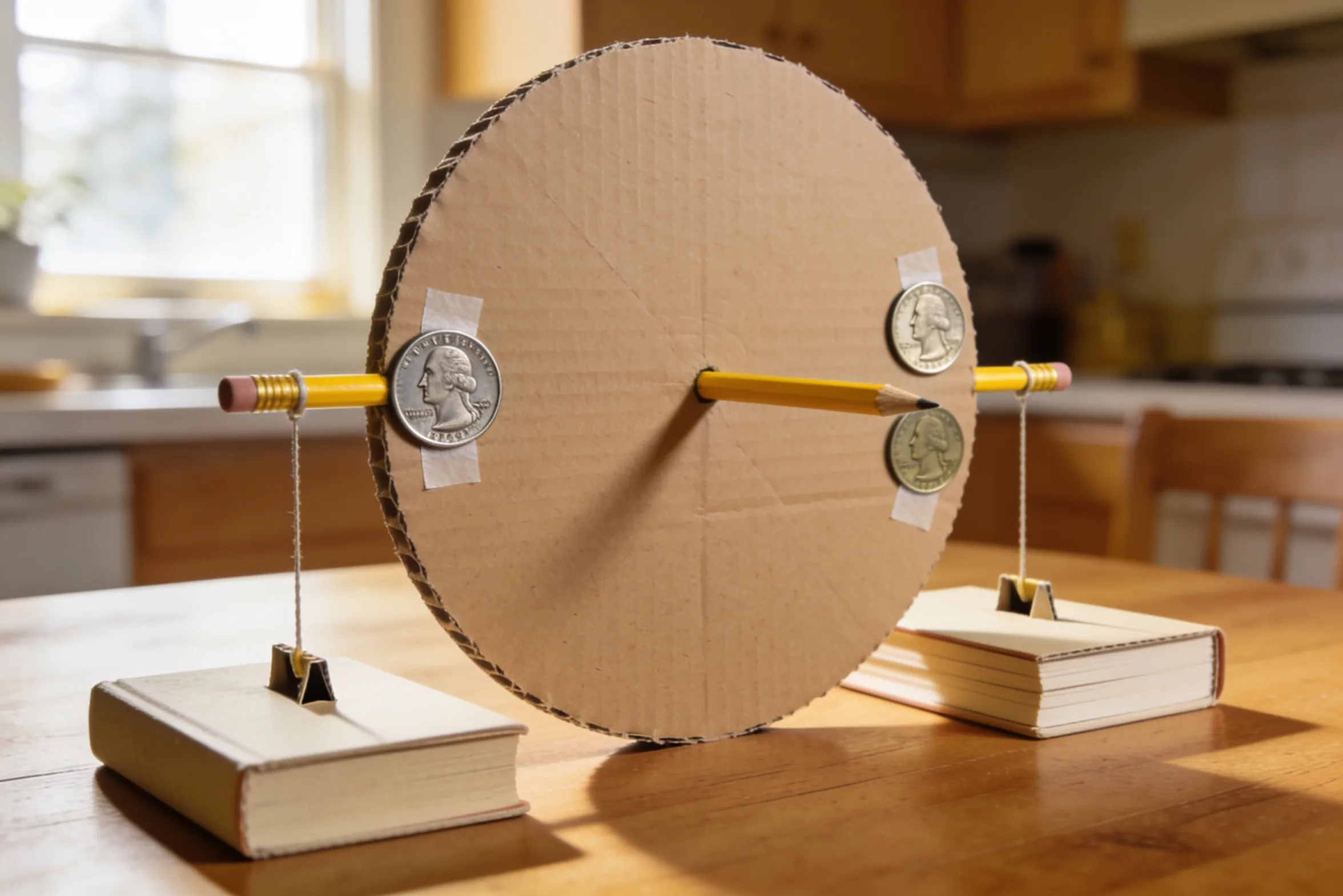
In step three the coin finishes at the bottom every time, all ten. Your circle has one favorite spot and finds it without fail, exactly as Villard’s wheel does.
In step four it halts wherever it happens to be. One coin at a radius of ten centimeters balances two coins at a radius of five, because one times ten and two times five make the same number.
Which is worth sitting with, because plenty of ordinary wheels do revolve all day with nobody pushing them.
The wheel that really does run all day
A waterwheel is this same machine. Buckets hang around its rim, filling and turning heavy on one side, emptying and turning light on the other. It is heavier on the falling side, always, and it works from morning to night.
The wheel is not the ingenious part. Watch the water instead. It leaves the bucket at the bottom and never climbs back up by itself. Something outside the wheel lifts it: sunshine evaporates it off the ocean, wind carries the vapor inland, rain drops it on a hill. The weather carried it there.
So the answer was never hidden in the hinges. Every weight that wheel lifts, it must lift itself, and it has nothing to lift with. Your upturned bicycle is the honest version of the same machine. It runs on the push your hand gave it, and stops when that push is used up.
Bessler needed a person behind the wall. A waterwheel needs the rain. Behind every wheel that keeps revolving, something out of sight is doing the climbing.