Why does wet sand hold its shape?
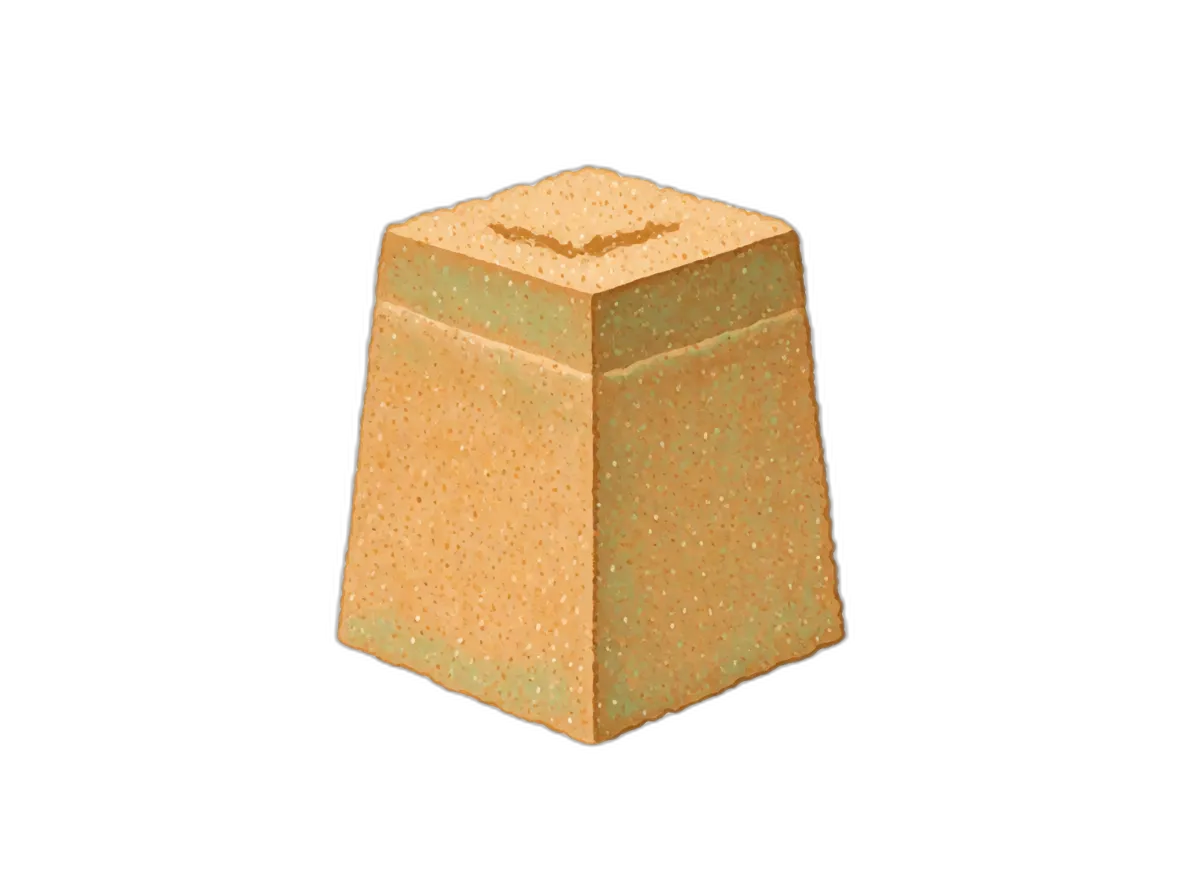
Tip out a bucket of dry sand and it slumps into a low cone. It cannot be persuaded to do anything else, however carefully you build. Splash a little water in and the same grains will stand in a tower with vertical sides and sharp corners. Keep pouring and it collapses into a grey soup. Somewhere between bone dry and soaking there is a right amount, and almost everybody guesses it wrongly.
Water does not glue the grains together. It pulls them together, from inside thousands of microscopic bridges, and a full bucket destroys every one of them.
Dry sand is a pile of things that will not hold on
Sand is granular: a material made of separate solid pieces, each one complete in itself. Beach grains are typically 0.3 mm(0.01 in) across, round-ish and worn smooth.
The grains touch each other and rub, and friction is the only thing supporting a dry heap. Pile it steeper than approximately thirty-four degrees and the surface layer slides away, which is why every dry sand pile on the planet settles into a cone of roughly identical slope.
Attempt a vertical wall and there is nothing available to work with. Nothing attracts one grain toward another, so the instant a grain finds nothing underneath it, it departs.
That is the entire problem requiring a solution. A tower needs the grains to hold on to each other, and dry grains possess no mechanism for doing it.
Water builds a bridge at every contact
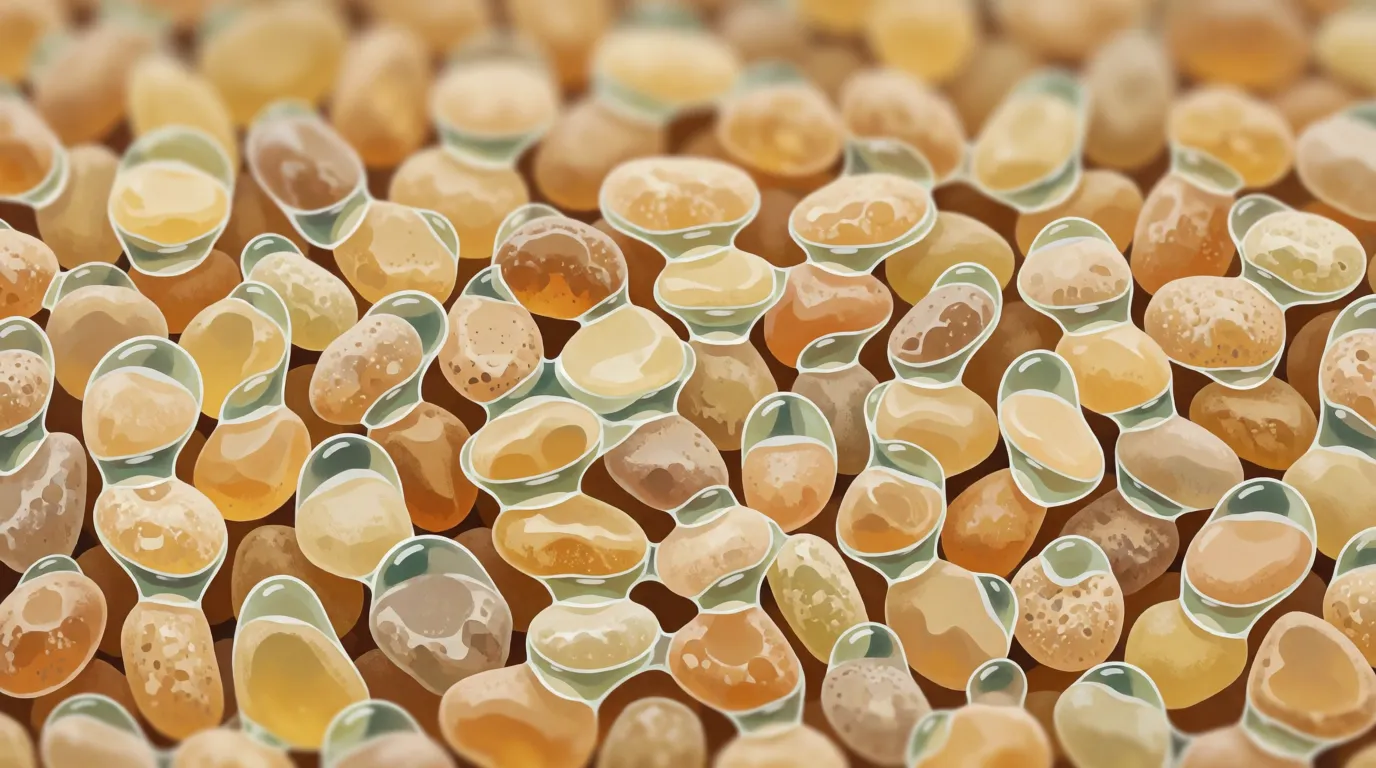
Now introduce a little water. It does not coat the grains evenly, and it certainly does not fill the gaps. It gathers at the positions where two grains touch, forming a small collar of liquid pinched between them.
Each of those collars is a capillary bridge. Look at one closely and its outer surface curves inward, dipping between the two grains. A curved liquid surface like that is called a meniscus.
A curved surface always wants to shrink
Water molecules cling to one another, and that clinging drags any water surface toward being as small as possible. The effect is surface tension, and inside a bridge it accomplishes something specific: it hauls the two grains together.
One bridge is a feeble thing. A handful of damp sand contains millions of contact points, however, and every single one is quietly pulling. Accumulated together, they supply the sand with cohesion: a genuine internal strength holding the material to itself.
Now the same pile behaves completely differently. It will stand in a vertical wall, take a sharp corner, and support a tower far taller than any dry heap could manage.
Too much water destroys the bridges
Here is the part that catches everybody out. If a little water builds bridges, additional water ought to build stronger ones. It accomplishes precisely the opposite.
Continue adding water and the collars swell until neighboring bridges touch and merge. Once the space between the grains is completely occupied by water, no separate collars remain, no curved surfaces survive, and nothing is pulling anything toward anything.
The pulling comes from the curve of the surface. Fill the gaps and there is no surface left to curve.
Saturated sand becomes a slurry. The grains slide past one another on a film of water, friction collapses, and the entire material flows like thick porridge. That is the disappointing stuff at the water’s edge that refuses to build anything.
So there is a peak somewhere in the middle, and a group in Amsterdam went looking for it. In 2012 Maryam Pakpour, Daniel Bonn and their colleagues built sand columns with carefully measured water and pushed them until they failed.
The water content that made the strongest sand in the Amsterdam tests, as a share of the volume.
One percent. A bucket of sand needs about a teacup of water, not a bucket, and adding more makes it weaker rather than stronger. With that ratio, their measurements predicted that a sand column 20 cm(8 in) across could stand 2.5 m(8 ft) tall.
The wetter the better
The identical rule explains why a sandcastle survives for hours and then disintegrates untouched. Evaporation gradually removes the bridges, and the moment the final collars disappear, the grains revert to being a pile of things that will not hold on.
The soldier who studied dunes for fun
Sand was regarded as beneath serious physics for a long time. It is not a solid, not a liquid and not a gas, and for centuries the response was to leave it alone.
The person who changed that was not a professional physicist. Ralph Bagnold was a British army officer who spent the 1930s, around when your great-grandparents were children, driving across the Libyan desert. He became fascinated by why dunes possess the shapes they do.

Back in England he constructed a wind tunnel in his spare time and established how individual grains are lifted, thrown and deposited by moving air. His book appeared in 1941, and it remains the foundation of an entire scientific field.
The odd part is what happened afterward. Bagnold went back to the desert during the war and used the same understanding of dune shapes to navigate, founding a unit that drove enormous distances across sand nobody thought was crossable. NASA still uses his equations to study dunes on Mars.
Find the right amount yourself
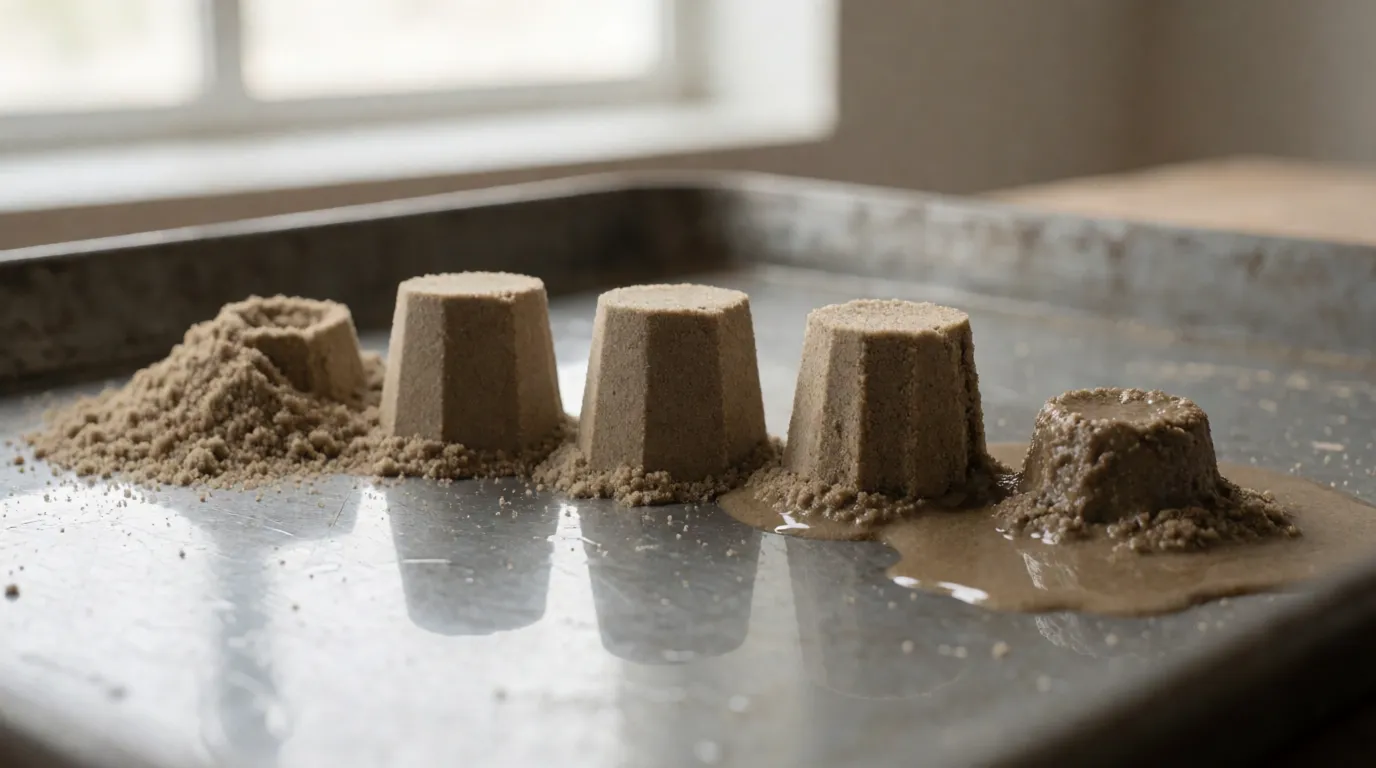
The dry one will not survive the cup being lifted. The soaked one slumps within seconds. Your winner will be one of the drier ones, and it will look disappointingly undramatic when you mix it.
To investigate further, repeat the winning ratio using different sand. Fine sand offers more contact points per handful than coarse sand, so it manufactures more bridges. Competition sandcastle builders are consequently very particular about which beach they work on.
A material held together by its own shortage of water
There is something genuinely strange about the answer, and it is worth sitting with for a moment. The strength of wet sand comes from water that is not there.
Filling the gaps gives you nothing. The pulling exists only because the water is scarce enough to be pinched into curved little collars, each one trying to shrink and dragging two grains along with it.
So the best sandcastle on the beach is built from sand that feels almost dry, by somebody who resisted the urge to fetch another bucket of sea.