Why is ice slippery?
Almost nothing else behaves like this. A wet paving stone is only mildly treacherous, cold metal has plenty of grip, and a polished floor needs a spill to become dangerous. Ice is slippery on its own, dry to the touch, at temperatures where nothing should be liquid at all. Something is between your shoe and the ice, and working out what took a hundred and sixty years.
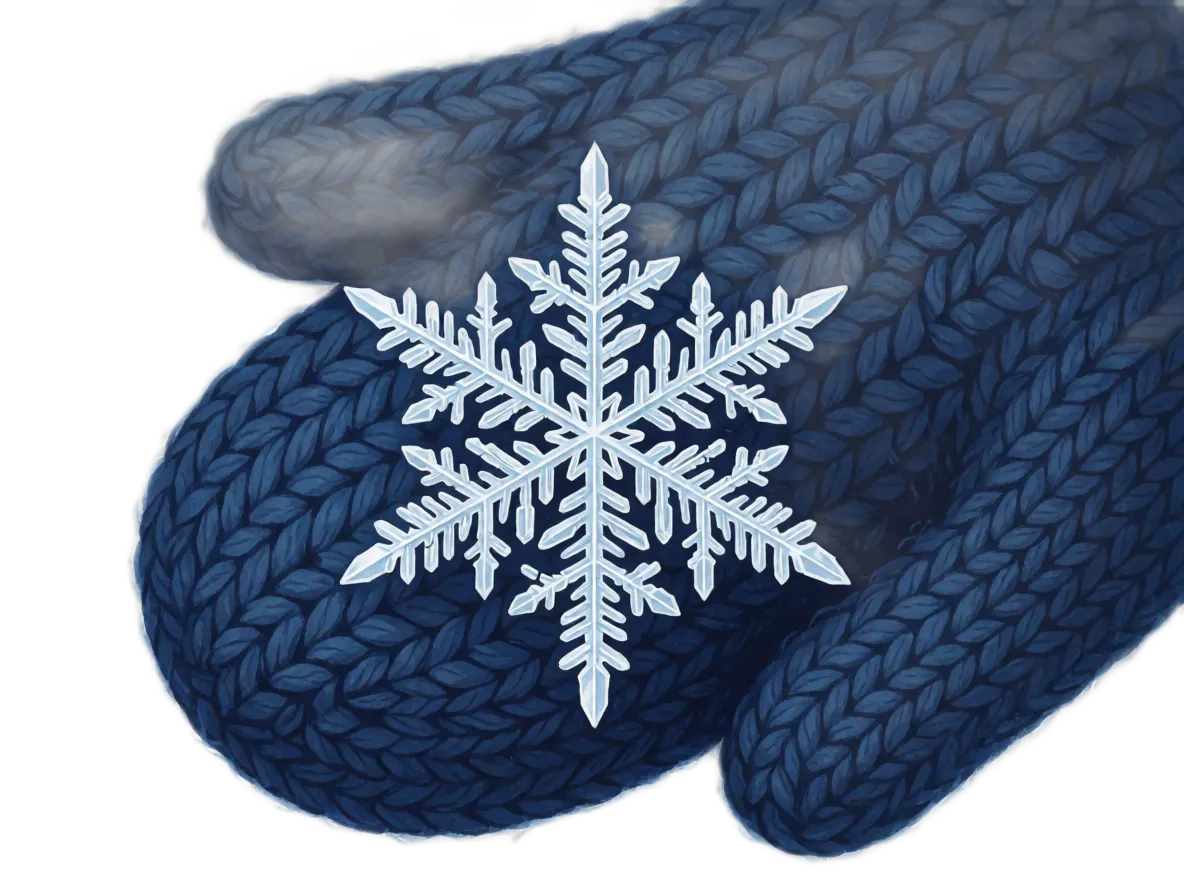
The top of a piece of ice is not solid. A thin disorderly layer sits there permanently, even far below freezing, and you are sliding on that.
Slippery means something is separating the surfaces
Rub two dry solids together and their bumps catch on one another. That catching is friction, and it is what stops you sliding across a carpet.
Reducing friction requires something between the two surfaces that shears easily. Oil accomplishes it, water accomplishes it, and a layer of microscopic rolling beads would accomplish it. Each of them permits the upper surface to travel while the lower one remains stationary.
So the question about ice is very specific. What exactly is in between? It cannot be water in the ordinary sense, because a skating rink is often held at −10 °C(14 °F), and water is emphatically solid at that temperature.
The explanation everybody was taught
The old answer is elegant and almost everybody has heard it. Squeeze ice hard enough and you lower its melting point, the temperature at which it turns liquid. The word for how hard you push on each patch of ice is pressure, and the story goes that your weight supplies enough of it to melt a film of water underneath you.
Ice genuinely does behave that way, and the behavior is remarkable. Nearly every other substance becomes harder to melt when squeezed. Water is the exception, because its solid form occupies more volume than its liquid form.
James Thomson predicted the effect in 1850, about seven generations before you were born, and his brother measured it. That brother is better known today as Lord Kelvin. The effect is real physics, correctly described, and nowhere near strong enough.
How far a skater’s weight lowers the melting point, in degrees Celsius.
A skater standing on one blade presses down roughly thirty-five times harder than the atmosphere does, and that buys about 0.25 °C(0.5 °F). A rink at ten below freezing needs around forty times more.
Ice is slippery when nothing is pressing on it
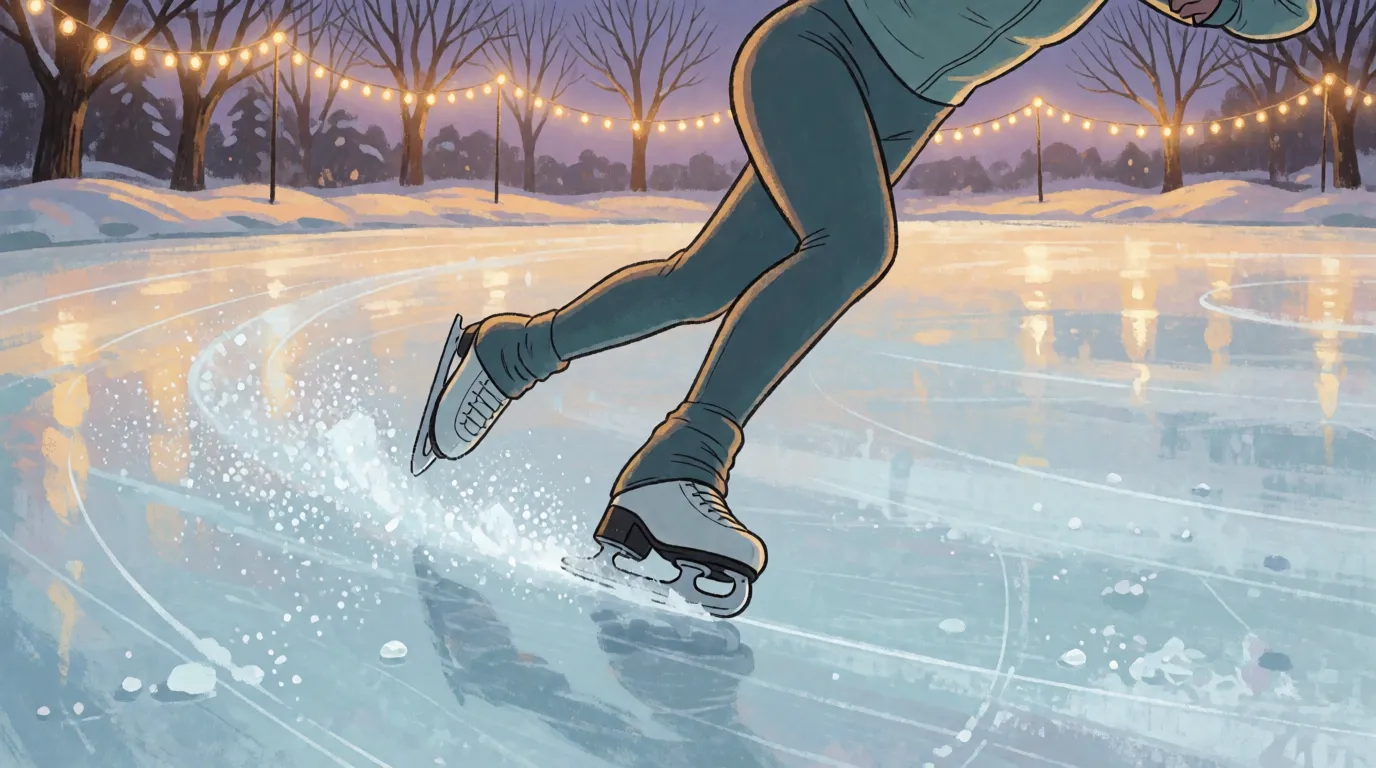
The surface of ice is never quite finished
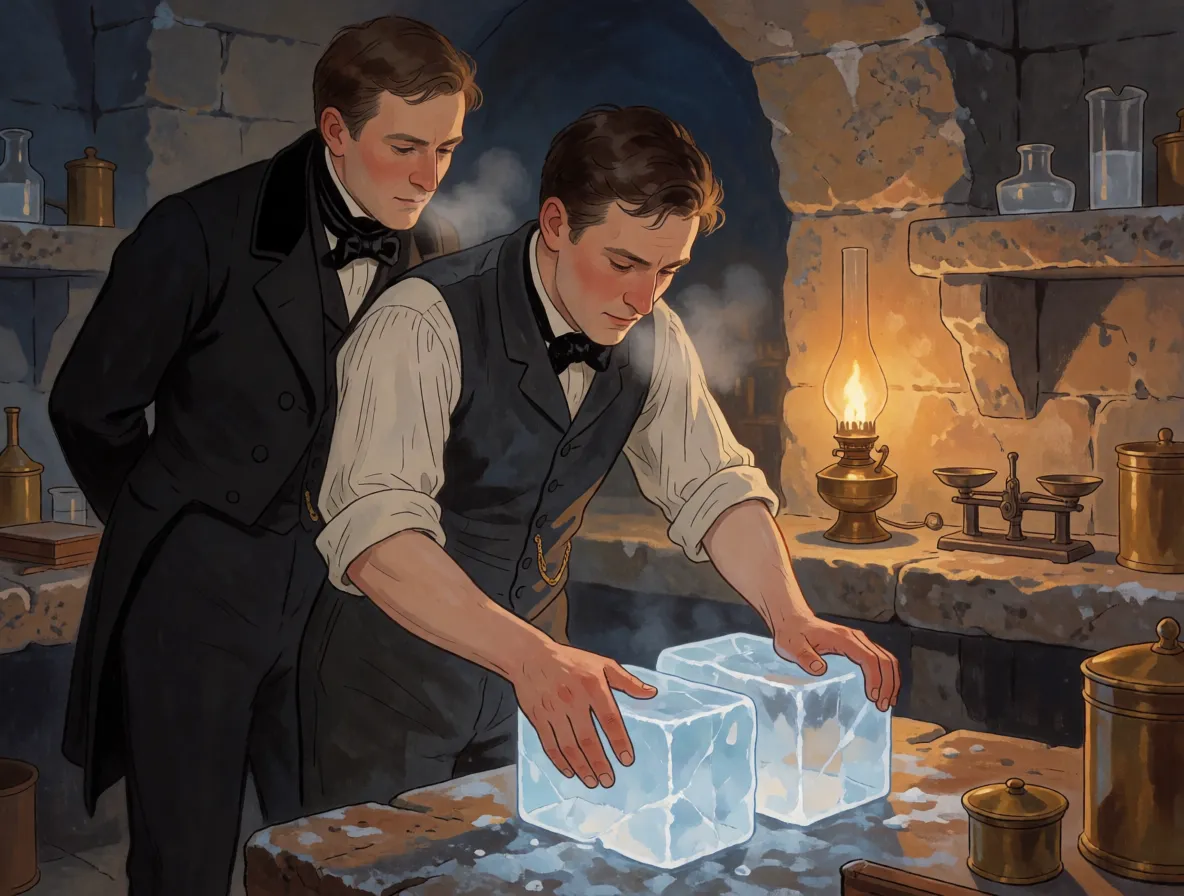
The real answer was proposed by somebody with no way of proving it. In 1859 Michael Faraday reported that two ice cubes pressed gently together freeze into one lump, even in a cold room, and even when you barely press.
He explained it by supposing that every piece of ice carries a thin film of water-like material on its outside. Bring two pieces together and the films are no longer on the outside of anything, so they freeze solid and weld the cubes into one. That welding is called regelation.
The reason such a film exists is worth pausing on, because it is simple. A water molecule — the smallest complete piece water can be divided into — is held from every direction by its neighbors when it sits inside the ice. A molecule on the very top surface has neighbors below and nothing above.
Half-held molecules cannot settle. The top of every piece of ice is permanently unfinished.
Supported from one side only, those surface molecules never lock properly into position. They shuffle about in a disorderly layer behaving partly like a liquid, sitting directly on top of ice that is entirely solid.
A layer with two names and a lot of papers
Physicists call the arrangement premelting, and the film itself a quasi-liquid layer. It is present at ten degrees below freezing, at twenty below, and it only disappears once the ice becomes seriously cold.
Still being measured today
Faraday was arguing with the squeezing explanation in the 1850s, and he could not prove his own version, because no instrument then could see a film that thin.
Modern instruments can. Teams have measured the layer directly since the 1990s. In 2016 a group in Germany including Mischa Bonn showed that the surface melts in steps: one molecular layer, then a second, as the temperature climbs.
The details remain thoroughly disputed. How thick the film is, and how runny it is, are live questions. So is how much of skating depends on the film rather than on friction from the blade, and fresh publications appear every year.
What is settled is the part that matters here. Ice does not need your help to be slippery. It arrives that way, and the surface you slip on was never properly frozen in the first place.
Race a coin down cold and colder ice
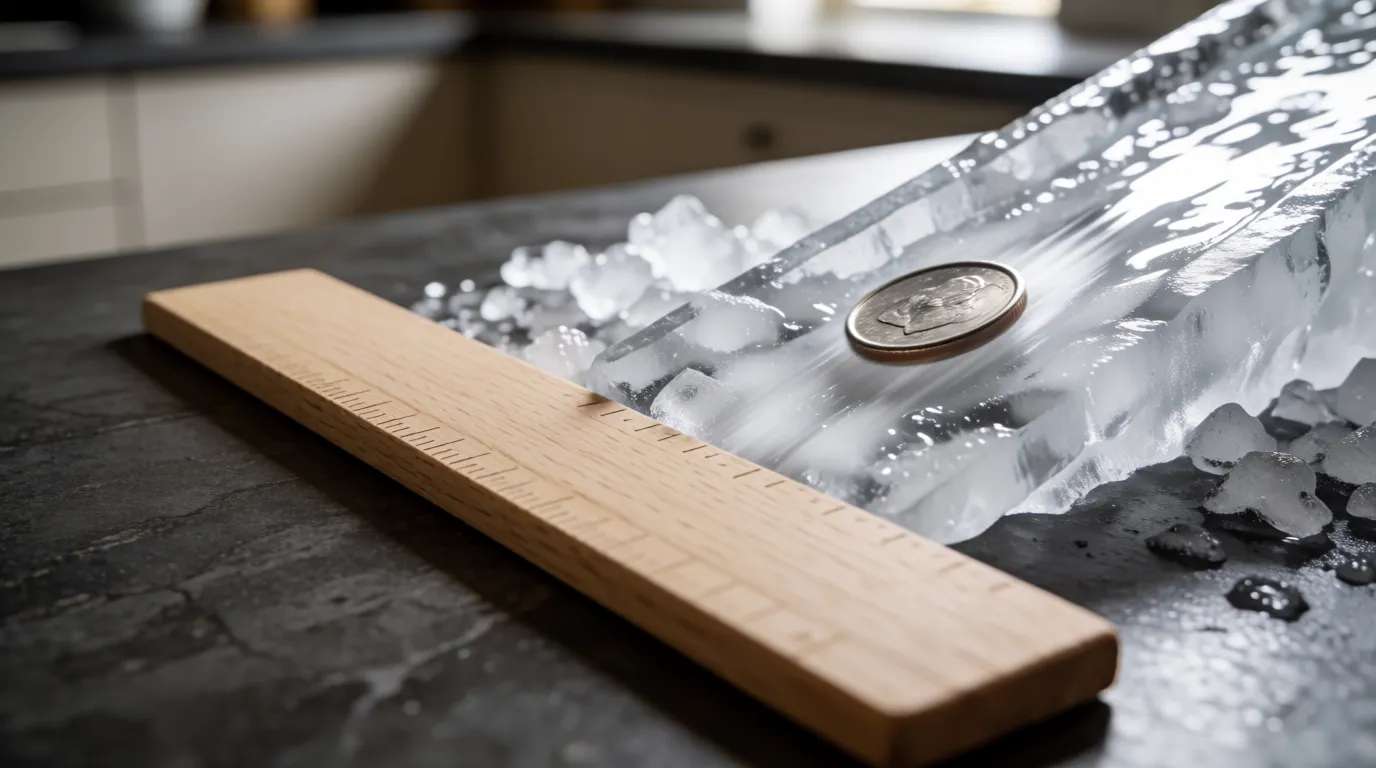
Both trays are slippery, which is the headline result. A coin is vastly too light to melt anything, so whatever distance it travels counts as evidence against the squeezing explanation.
Comparing the two is the interesting part. Very cold ice usually grips slightly better, because the disorderly layer gets thinner as the temperature falls, which is exactly what the premelting picture predicts.
A question that took longer than the aeroplane
There is something enjoyable about the timeline here. People were skating on frozen rivers for centuries before anybody investigated why it worked, and then the question outlasted almost every other physics problem of its generation.
Thomson’s squeezing explanation arrived in 1850 and was taught in schools for well over a century after the numbers showed it could not be right. Faraday had the better answer nine years later and could not demonstrate it.
So the next time you slide on a frozen puddle, the thing under your shoe is a few molecules of water that never quite managed to freeze. People are still publishing papers about exactly how deep it goes.