Why do we only ever see one side of the Moon?
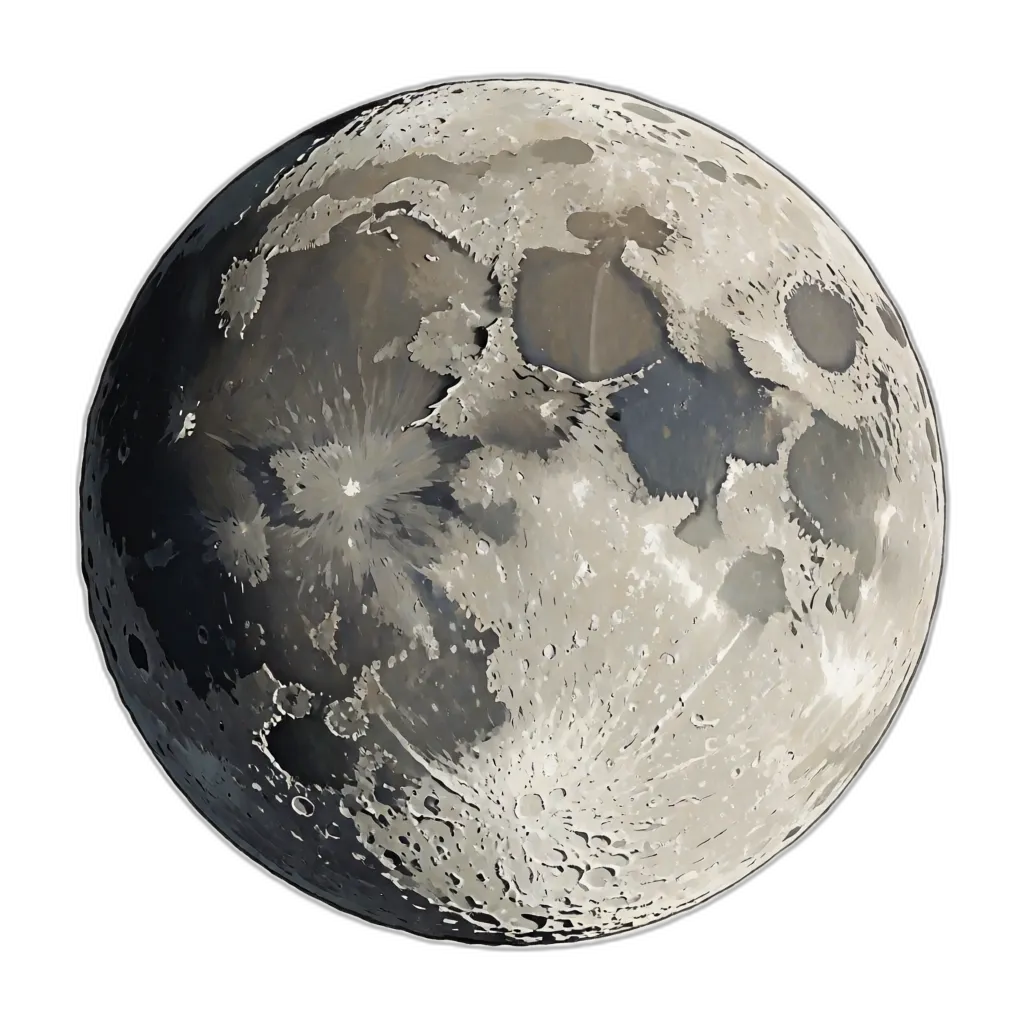
Go outside on the next clear night and look up. The dark patches on the Moon make the same pattern they made last month. They made it when your grandparents were at school, and when the earliest astronomers invented names for them. Nothing holds the Moon in position, so why has it never once swung round and shown us its back?
Because it has been rotating the whole time. The Moon spins steadily on the spot, at the one rate that keeps the same face aimed at us. That match is far too precise to be an accident, and Earth is responsible for it.
The Moon turns once every lap
Try this where you are sitting. Hold your thumb up in front of your nose, then turn your whole body halfway round, keeping the thumb in front of your nose the entire way.
Your thumb has traveled a half circle around your head, and it has also rotated halfway round itself. The thumbnail facing you at the start still faces you, while the back of your thumb has swung across to the opposite wall. To circle an object while showing it one face, you must rotate as you go.
One full lap of the Moon around Earth is an orbit, and the Moon completes one every twenty-seven days. In those identical twenty-seven days it makes exactly one rotation. The hemisphere that never swings into view is called the far side.
So the Moon is turning after all. What still needs explaining is the coincidence: two entirely separate quantities, the rotation and the orbit, matching each other precisely.
Earth pulls harder on whatever is closer
Gravity does not reach out at a single strength. It weakens with distance, so any pull is slightly stronger on the near part of an object than on the far part.
The Moon’s diameter is 3,475 km(2,160 mi). Its near side sits that entire width closer to us than its far side does. The gap between us measures 384,400 km(238,900 mi), enough to line up thirty Earths in a row. Beside a distance like that, the width of the Moon is almost nothing. Gravity notices it regardless.
The near side is tugged a little harder than the Moon’s middle, and the far side a little less. Pulled unevenly from end to end, the Moon is drawn out along the line joining it to Earth, with a low bulge at either end. That difference between the strong end and the weak end is a tidal force, the same gravitational effect that lifts the ocean up the beach twice a day.
The Moon pulls our oceans into two bulges as well, which is why high tide comes round twice a day and not once.So the Moon is very slightly egg-shaped, with one end of the egg pointing permanently at Earth. That shape converted a spinning rock into a rock that always faces one direction.
The bulge that ran ahead of the pull
Wind the clock back four billion years. The young Moon rotated far faster than it does now, taking hours rather than weeks.
Rock does not change shape the instant you ask it to. Squeeze a lump of putty and it yields slowly. Moon rock behaves similarly, only colder and enormously stiffer, so the two bulges lagged behind. Rock grinding against rock also warms up, and that warming is friction, quietly draining energy from the spin.
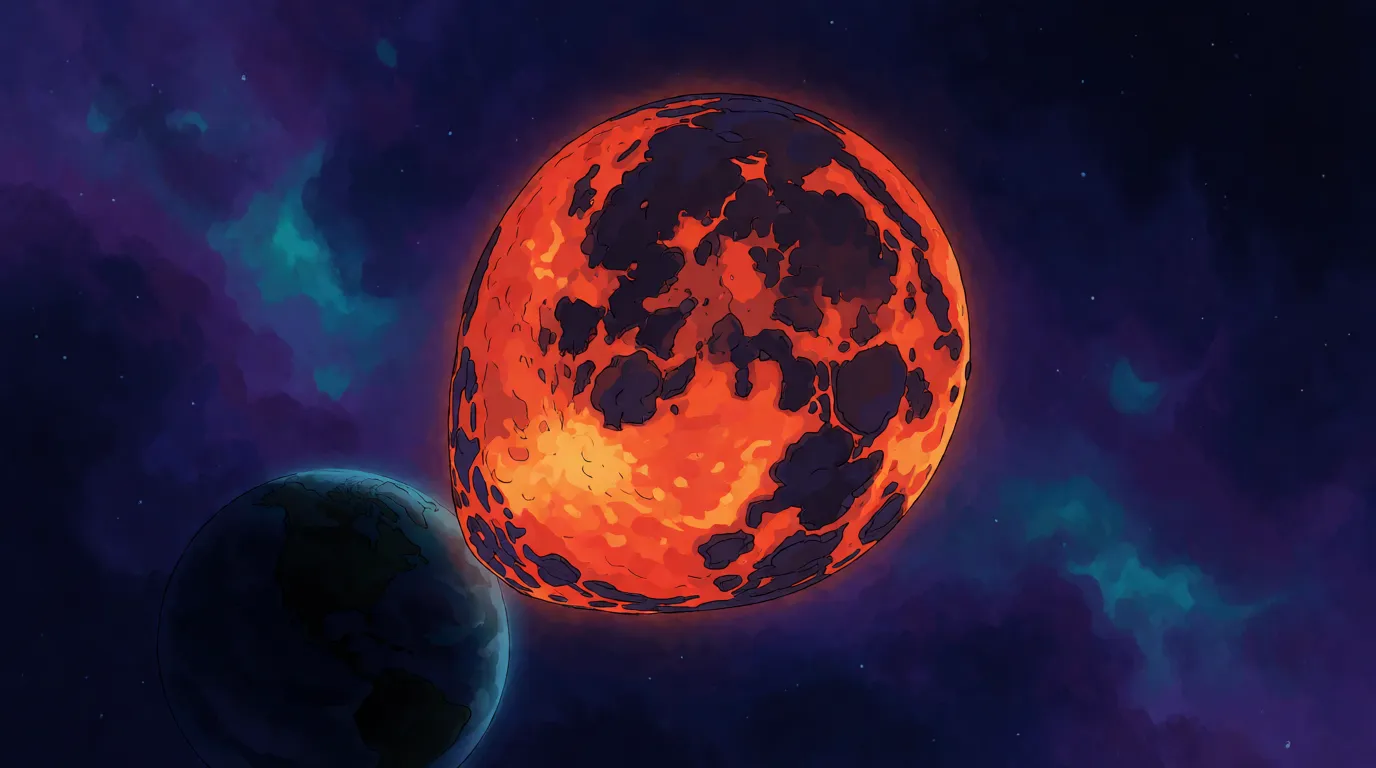
The rapid rotation therefore carried the near bulge past the line to Earth and held it a little ahead of the position where our pull is strongest.
Now Earth had something to grip. Gravity pulls hardest on the nearest material, and the nearest material was that bulge, sitting off to one side. Earth hauled it backwards, opposing the rotation.
The tug is feeble. It is also relentless, arriving every hour of every day for millions of years. The Moon had grown its own brake, built from nothing except its own shape.
The brake switched itself off
A brake that never releases has to finish somewhere. The rotation slowed, and the gap between rotation and orbit closed.
When the two finally matched, the whole arrangement changed. A Moon that turns once per orbit holds the same face toward Earth, so its near bulge stops traveling across the surface. It settles, aimed directly down the line at us.
Earth’s pull now runs along that bulge instead of across it. Nothing is sitting off to one side any more. The backwards tug fades away, and the braking stops.
Nobody is steadying the Moon. It is turning all the time, at exactly the speed that keeps its other half out of sight.
Better still, this is a position the Moon cannot easily escape. Nudge the spin faster and the bulge slides ahead again, and the old backwards tug pushes it down. Nudge it slower and the tug reverses and speeds it up. A world captured like this is tidally locked.
How long the braking took is genuinely unsettled. Estimates run from a few thousand years to a hundred million, depending on how soft the young Moon was. The lock finished long before there was anything on Earth with eyes, and it left the Moon rotating, which settles an old argument about sunlight.
The far side is not the dark side
We never see the far side. That is a different statement from saying sunlight never reaches it.
The word dark there never meant unlit. It meant unknown, dark the way an unexplored forest is dark. Once a camera had been out there, astronomers abandoned the phrase.
So the hidden hemisphere is illuminated exactly as often as the familiar one. What concealed it was geometry, and working out which geometry took people a surprisingly long time.
The right answer, printed in a local newspaper
The explanation arrived long before the photographs. In the summer of 1754, before your great-great-great-grandparents were born, a thirty-year-old private tutor in Königsberg worked it out. Immanuel Kant argued that tides drag on a rotating world and gradually slow it down. He had written it for a prize competition at the Berlin academy, then never submitted it, printing it in his town’s weekly newspaper instead.
There it sat for a century and a quarter. In 1879 George Darwin, a mathematician at Cambridge and a son of Charles Darwin, finally performed the calculations. He demonstrated that a tidal brake really can grind a moon’s rotation down until it matches its orbit, and that the same drag is lengthening Earth’s day.
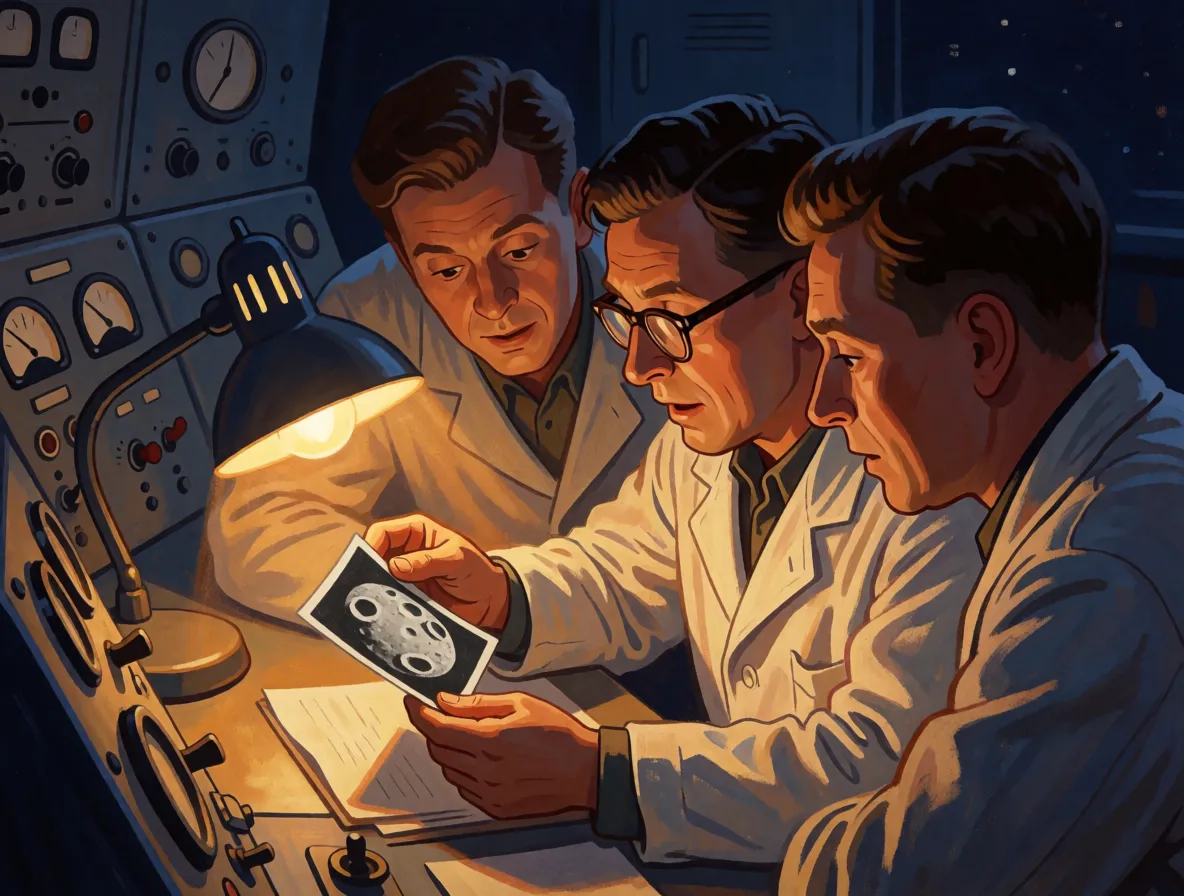
Photographing the far side still required a rocket. On 7 October 1959 a Soviet spacecraft, built by engineers under Sergei Korolev, swung behind the Moon and took twenty-nine photographs in forty minutes. It developed the film on board and radioed the pictures home. Seventeen frames survived, grainy and utterly unfamiliar. Kant’s reasoning had held up, and you can check the part that matters most without leaving the room.
Count your own turns
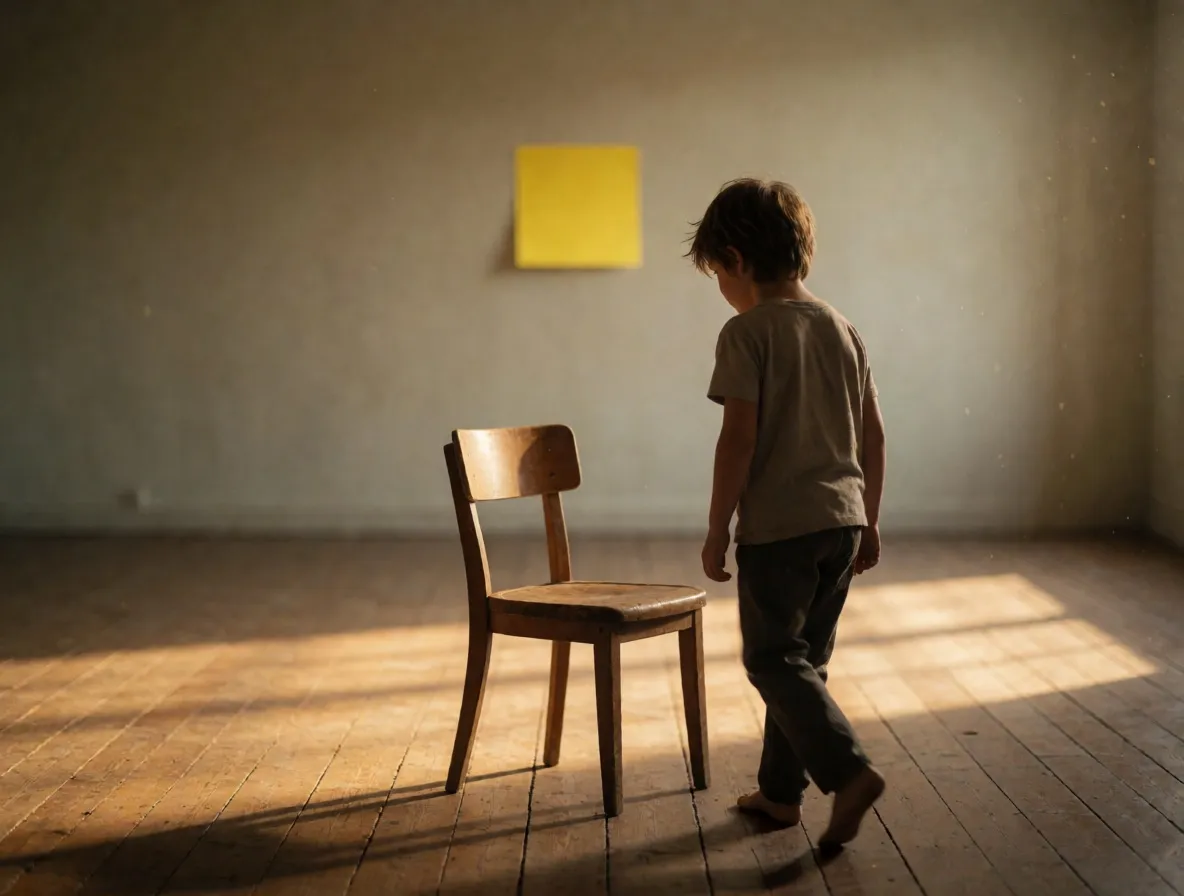
The first lap produces one rotation, and the chair sees a single face of you throughout. That is the Moon. The second produces no rotation at all, and the chair collects your front, your shoulder and your back. Nobody has ever seen a Moon behave like that.
We see rather more than half
Now for the piece hiding in plain sight. The lock is exact across a complete orbit, but not from one night to the next, because the orbit is not a circle.
The Moon’s path is an ellipse, a circle squashed gently out of round. Along the near stretch of that ellipse the Moon hurries; along the far stretch it dawdles. Its rotation, meanwhile, holds one steady rate the whole way round.
So the two drift in and out of step. For part of the month the orbit runs ahead of the rotation, and a sliver beyond one edge swings into view. Two weeks later it lags, and a sliver beyond the opposite edge appears. The Moon seems to rock, like an extremely slow shake of the head, and that rocking is called libration.
Add together every strip the rocking has ever exposed and the total exceeds half a Moon.
Everything on the Moon that can be seen from the ground, added up.
So we do not only ever see one side. We see fifty-nine hundredths of a world that has been turning all along, at precisely the rate that conceals the remainder. Earth ground it to that rate using nothing but the difference between a near pull and a far pull. The Moon has been returning the favor throughout, dragging on our rotation and lengthening our day. Everything up there is turning, and the turning is what does the hiding.