Why does a total eclipse fit so exactly?
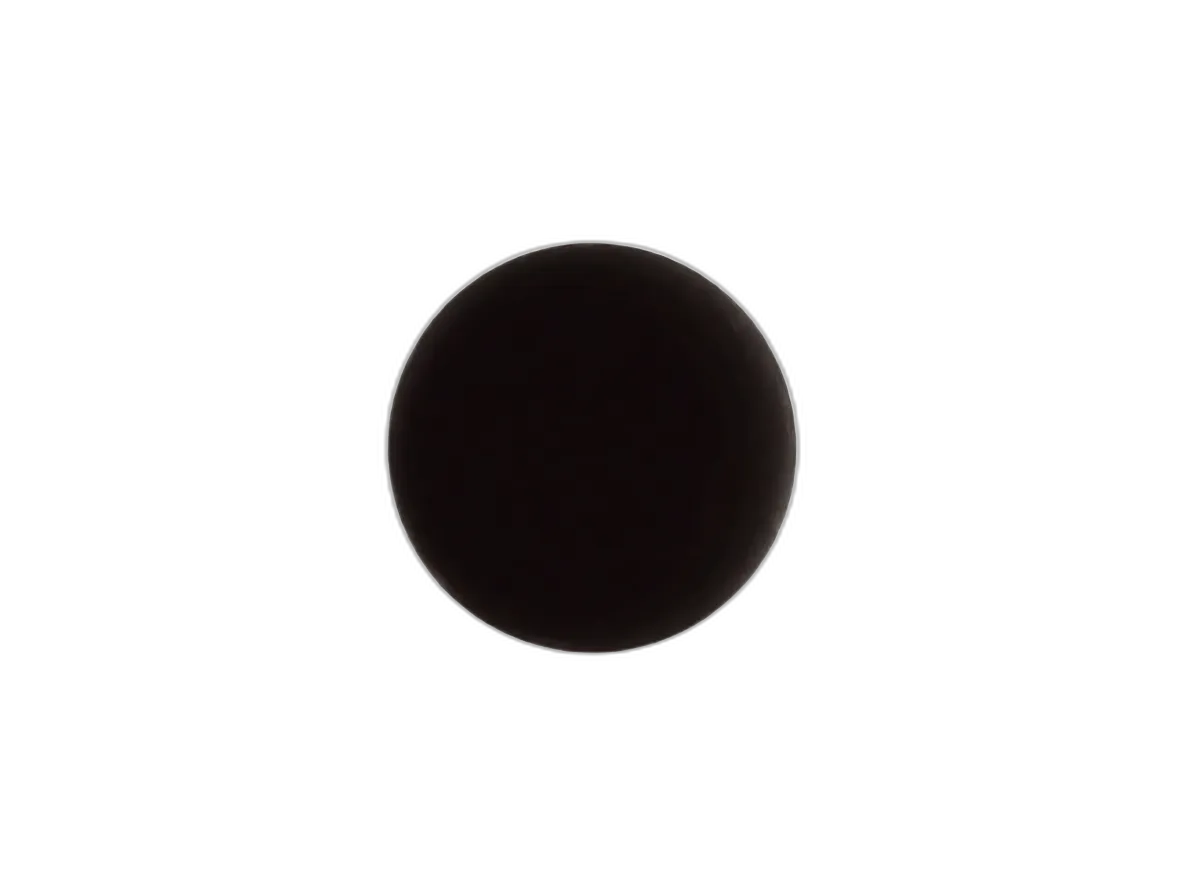
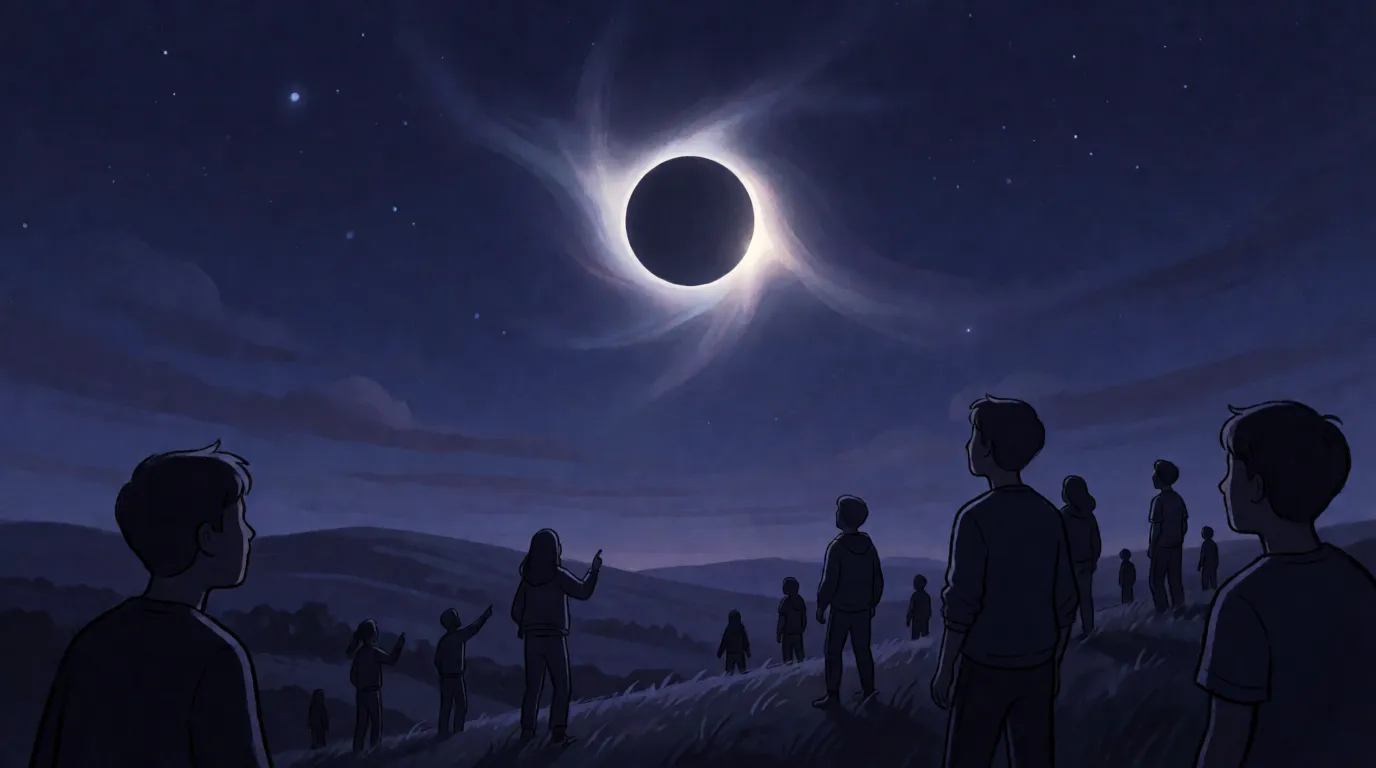
During a total eclipse the Moon covers the Sun so precisely that the only thing left is a faint glowing crown around the edge. A fraction bigger and the crown would be hidden. A fraction smaller and the glare would drown it. Nothing arranged this. Two objects with nothing whatsoever to do with each other happen to look identical in size, and they will not for much longer.
The Sun is about four hundred times wider than the Moon and about four hundred times further away. Those two four hundreds are unrelated, and they cancel out.
Your eye measures angles, not sizes
Nothing in the sky tells you how big anything is. What your eye records is how much of your view something occupies, which is its angular size.
A small object nearby and an enormous object far away can produce exactly the identical angle. Hold a coin close to your face and it obliterates a house.
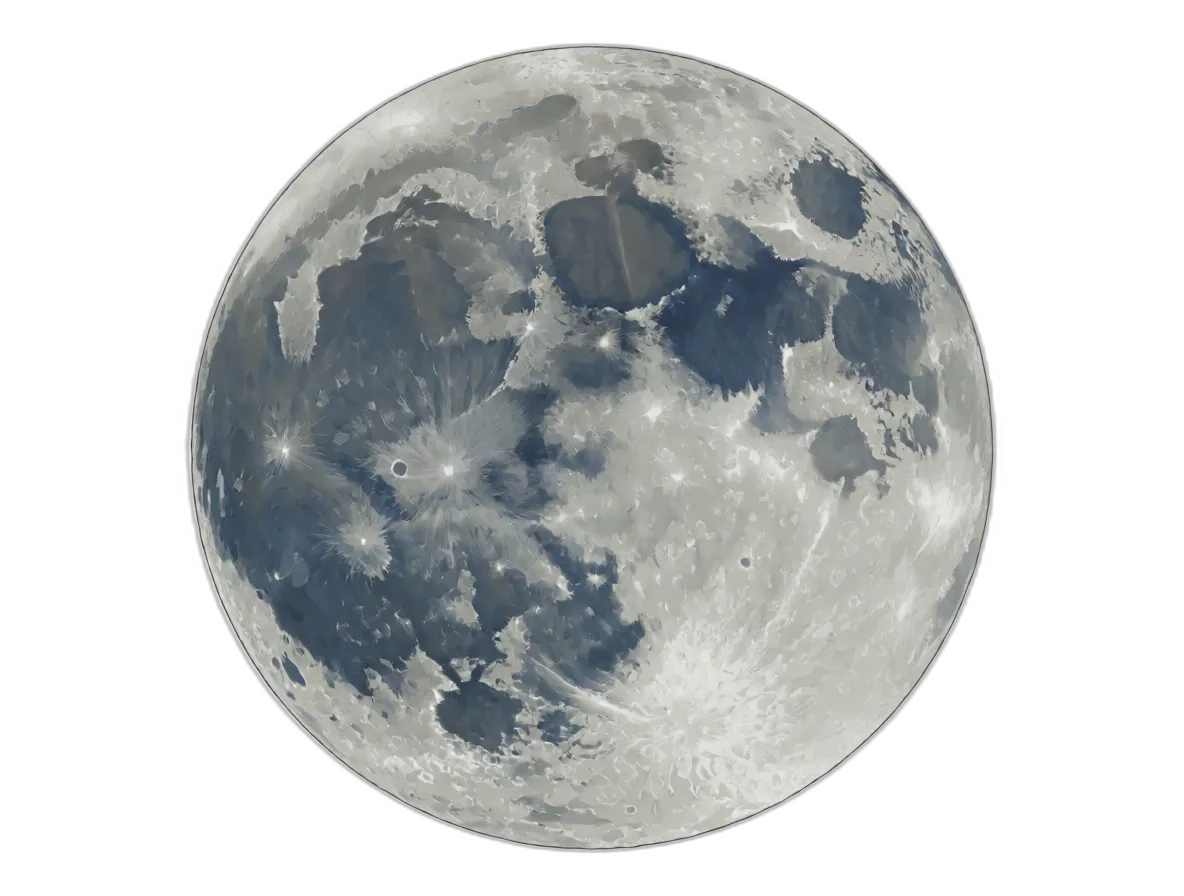
The Sun is 1,392,000 km(865,000 mi) across. The Moon is a mere 3,474 km(2,159 mi), so the Sun is genuinely enormous in comparison.
How many times wider the Sun is than the Moon.
Now the distances. The Moon sits about 384,000 kilometers away and the Sun about 150 million, which makes the Sun roughly 390 times further off.
Four hundred times bigger, and about four hundred times further. The two ratios almost cancel, so both discs arrive at your eye at a hair over half a degree, and one can hide the other.
Nothing connects those two numbers
It is worth being clear about how little sense this makes. The Moon’s size was settled by an enormous collision early in the Solar System. Its distance is set by how that debris settled into an orbit: the looping path one object takes around another.
The size of the Sun was determined by how much gas collapsed to manufacture it. Its distance depends entirely on where our planet happened to condense.
Four separate accidents, and no reason whatsoever for the answers to correspond. No other planet in the Solar System receives this arrangement. Some possess moons far too small to cover their Sun, and others possess moons that swamp it entirely.
Nothing arranged for the two to match. Four unrelated numbers happen to divide into one another, and we happen to be alive while they do.
It is not even a perfect fit
Both orbits are slightly squashed rather than circular, so both discs change their apparent size through the year, by a few percent each.
When the Moon is at its furthest it is too small to cover the Sun completely, and a bright ring is left all the way around. That is an annular eclipse, and it is a different and much less dramatic sight.
Totality only happens when the Moon is near enough. The darkest part of a shadow is called the umbra, and the strip of ground where the umbra actually lands is rarely more than about a hundred kilometers wide.
Everywhere outside that strip sees only a partial eclipse, standing in the penumbra, the softer part of the shadow where the Sun is merely bitten into rather than covered.
Why not every month
The fit is running out
Now the part that makes the coincidence feel precarious. The Moon is moving away from us, and we know how fast because we measure it directly.
Astronauts left mirrored panels on the surface, starting with the crew of Apollo 11 in 1969, when your grandparents were children. Each panel is a retroreflector: a set of corners that sends light straight back where it came from, whatever angle it arrives at.
Fire a laser at one from Earth, time the round trip, and you obtain the distance to within a few centimeters. Repeat the measurement for fifty years and the conclusion is unambiguous: the Moon retreats about 3.8 cm(1½ in) annually.
So the perfect fit is temporary. Run the clock forward and in roughly six hundred million years the Moon will be too far away to cover the Sun at all, and total eclipses will end permanently.
Run it backward and eclipses were once easy. Any creature alive a hundred million years ago would have seen the Moon comfortably swallow the Sun with room to spare.
Two eclipses that changed things
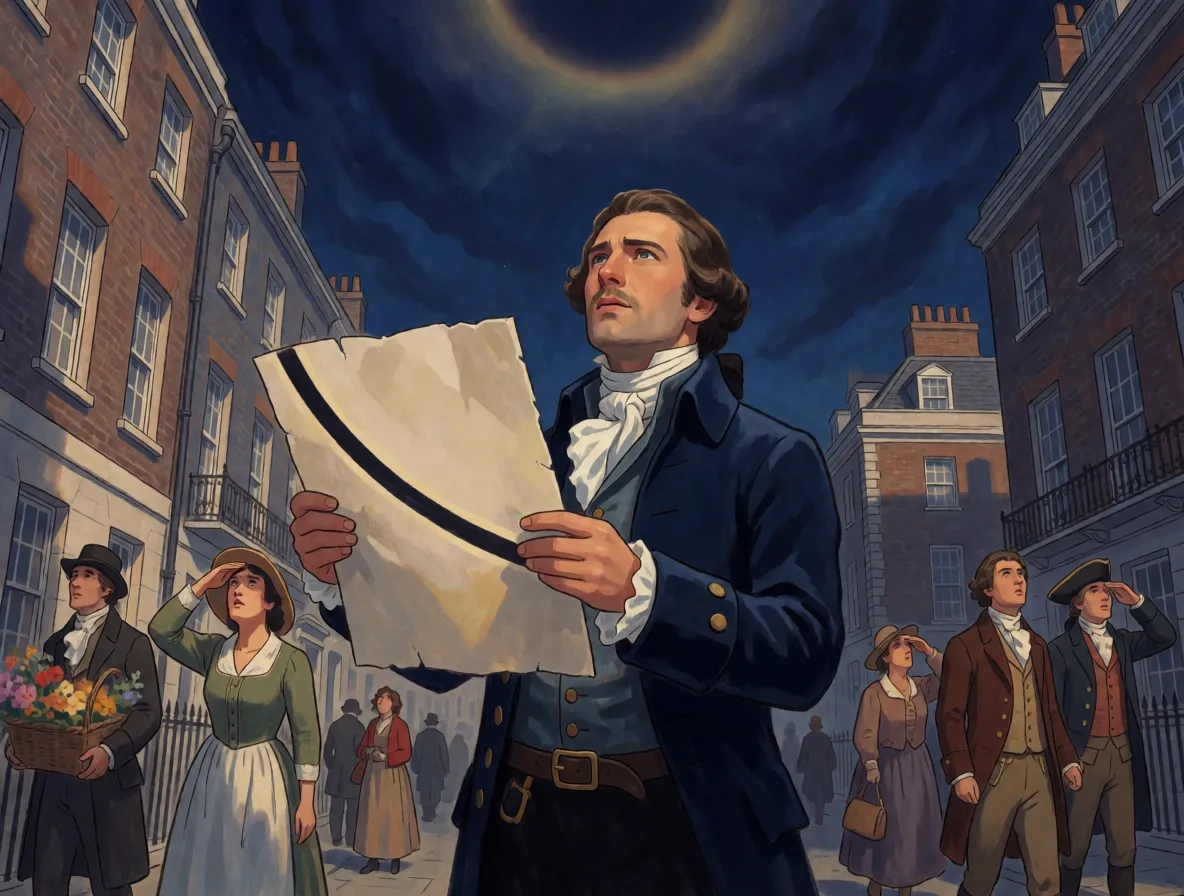
Edmond Halley did something remarkable in 1715. He calculated exactly where the shadow would cross England, printed a map of the path, and distributed it beforehand so people could check him.
The shadow arrived within about twenty miles and four minutes of his prediction. It turned an eclipse from an omen into a timetable, and it started the practice of mapping paths that every eclipse now gets.
Two centuries later an eclipse settled an argument about gravity. In 1919 Arthur Eddington photographed stars near the covered Sun, because only during totality can you see stars whose light passes close to it.
Their positions were shifted slightly, exactly as a new theory of gravity had predicted and as the old one had not. That 1919 measurement made Albert Einstein famous within a week.
Build the coincidence on a table

Your two answers should land close together, and the reason is exactly the reason for the eclipse. Anything covers anything else precisely when the ratio of sizes matches the ratio of distances.
Try it with a larger coin and you will have to walk further back. Try a bigger plate and you come forward. There is nothing special about the numbers four hundred and four hundred, except that our sky happens to have them.
Something worth going to see
Astronomers are unusually insistent about this one. A partial eclipse and a total eclipse are not an identical event at slightly different strengths. They are completely different experiences, and the distinction arrives in the final few seconds.
That is a consequence of the fit. Because the match is so close, the faint outer atmosphere of the Sun is uncovered only when the last sliver goes, and only from inside a shadow path a hundred kilometers wide.
So a total eclipse is not a sign of anything, and it was never arranged. It is four unrelated numbers dividing neatly for a few hundred million years, on a planet that happens to have somebody standing on it who noticed.