Why do we have fingerprints?
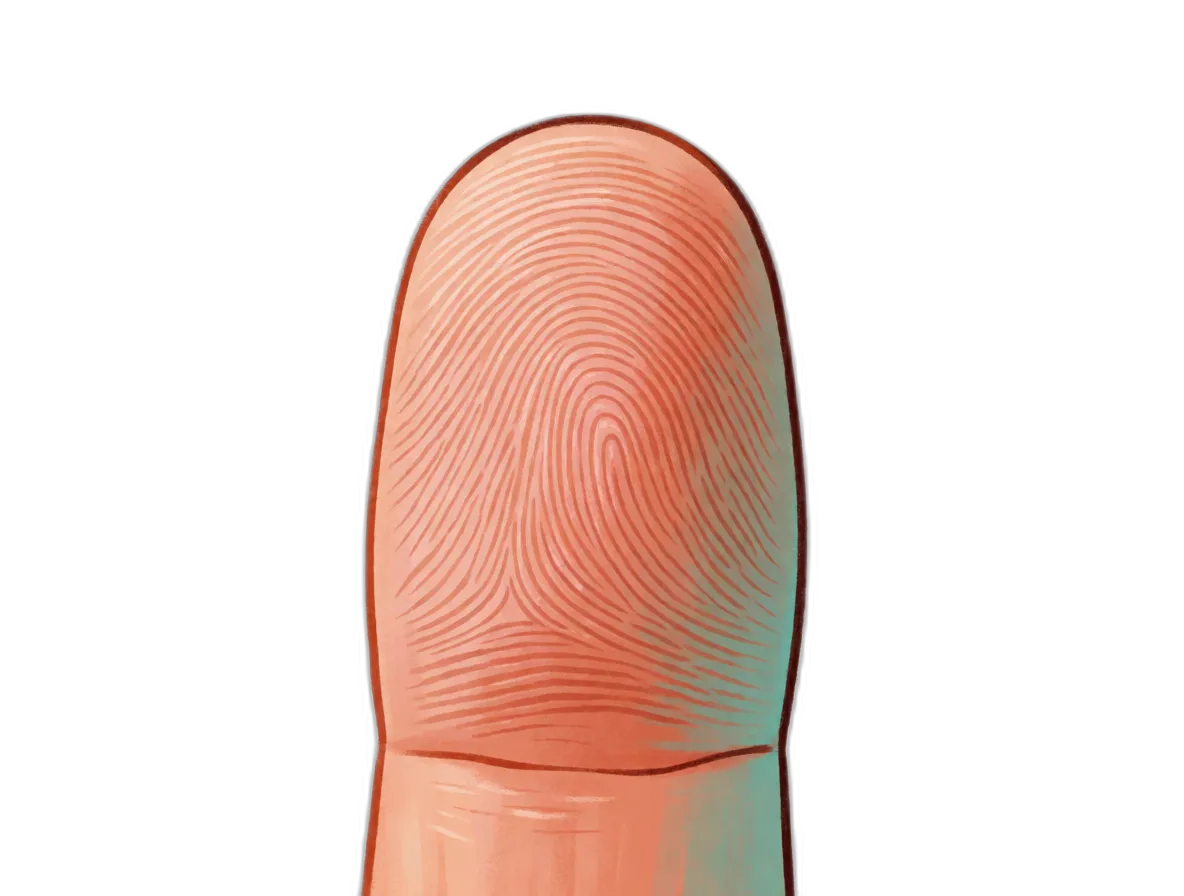
Look at your own fingertip. Those loops and whorls are a permanent piece of engineering, laid down before you were born and unchanged for the rest of your life. Every explanation you have ever heard says they are there for grip, which sounds obviously right and is easy to test. In 2009 somebody tested it properly, and ridged fingers turned out to be worse at holding smooth things than plain ones.
The pattern is almost certainly not about holding on. The evidence points instead at something far stranger: fingerprints appear to be tuning your sense of touch.
Grip is really about contact area
To understand the experiment, you need one idea about rubbery materials, and fingertips are rubbery. When soft materials slide, the resistance depends mainly on how much surface is genuinely touching.
That is different from a brick sliding on a table, where the weight matters and the area does not. Rubber behaves the opposite way: the more area in contact, the more grip, which is why racing tires are smooth rather than treaded.
Friction, the resistance you feel when two surfaces slide, therefore depends on contact area for anything soft. Increase the area and you increase the hold.
Now look at a ridged fingertip against a pane of glass. The raised ridges touch; the valleys between them do not. Some of your fingertip is deliberately held away from the surface.
The measurement nobody had bothered to make
In 2009 Peter Warman and Roland Ennos in Manchester set out to check the grip explanation directly. They dragged fingertips across smooth acrylic under measured loads of up to 5 N(1 lb of push) and recorded the force.
How much less fingertip actually touched a smooth surface, compared with the same finger without ridges.
The ridges removed about a third of the possible contact area, and the friction fell accordingly. Their conclusion, published in 2009, was blunt: fingerprints are unlikely to increase the friction of a fingertip at all.
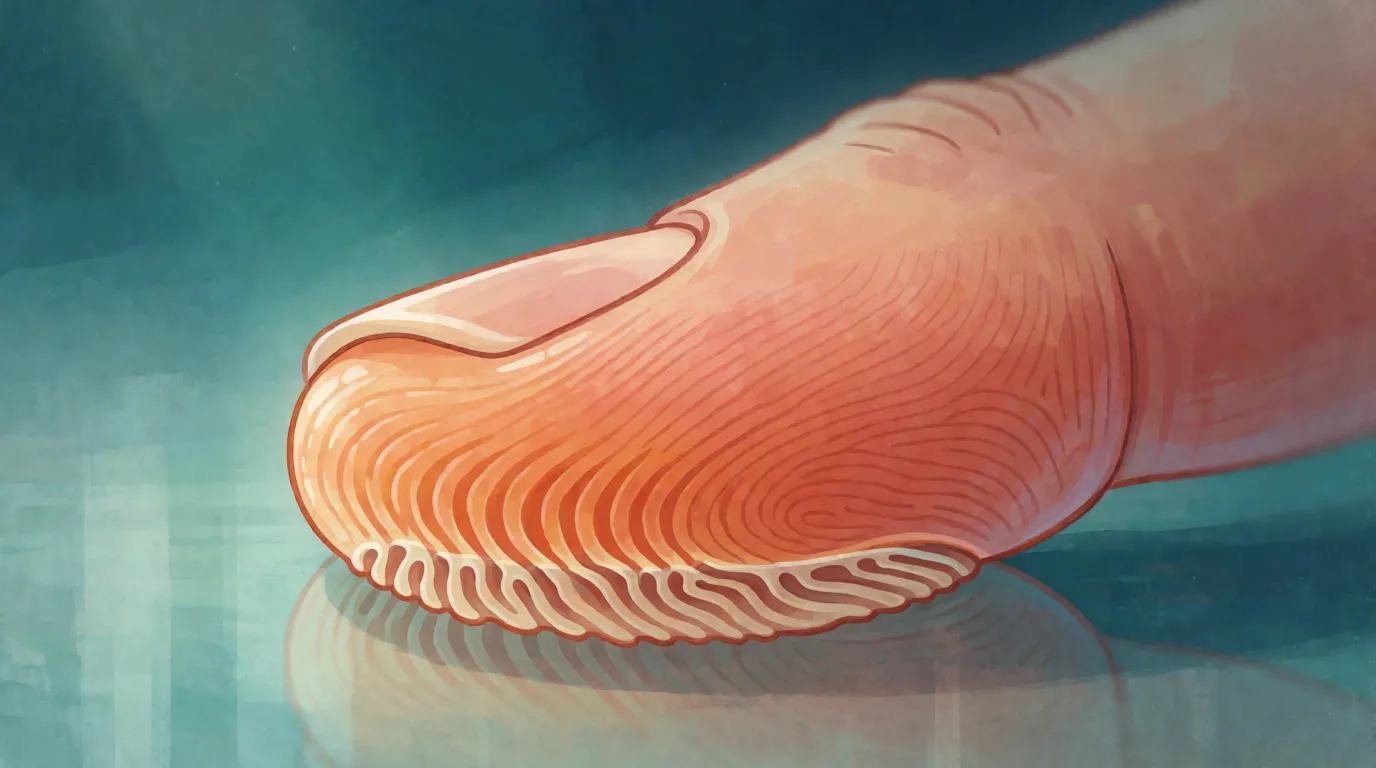
That result is uncomfortable, because it removes the only explanation most people have. If ridges reduce grip on a smooth surface, they need a different reason to exist.
Not for grip, then
The vibration idea
Here is where it becomes interesting. Run your fingertip across a surface and the ridges bump over every tiny irregularity, converting texture into a rapid vibration traveling up into your skin.
Buried a few millimeters down are Pacinian corpuscles: onion-layered sensors that ignore steady pressure — a constant push — and respond only to vibration. How many shakes a second a vibration contains is its frequency, and these sensors are most sensitive around two hundred and fifty.
In 2009 Julien Scheibert and colleagues in France built an artificial fingertip, with ridges and without, and dragged both across textured surfaces while recording what the sensor underneath received.
The ridged version produced a far stronger signal, concentrated at one particular frequency. That frequency depends on your sliding speed and on the spacing of the ridges, which sit about 0.5 mm(1/50 in) apart.
Your fingerprints may be an aerial. The pattern converts texture into exactly the frequency your vibration sensors listen for.
That would explain a great deal. A pattern of evenly spaced ridges is exactly what you would design to turn a messy surface into a clean signal, and fine texture is something human fingers are extraordinarily good at.
It is not settled. Grip on wet surfaces, resistance to blistering when skin stretches, and the vibration idea are all still argued about, and the honest answer is that fingerprints probably do several jobs at once.
Uniquely yours, and always were
Whatever they are for, one thing about them was established long ago. Francis Galton published a book in 1892, about five generations before you were born, showing two facts that made fingerprints useful to police.
The first is that the pattern never changes. Galton compared prints taken from the same people decades apart and found them identical, apart from growing larger.

The second is that no two are alike. The ridges form before birth, partly from your inherited instructions and partly from how the skin happens to buckle as the fingertip grows. Biologists call an outcome shaped that way developmental, and it is why even identical twins carry different prints.
That second half is worth noticing. Your fingerprints are not entirely written in your instructions. They are partly an accident of how you grew, which is why nobody else has them, including somebody with your exact instructions.
Feel a texture two ways
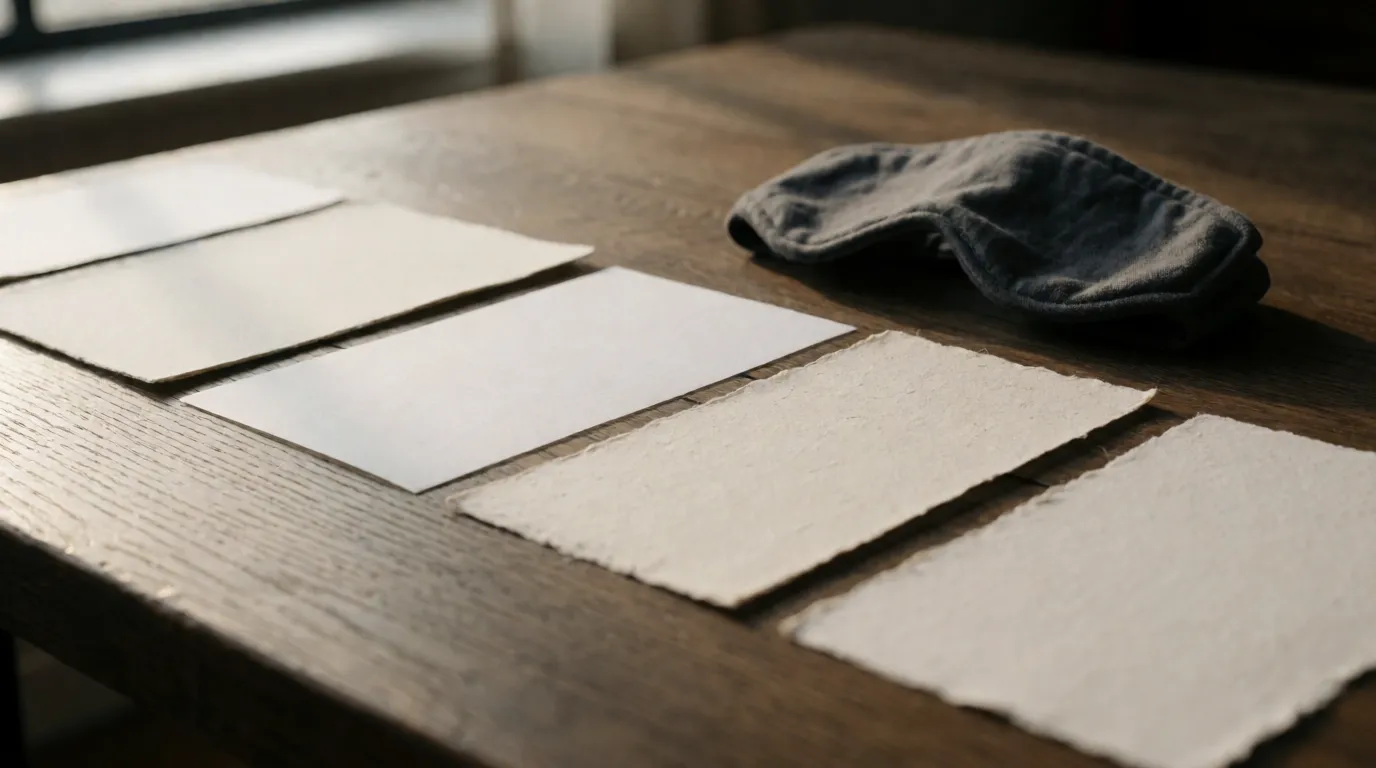
Almost nobody can rank the surfaces by pressing. Almost everybody can rank them by stroking, and usually gets all five right.
That gap is the finding. Your fine sense of texture barely exists without movement, which is precisely what you would expect if the ridges are there to turn movement into a signal.
An answer that got replaced by a better question
There is something worth taking from this beyond fingers. The grip explanation was not stupid. It was plausible, it was repeated everywhere, and nobody had checked it because it did not seem to need checking.
One straightforward measurement removed it, and left a genuinely more interesting question behind. That is a good trade, and it happens more often than the tidy version of science suggests.
So the pattern on your fingertip is probably not for holding a cup. It is probably an instrument, converting the world into a frequency your body is built to hear.