Why do your fingers wrinkle in the bath?
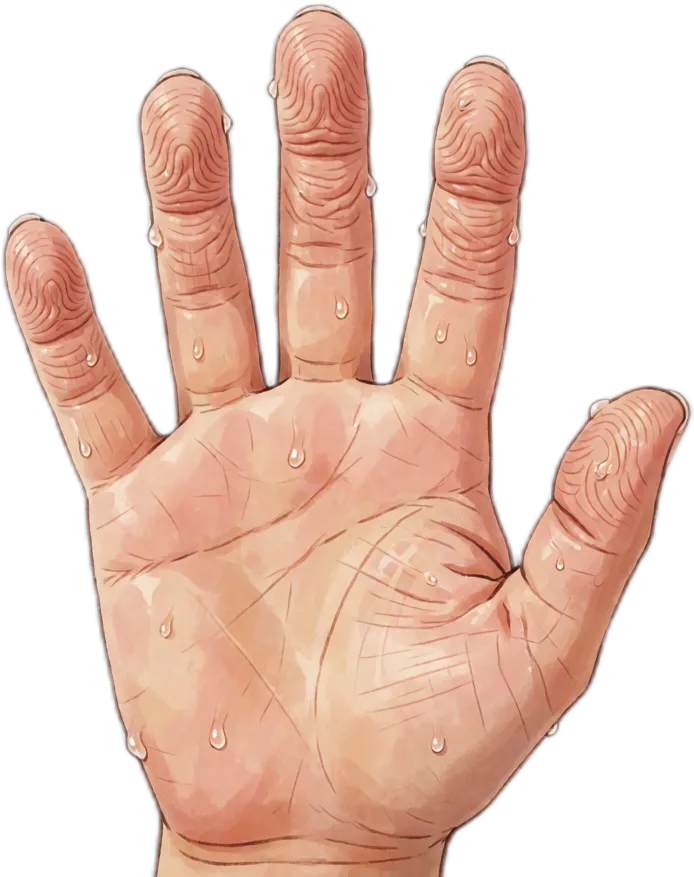
You have been in the bath a while, and your fingertips have gone strange. Every one of them is folded into little ridges, like a plum left too long in the sun. Now turn your hand over. The back of it is perfectly flat, and it has been underwater exactly as long. So what is choosing which parts of you fold up?
Nothing soaked in. Your body folded that skin deliberately, pulling it down from underneath, using wiring you have no say over at all.
Only the parts you grip with
The folding picks its spots, and it always picks the same ones. Fingertips fold. Toes fold. The palms of your hands and the soles of your feet fold. Nothing else on you does, however long the soaking lasts.
Those patches share one property. They are your glabrous skin — the skin with no hair growing out of it. Wherever hair grows, the surface stays flat in water. Wherever you grip, it folds.
Check that yourself the next time you climb out of the bath. Compare the back of your hand with your fingertips. One is smooth and one is corrugated, after identical water and an identical half hour.
The folding also keeps to a timetable. In 1997 Cales and Weber timed volunteers’ fingers across a range of water temperatures. Immersion at 40 °C(104 °F), roughly the warmth of a comfortable bath, worked fastest. The ridges appeared in about three and a half minutes.
So water begins something rather than doing something. Whatever it begins happens invisibly, in the soft interior of your fingertip.
The cushion inside your fingertip deflates
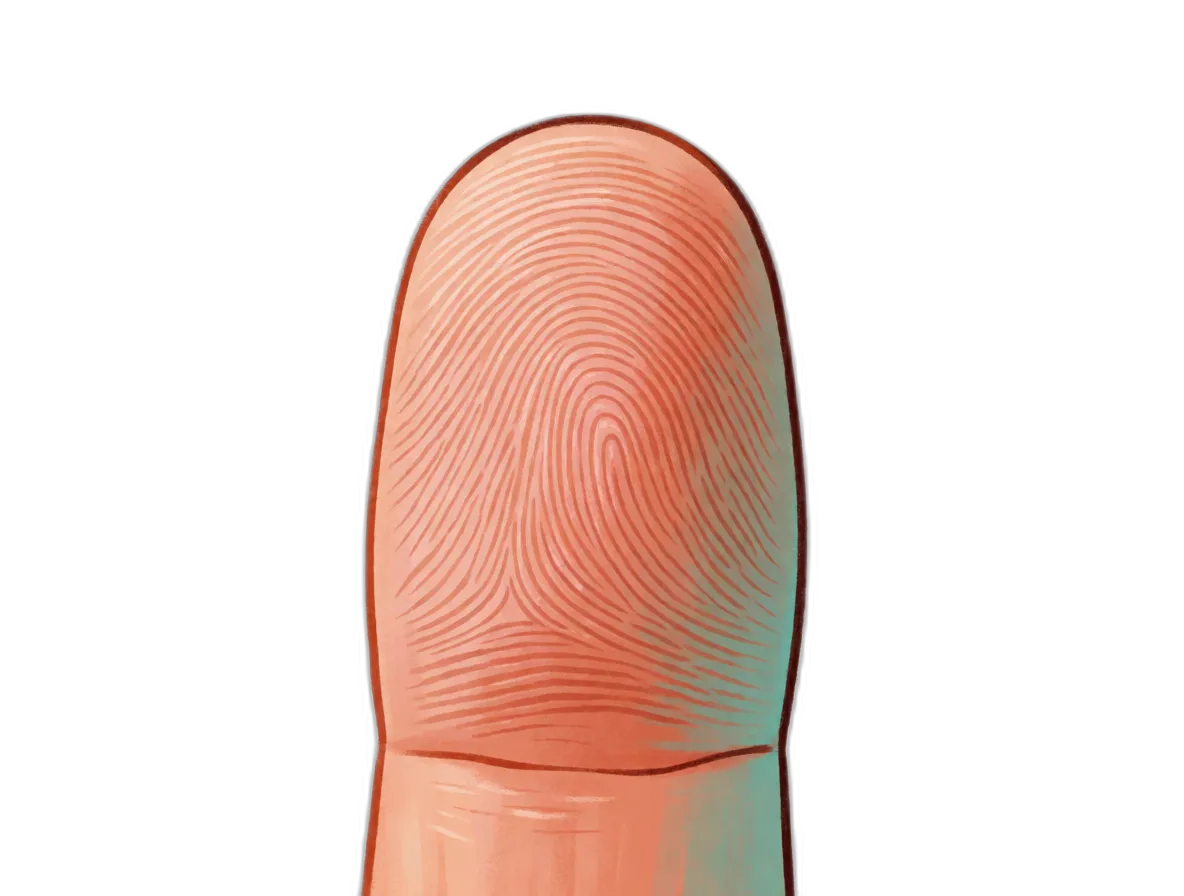
Under the print on your fingertip sits the pulp: a cushion of fat and tiny blood vessels, packed tight and sealed beneath the skin. It is the reason a fingertip is squashy rather than hard.
Blood vessels are not rigid pipes. Arteries are the vessels that carry blood toward your fingertip. The narrowest of them are wrapped in rings of muscle, and tightening those rings makes the vessel narrower. Doctors call the narrowing vasoconstriction. From here on, we can call it the squeeze.
In 2003 Einar Wilder-Smith and a colleague measured the circulation in people’s hands while their fingers wrinkled. Blood slowed all along the arm, and it slowed most dramatically in the fingers. The squeeze was strongest exactly where the folds appeared.
Squeeze those vessels and the cushion holds less blood, so the cushion shrinks. The skin stretched over it does not shrink to match. It is the identical skin, covering an identical area, with less underneath supporting it.
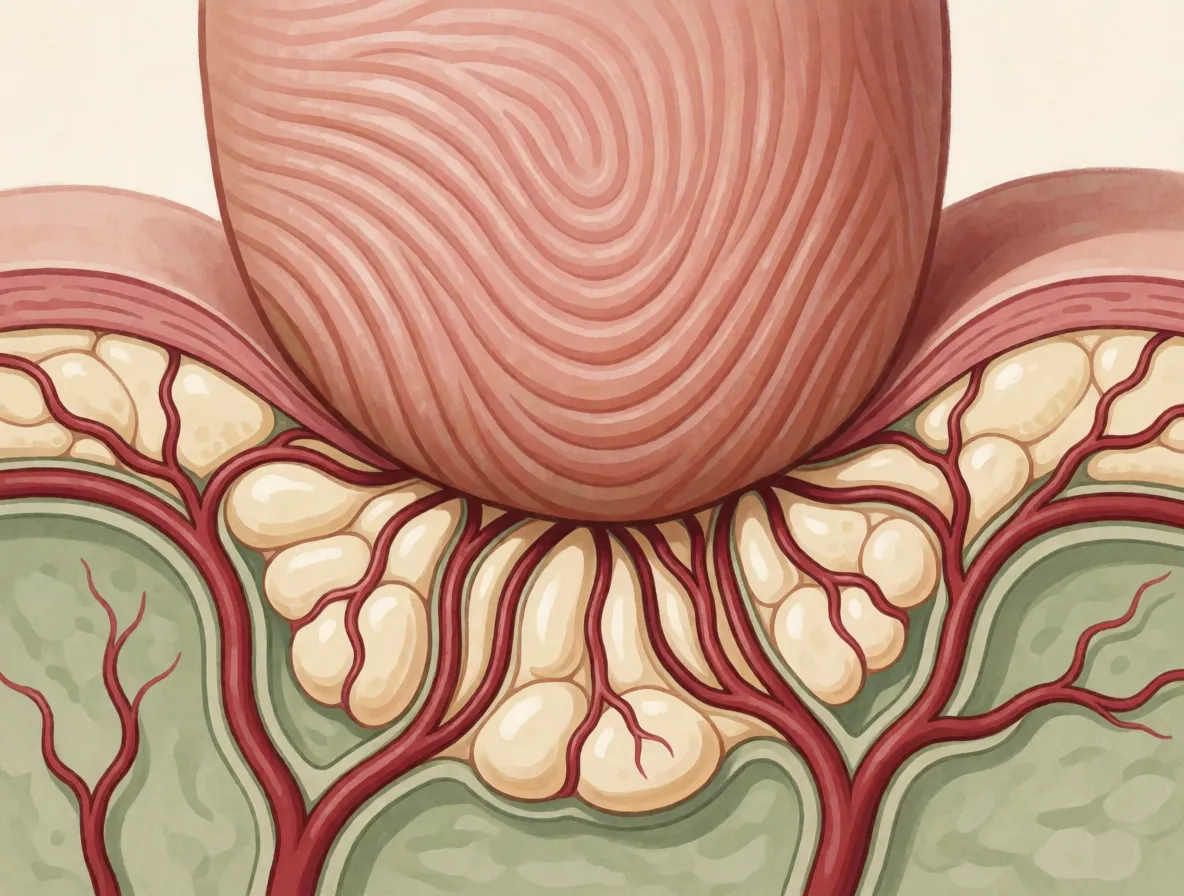
So the surface is tugged inward, hardest above the vessels that narrowed most. Those dips are your wrinkles. The remaining puzzle is who ordered the squeeze, because water by itself cannot tighten a muscle.
Wiring you cannot switch off
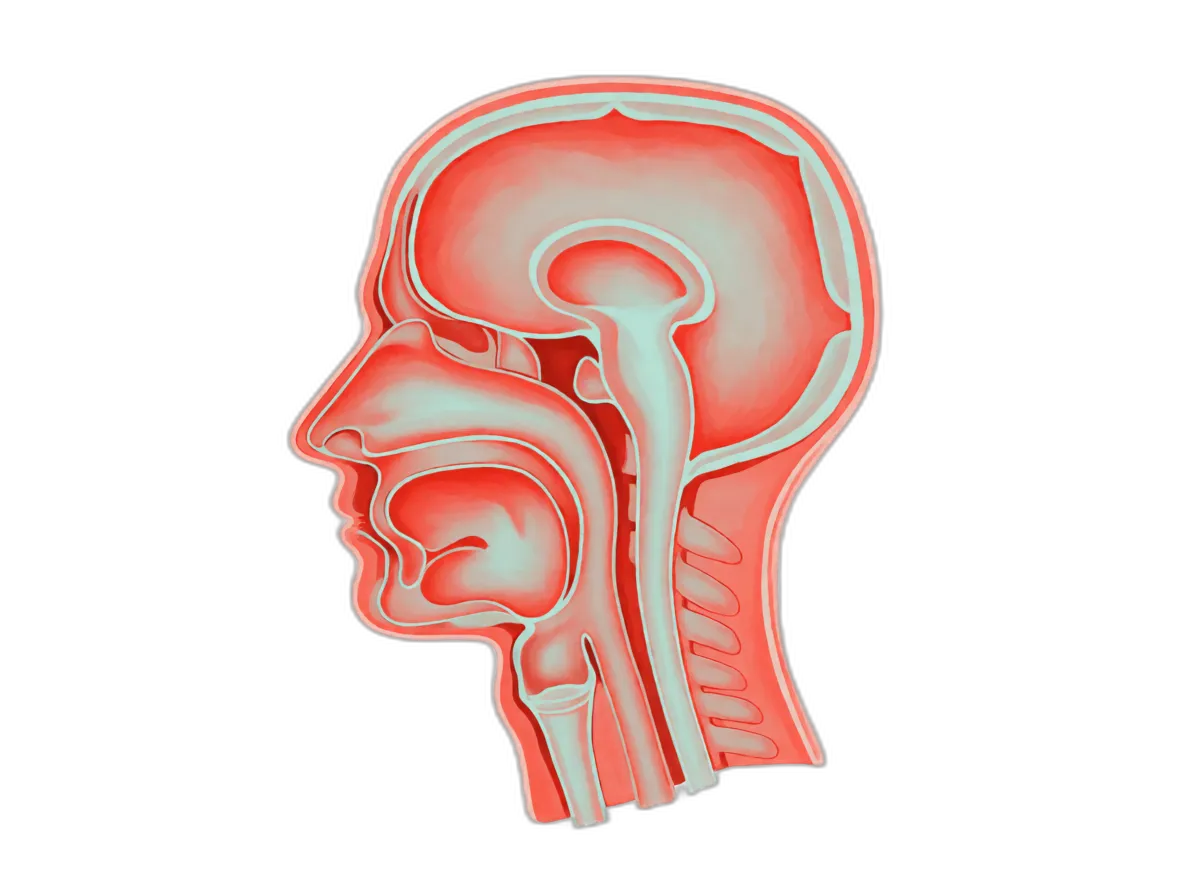
The order arrives along a nerve: a living cable carrying signals between one part of you and another.
These particular cables belong to a system you never command. Your sympathetic nerves operate the machinery you would never remember to run yourself. They widen your pupils in a dark room, and they tighten the vessels in your skin when you are cold. Wrinkling is on their list, which makes it a reflex: an involuntary response, produced without waiting for permission. You cannot choose to wrinkle, and you cannot choose not to.
Water’s only contribution is starting the message. It seeps in through your sweat pores, which crowd more densely on fingers and palms than anywhere else. Inside, it disturbs the balance of dissolved minerals in the epidermis, the thin outer layer of skin those pores open onto. The endings buried there begin firing faster.
So the folds are an instruction, delivered along a cable and obeyed by blood vessels. That claim has a sharp edge on it. Cut the cable, and nothing whatever should happen.
The finger that will not wrinkle
In 1936 two London doctors, Thomas Lewis and George Pickering, published a study of the circulation in hands whose nerves had been damaged. Your great-grandparents were children that year.
Several of those patients had an injured median nerve, the cable serving your thumb and the two fingers beside it. Immerse such a hand and most of it wrinkles on schedule. The territory fed by the damaged cable emerges as smooth as if it had never been wet.
Nothing much was built on the observation for thirty-seven years. Doctors already possessed a method for examining an injured hand, called two-point discrimination: press the fingertip with one point or with two, and ask the patient which they detected. It works beautifully, provided the patient can answer.
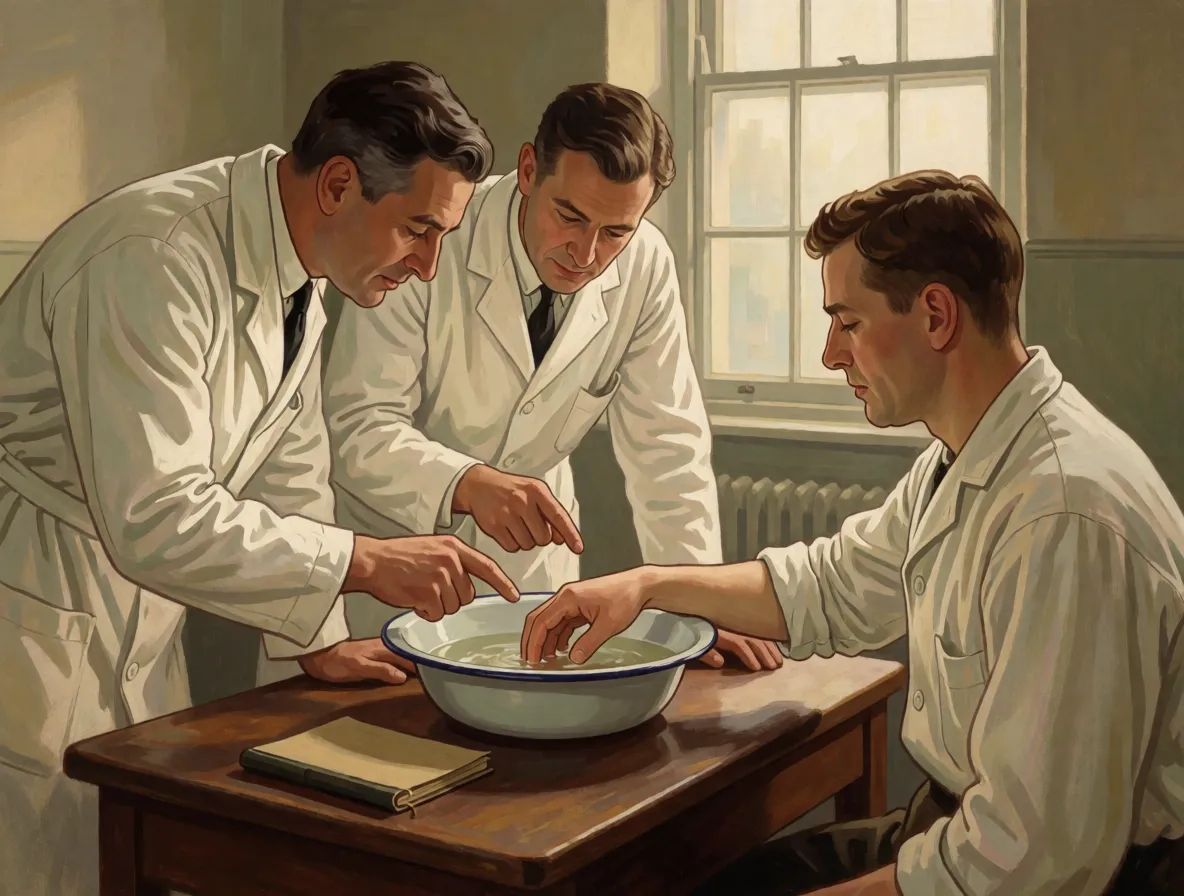
Then in 1973 a surgeon named Seamus O’Riain, writing in the British Medical Journal, converted the old observation into a test. Immerse the hand in warm water. Wait. Look. A finger whose supply is severed stays smooth, and it never has to say a word. As a repaired cable regenerates and grows back, the wrinkling returns, so the same bowl tracks the recovery too.
That silence is why the test survived. In 2006 three doctors recommended it for exactly the patients who cannot answer questions: very young children, and people brought into a hospital unconscious.
So one prediction has been examined on real hands, and no absorption story survives it. Two fingers, one bowl, identical water: the wired finger folds and the unwired finger does not. Which leaves the harder question of what the folding achieves.
Nobody knows what the folds are for
A wrinkled fingertip looks engineered. In 2011 Mark Changizi and three colleagues measured the channels between the ridges. They branch the way river systems branch, draining water away from wherever the finger presses down. The tread on a bicycle tire uses that principle: grooves give water somewhere to escape, so the flat parts can grip the road.
Changizi’s team went further, calling wrinkling an adaptation — something evolution built on purpose — and asking whether the other primates have it too. Primates are the animal family that includes monkeys, apes and you.
In 2013 Kyriacos Kareklas and two colleagues tested that. Twenty participants moved marbles and fishing weights from one container to another. Sometimes the objects were dry. Sometimes they had to be retrieved from under 20 cm(8 in) of water, about the depth of a kitchen sink.
Wrinkled fingers completed the underwater version in twelve percent less time. On dry objects they gained nothing whatever, precisely what you would predict if the folds are meant for water.
Twelve percent off a job lasting a minute — the head start Kareklas measured.
Then in 2014 a larger team repeated the experiment with forty participants and measured nothing. Wrinkled fingers showed no advantage handling wet objects, and no extra sensitivity feeling them. A third study, in 2021, examined grip efficiency rather than speed: wet fingers demanded a firmer grip than dry ones, and wrinkled fingers did not.
Your body spends blood on this, in every bath you take, and after ninety years nobody can say what it buys.
So the scoreboard reads two experiments for, one against, and no agreement between them. The folding is certainly deliberate. Its purpose is still unsettled.
Race two bowls of water
The timetable is the easiest part of this to examine yourself, and it needs two bowls and a clock.
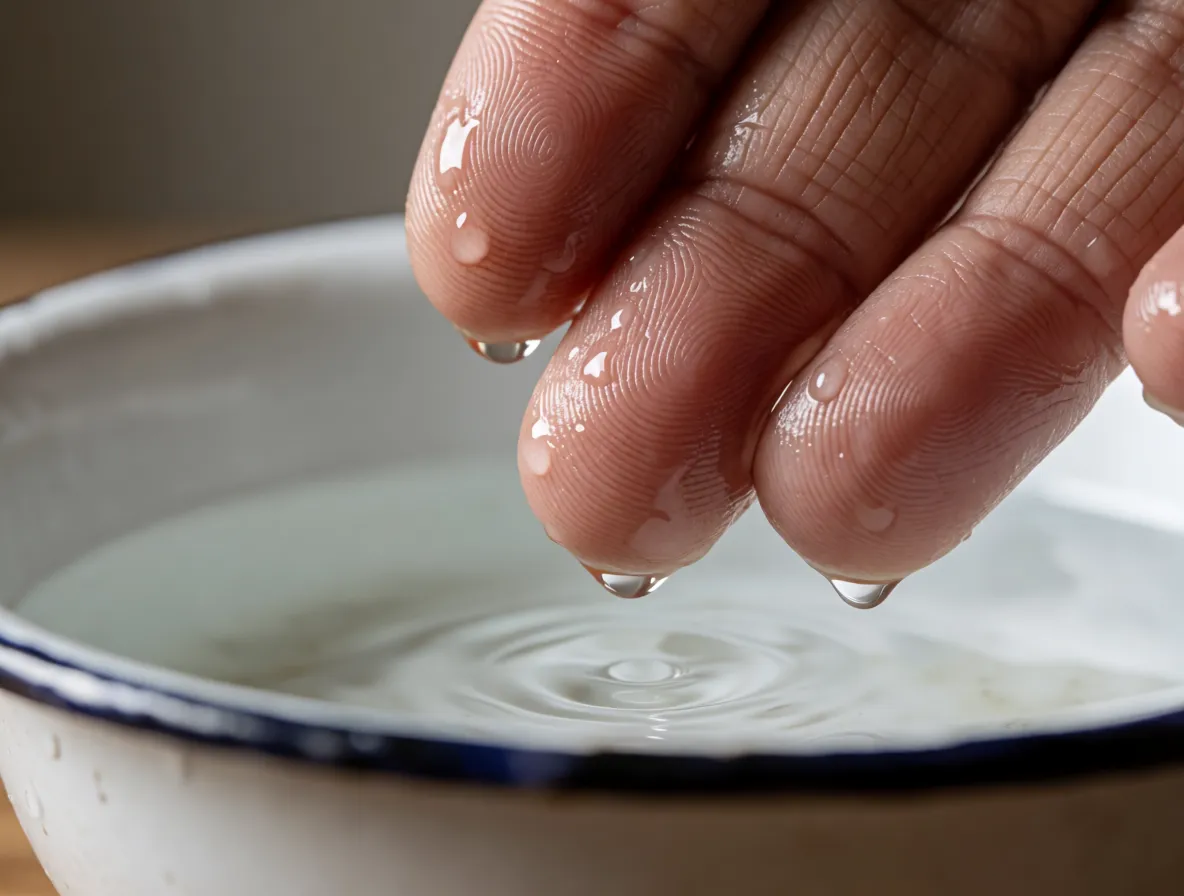
Warm should beat cold by a wide margin, and the exchange should not alter the winner. If it does, you have discovered something about your own two hands rather than about water. One thing is worth doing before you dry them: take a photograph.
The same folds, every time
Have another bath next week and photograph the identical finger again. The two pictures will match.
In 2025 Rachel Laytin and Guy German did exactly that. Comparing fingertips photographed weeks apart, they found the ridges kept their shape and their direction from one immersion to the next.
That consistency is the entire argument in one picture. Absorption would produce a slightly different arrangement every time. Ridges reappear in identical positions because the vessels shrinking beneath them occupy identical positions, and your blood vessels are not going anywhere.
Which returns you to the bath, one hand held up in front of you. Half of it is folded and half is flat, and the boundary between them is nowhere near the line the water reached. It is the line where glabrous skin stops.
A collection of nerves you have never once considered decided that the skin you grip with should be folded whenever it gets wet. It has been making that decision your entire life, in the same places, in every bath you have ever taken. Ninety years after two doctors noticed a finger that would not fold, the honest ending is unchanged: we know it is deliberate, and we do not know its purpose.