Why does the other queue always move faster?
You choose the shortest queue, carefully, having looked at all of them. Within a minute the lane beside you is sailing past and yours has stopped because somebody wants a price check. It happens on highways too, and in airports, and everybody has decided it is simply a joke about bad luck. It is not a joke. The other lane really is faster more often than yours, and there are two separate reasons.
Arithmetic makes you slower than your neighbors most of the time. Then the way you experience waiting exaggerates it further.
Only one lane can win
Start with the plain counting. Suppose three queues are running and all three are equally good, so nothing about any of them is better than the others.
One of them will finish first, and probability — the measure of how likely something is — says your chance of being in it is one in three.
Your chance of standing in the fastest of three equally good queues.
Which means two times out of three, at least one neighboring lane beats you. Add a fourth queue and it gets worse. Nothing has gone wrong, nobody is unlucky, and the feeling of always losing is a correct summary of a game you were never likely to win.
You are not competing with one other queue. You are competing with every other queue at once, and losing to the best of them.
Why the delays are so uneven
The counting explains the frequency, but not how dramatic it feels. That part comes from how unevenly the delays are spread.
Most customers take about the same time, and a shop counter is only about 2 m(6 ft) of the whole aisle. A few take enormously longer: a price check, a card that will not work, a trolley with ninety items. Those rare disasters are what decide a queue.
The spread of a set of numbers around their average is called variance, and queues have a great deal of it. One bad customer can cost more time than twenty ordinary ones.
So a lane is not slow because everybody in it is slow. It is slow because it drew one disaster, and that is enough to lose to every other lane at once.
Being overtaken lasts longer than overtaking
Now the second reason, and it is the more interesting one. Two Canadian researchers, Donald Redelmeier and Robert Tibshirani, studied the same complaint about traffic in 1999, a few years before you were born. Their drivers were traveling at about 100 km/h(62 mph), and their lanes were carrying the same average speed.
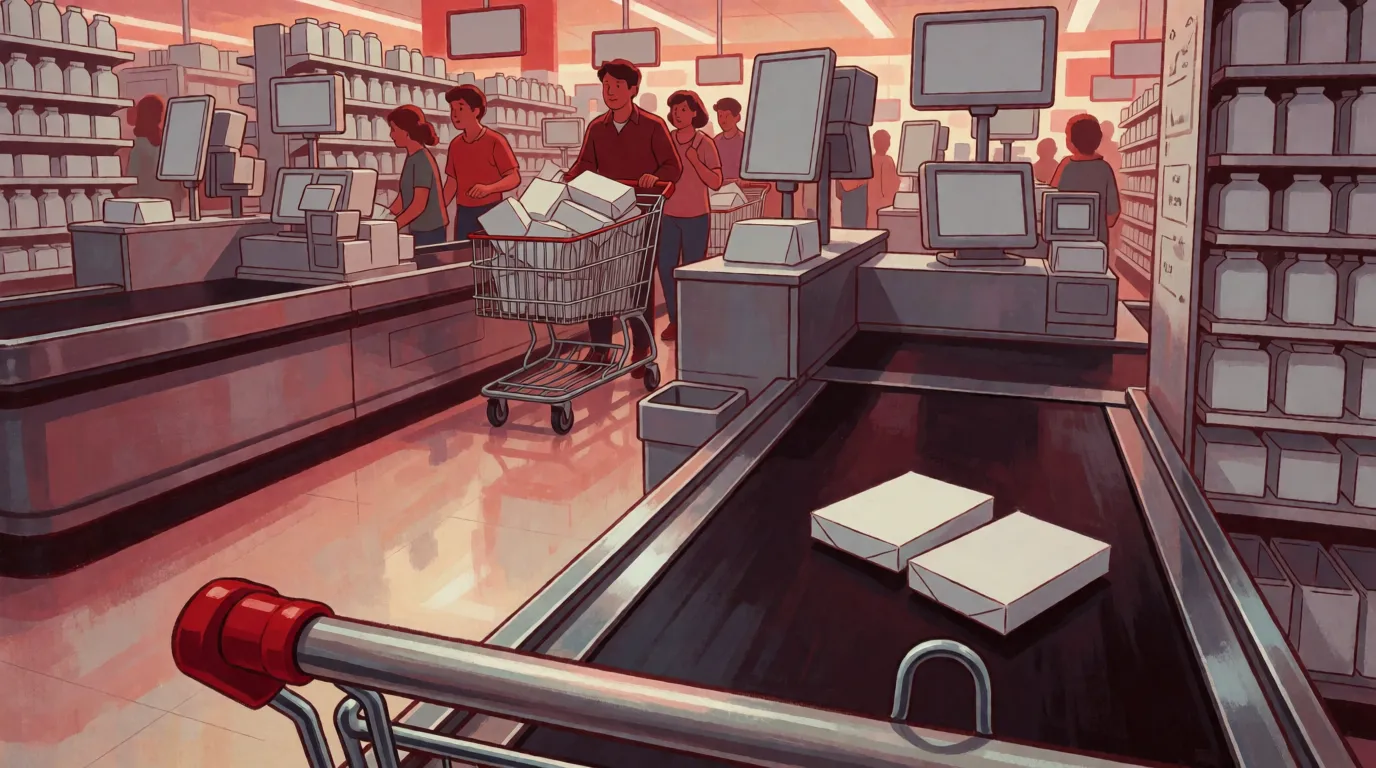
They pointed out something nobody had noticed. Even if two lanes move at the same average speed, drivers spend more of their time being overtaken than overtaking. Passing somebody is over quickly, and being stuck behind them takes a long while by definition.
That asymmetry means your experience is not a fair sample of the day. Every minute you spend losing is a minute you spend watching yourself lose, and every moment you spend winning is over before you look up.
Sampling a situation in a way that over-represents one outcome is called sampling bias, and here it is not a mistake in your head. The unequal exposure is genuinely out there, and your memory reports it accurately.
It is not only in your head
Somebody solved this a century ago
The whole subject has a founder, and he was working on telephones. In 1909 Agner Erlang, a Danish mathematician employed by the Copenhagen telephone company, was asked how many lines a town actually needed.
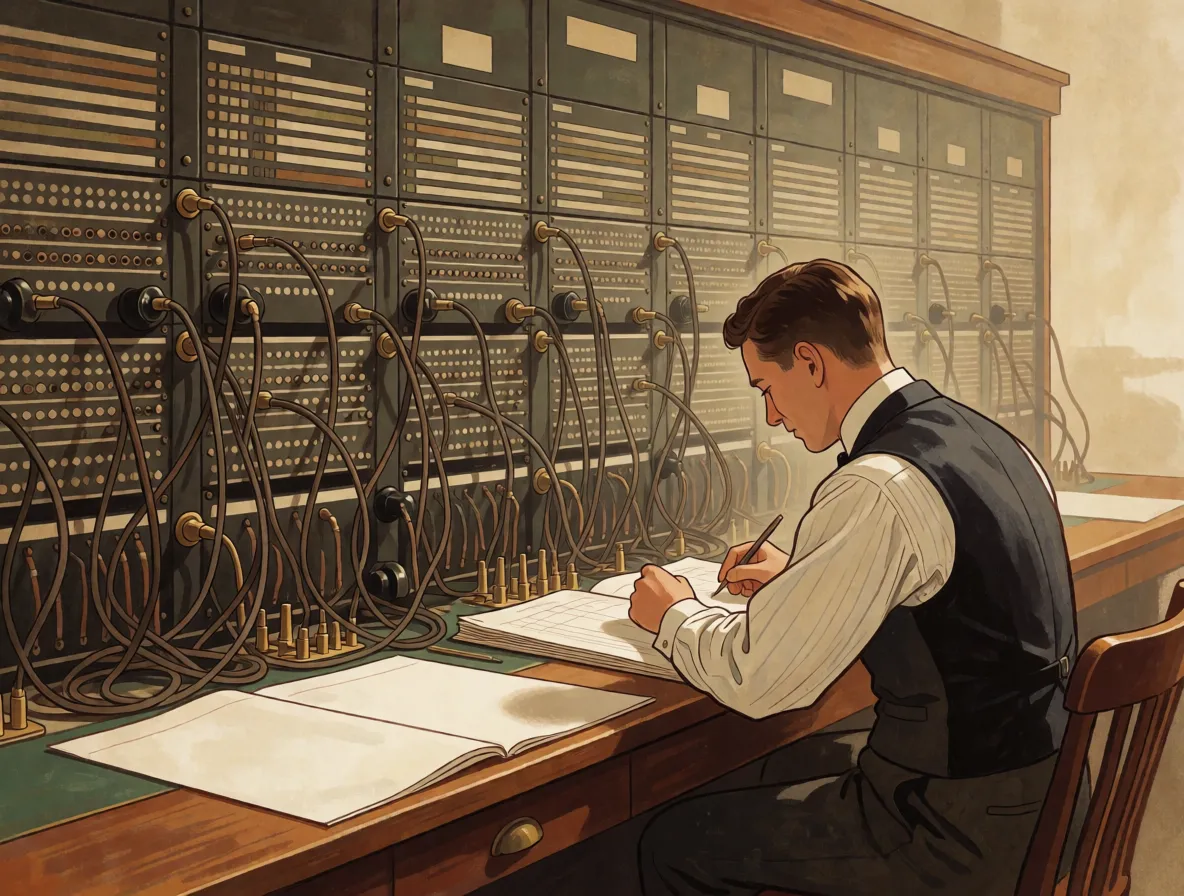
Answering that meant describing how randomly arriving customers pile up in front of a limited number of servers, and the field he invented is called queueing theory. It now runs airports, hospitals and computer networks.
One of its clearest results is the fix for this entire article. Instead of many separate queues, use one queue feeding all the tills, and call people forward as each till frees up.
That arrangement is a serpentine queue, and it is why banks, airports and post offices look the way they do. Nobody can be stuck behind one disaster, because everybody shares every disaster equally.
It is usually a little slower overall, oddly, because a person has to walk from the front of the line to the till. Almost everybody prefers it anyway, because it is fair, and because nobody watches somebody else win.
Count thirty checkouts
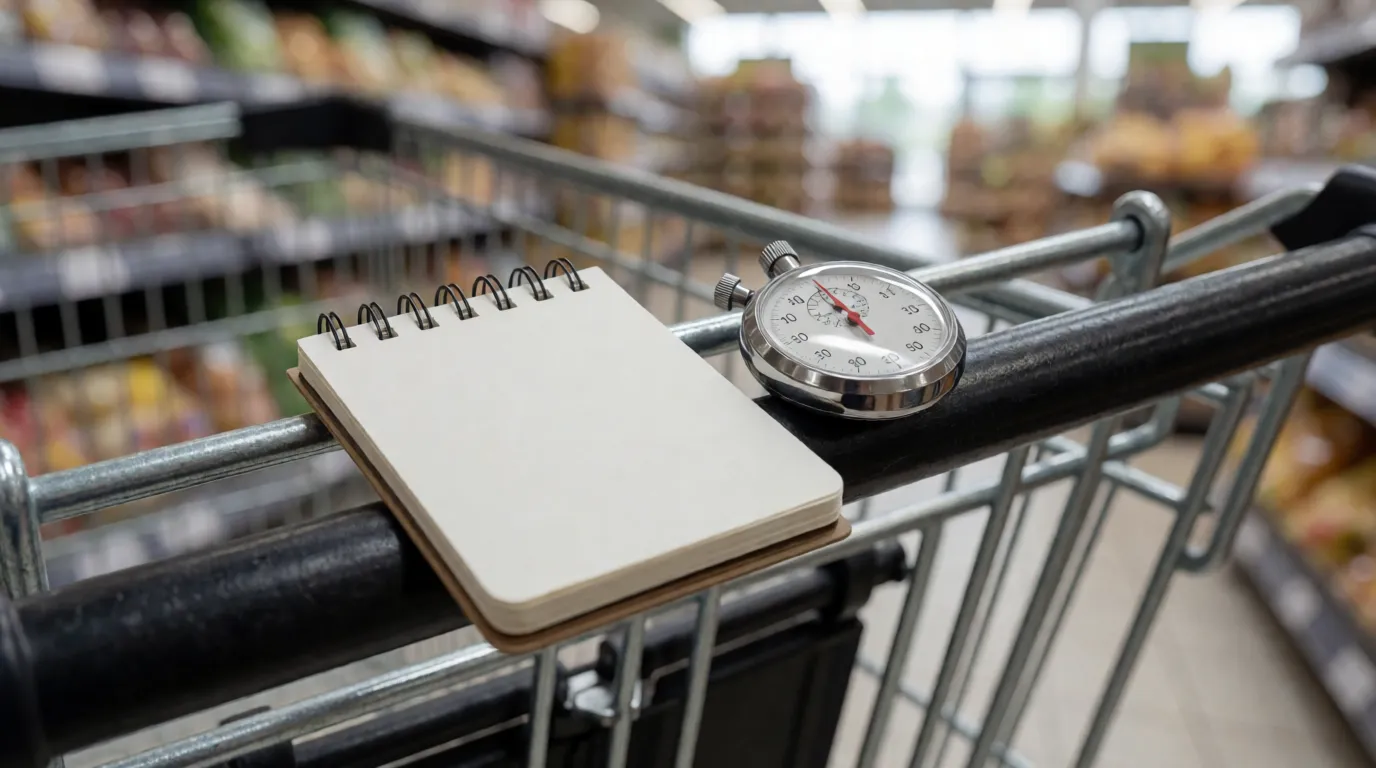
Your win rate will land near what the arithmetic predicts, and probably a little below it, because people are bad at guessing which lane is best.
The two time columns are the part worth collecting. Almost everybody finds that their losing minutes vastly outnumber their winning minutes, even in the visits they eventually won.
An accurate complaint
There is something worth keeping in this beyond shopping. The complaint is correct, the reasoning behind it is usually wrong, and the correct reason is more interesting than either.
You are not unlucky. You are one lane among several, watching the winner, for the whole time it takes them to win. Anybody standing in any of those lanes would report the same thing, and all of them would be right.
Which is why the queue at the airport is a single line. Somebody worked out that the fairest way to make everybody wait is to make everybody wait together.