Why did the Millennium Bridge wobble?
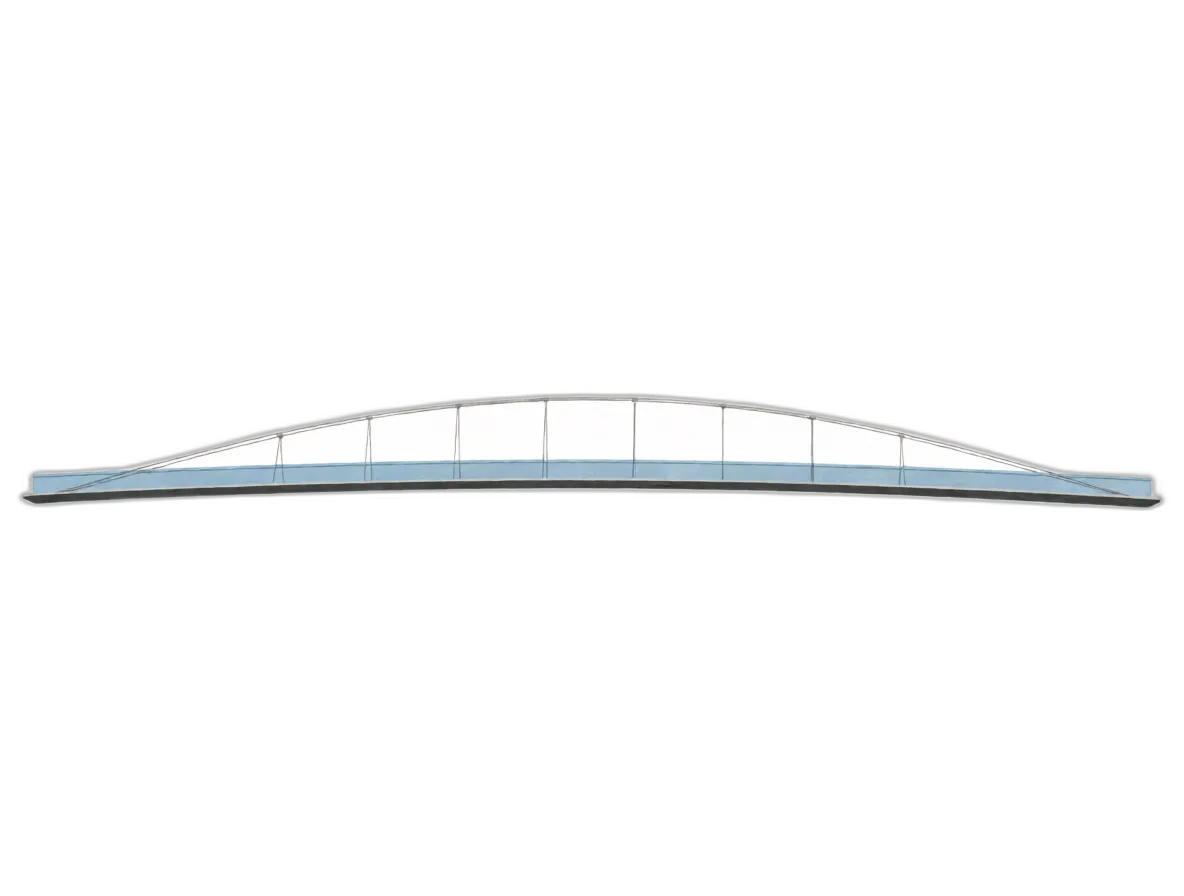
On the tenth of June 2000, a few years before you were born, London opened a new footbridge over the Thames. Around ninety thousand people crossed it that day, up to two thousand at a time, and it swayed sideways hard enough that people grabbed the handrails. It shut two days later and stayed shut for two years. Nothing had cracked. Nothing was too thin. The engineers had left one thing out of the calculation, and the thing was the crowd.
People walking on a swaying surface unconsciously step in time with it, and stepping in time is exactly what makes it sway harder.
Everything has a rhythm it prefers
Hang a weight on a string and it swings at one particular rate, set by the length of the string and nothing else. Push it at that rate and it swings further. Push at any other rate and you fight it.
Every structure has rhythms like that. How many times something repeats in a second is its frequency, and the frequency a structure adopts when you disturb it and let go is its natural frequency. Pushing at exactly that rate is resonance.
Bridges are designed with this in mind, and have been for a very long time. What engineers had always worried about was people bouncing a bridge up and down.
The London bridge was tested for that, and it was fine. Its sideways rhythms were known too, at just under one sway a second. Nobody expected anything to push it sideways at that rate, because walking pushes downward.
Walking does push sideways, just gently
Walk normally and pay attention to your hips. Each step lands slightly to one side of your line of travel, so your weight shifts left, then right, then left.
That gives every walker a small sideways push, delivered at half their stepping rate, because it takes two steps to complete one left-right cycle. Two steps a second means one sideways push a second.
Which lands almost exactly on the bridge’s sideways rhythm. That was unlucky, and on its own it would have been harmless, because two thousand people all pushing at random moments cancel each other out.
Then the bridge changes how people walk
Here is the part nobody had in their calculations. Once a walking surface starts moving sideways underneath you, you adjust automatically to stay balanced.

The easiest adjustment is to widen your stance and time your steps to the sway, putting a foot down as the deck arrives. Nobody decides to do it and almost nobody notices doing it.
Now the pushes are no longer random. A fraction of the crowd is pushing in time, their pushes add up instead of cancelling, and the sway grows.
A bigger sway makes it harder to walk normally, so more people fall into step, which grows the sway further, which recruits more people. That is a feedback loop, and it has no natural limit.
Nobody synchronized on purpose. The bridge asked, quietly, and two thousand people answered.
The old rule was about soldiers
Engineers had known for a very long time that marching in step is dangerous. In 1831 a suspension bridge at Broughton near Manchester collapsed under a column of soldiers marching across it in time.
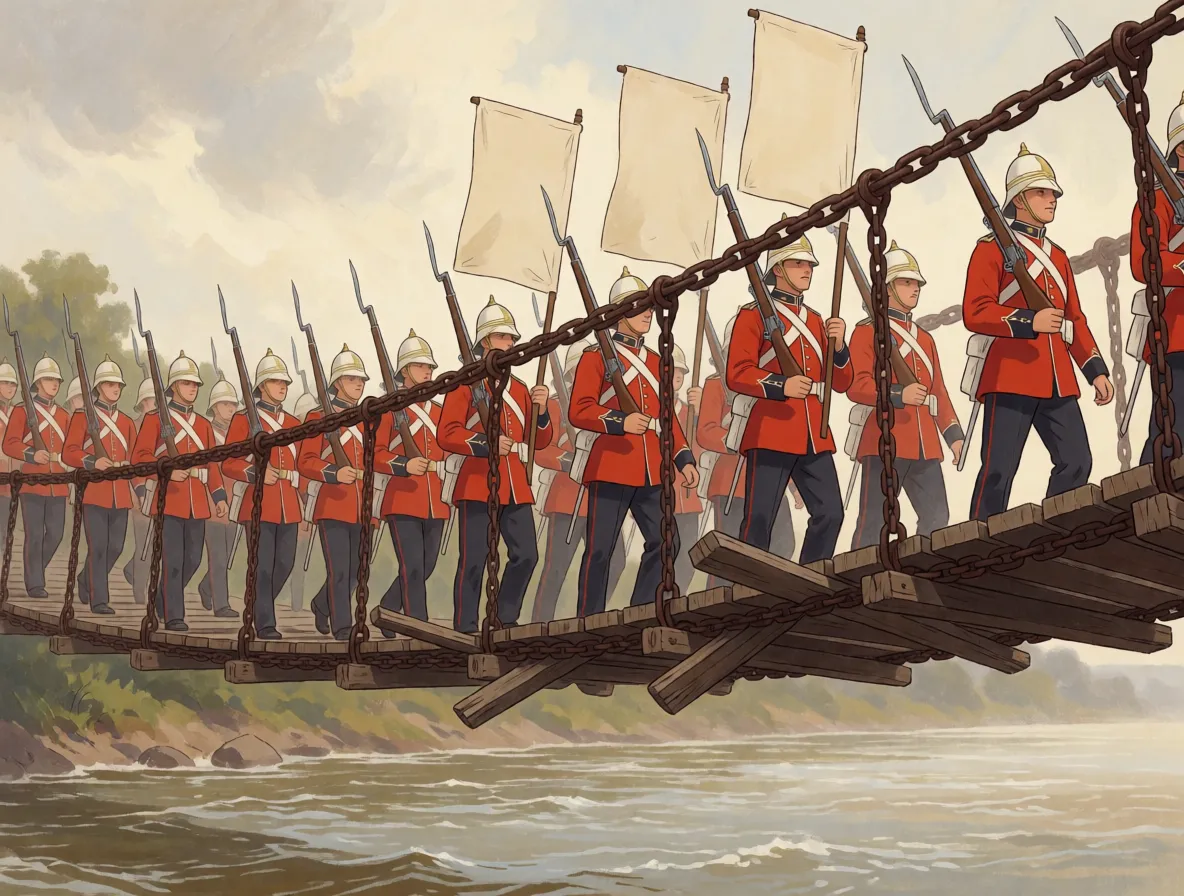
Armies have ordered troops to break step on bridges ever since, and the rule appears in engineering courses everywhere. It is a rule about people deliberately moving together.
What happened in London was the opposite. Nobody was in step when they walked on, and the bridge itself produced the timing. The old rule pointed at the right danger and the wrong cause.
Not a design fault in the usual sense
The bridge itself was designed in 1996 by an architect, Norman Foster, working with an engineering firm, and it is genuinely elegant. It is a very shallow suspension bridge 320 m(1,050 ft) long, with the cables lying almost flat rather than arching overhead.
The deck length shared between everybody on it at the busiest moment.
That crowd density mattered. The effect needs enough people to push together, and a quieter bridge would have shown nothing at all.
Still being argued about
The story usually ends there, and it should not. In 2021 a team including Igor Belykh published work arguing that the crowd does not actually need to synchronize for the sway to take off.
On their account, even walkers who never fall into step still push a little more in the helpful direction than the unhelpful one, simply because of how balance works, and that is enough. The word for a crowd falling into step is synchronization, and their argument is that you do not need it.
The practical fix is the same either way, which is why bridges are still fitted with dampers. The explanation, twenty-five years later, is not finished.
Build a bridge that answers back

The right rhythm produces an enormous swing from an almost invisible push, and every other rhythm produces nothing. That is resonance, and the size of the gap between them is what surprises people.
The London bridge was the same experiment with two thousand fingers, none of which knew they were doing it, and a deck that told them all when to push.
A structure that included the people
There is a lesson in this that engineers took seriously. The bridge was analysed carefully, and the analysis treated the crowd as a load: a weight to be carried.
A crowd is not only a load. It is made of people who respond to what the structure does, and that response feeds back into the structure. Leave the response out and the calculation is describing a different bridge.
Footbridges everywhere are now tested for exactly this, using rules that did not exist before June 2000. The wobble cost two years and a great deal of money, and it bought a correction to a blind spot that had been in the profession for a century.