Why does a whip crack?
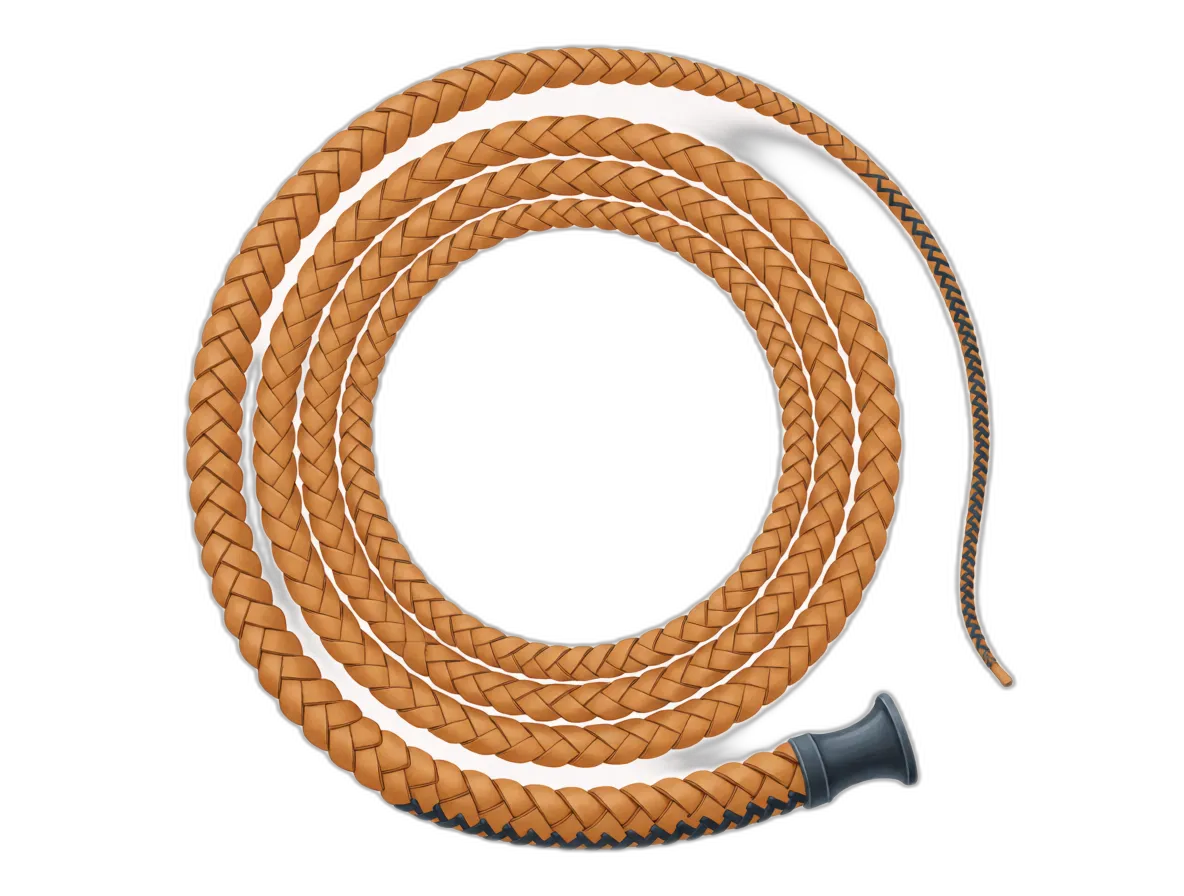
Somebody flicks a whip and the noise is startling — a hard flat bang, more like a firework than anything manufactured from leather. Watch the arm doing it and the arm is barely moving. No two parts of the whip touch each other, nothing burns and nothing breaks. Somewhere between a lazy flick and that bang, something went extremely fast.
A whip is a machine for concentrating movement. The same push ends up in less and less material, until the last few centimeters go supersonic.
The bang is a sheet of squashed air
Sound is a pressure wave: a squeeze traveling through air, made of molecules shoving their neighbors, which shove theirs. That message travels at 343 m/s(770 mph) and never any faster.
Anything moving through air slower than that is polite about it. The air gets a warning, because the squeeze runs ahead of the object and the air flows aside before it arrives.
Now move something faster than the message can travel. The air ahead receives no warning whatsoever, so it cannot move aside. It gets compressed violently into a thin sheet of squashed air that travels along with the object.
That sheet is a shock wave, and when one sweeps past your ear you hear it as a single sharp bang. A whip crack is a small one. A jet makes a large one and we call it a sonic boom.
Thick at one end, feather-light at the other
Pick up a bullwhip and the first thing you notice is that it is thick at one end and thin at the other. That gradual narrowing is a taper. A typical whip is around 2 m(6½ ft) long, and its last section is a light cord thinner than a shoelace.
Flick the handle and you do not move the entire whip. You send a loop down it: a tight bend that travels along the leather, with the section ahead of it still motionless and the section behind it already finished.
Engineers call a movement that travels through a material like that a traveling wave, and a whip is an unusually dramatic example.
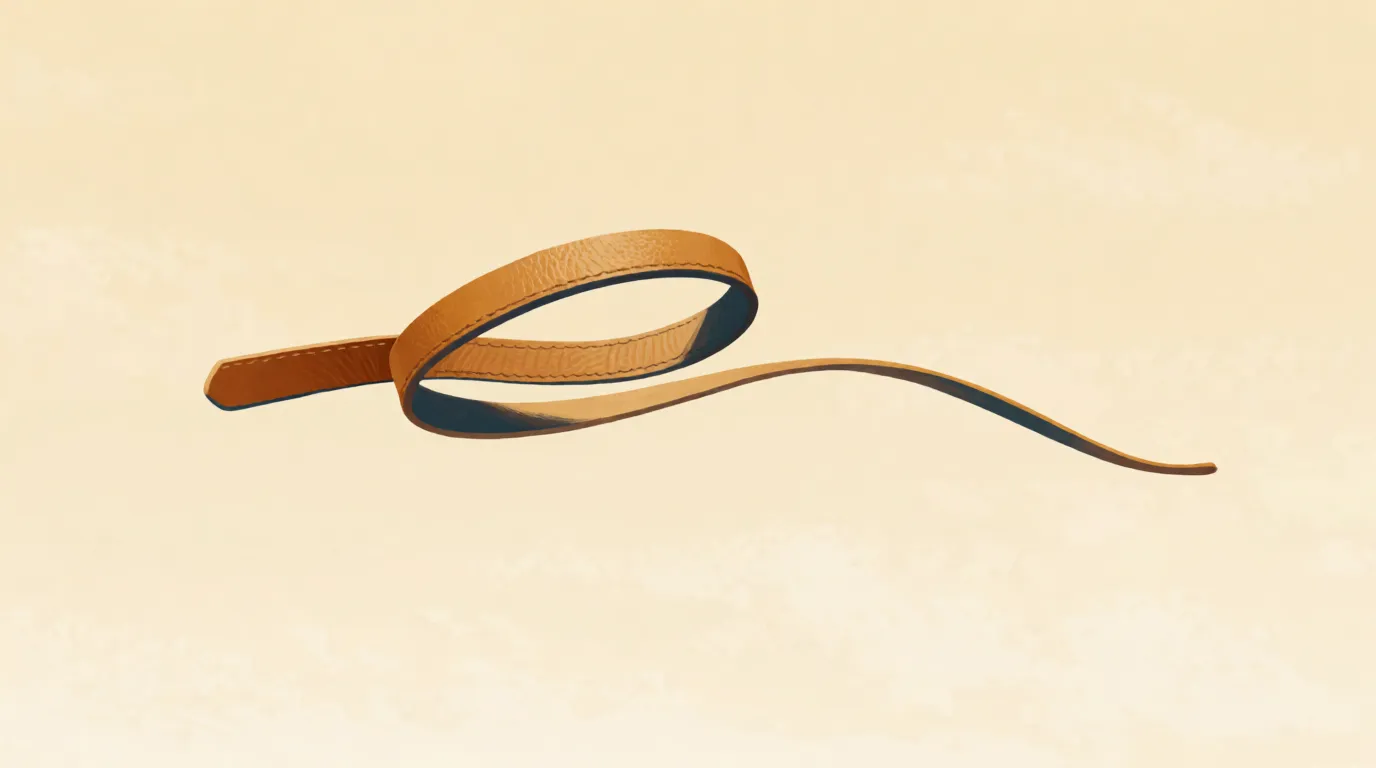
That loop carries a fixed amount of momentum: the quantity you get by multiplying how much material is moving by how fast it is moving. Momentum does not simply evaporate, so if the moving mass shrinks, the speed has to climb.
As the loop travels into thinner sections there is less and less leather to move. Same momentum, less mass, higher speed. By the time it reaches the last thin cord, the speed has multiplied enormously.
Twice the speed of sound, at the very end
Careful measurement has pinned the numbers down, and one of them is unexpected. The crack does not happen the instant anything reaches the speed of sound.
The speed the whip tip reaches at the moment of the crack, in meters each second.
Alain Goriely and Tyler McMillen published the mathematics of a cracking whip in 2002. They calculated that the tip is traveling at roughly twice the speed of sound by the time the bang departs. The loop reaches the end, opens out, and that is the moment the shock escapes.
They also found something counterintuitive about the loop. It does not need to shrink in order to speed up: a loop of constant size traveling along a tapering rope accelerates anyway, simply because there is less material left in front of it.
Nothing in the whip goes faster than your hand did. A small part of it does, and that is a completely different sentence.
Almost nothing about the whip is doing the work. The last few centimeters weigh close to nothing and end up carrying the movement of an entire arm.
Nothing hits anything
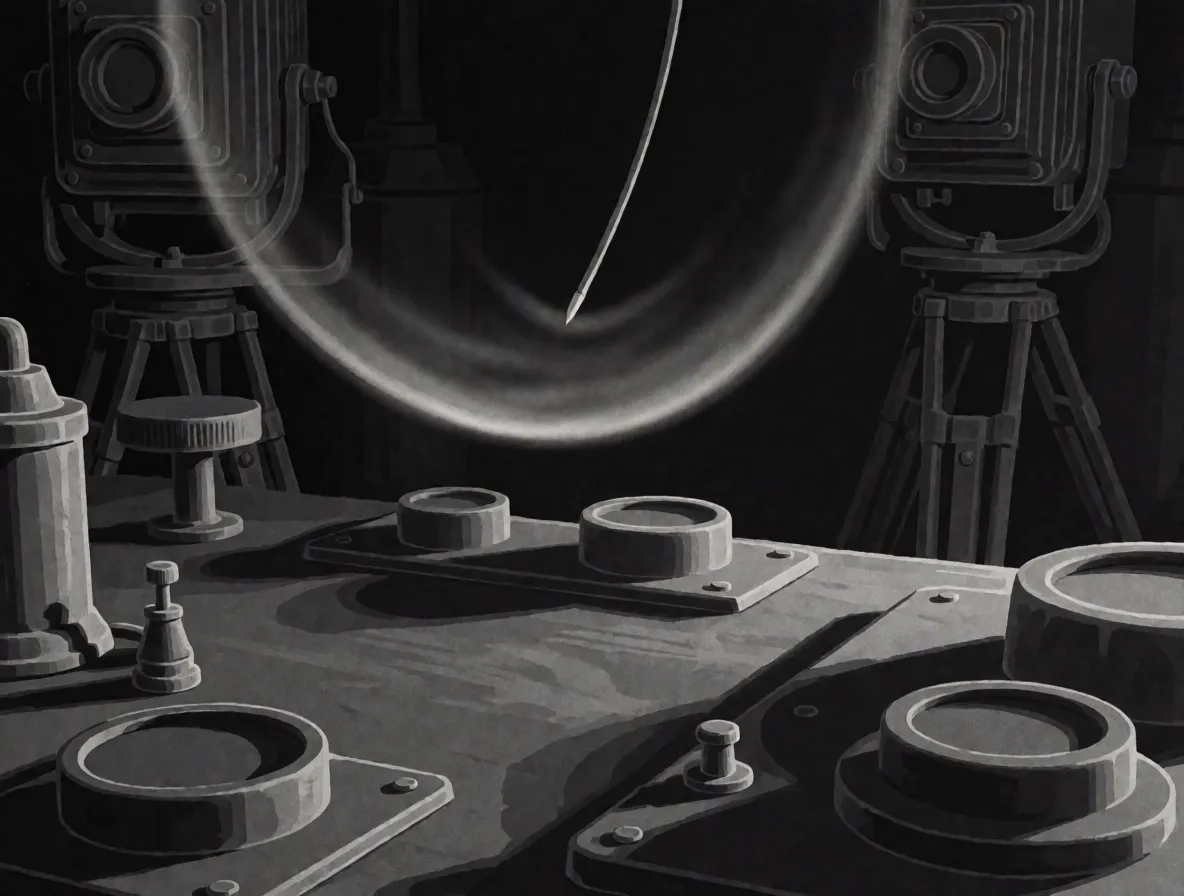
That makes a cracking whip the earliest object humans ever built that broke the sound barrier, by a margin of several thousand years. It was doing it long before your great-grandparents were born, and long before anybody had a word for it. Nobody realized what was happening until aircraft made the question interesting.
Concentrate movement with two balls

The small ball can leave the floor at up to three times the speed it landed with, and it will go far higher than you dropped it from. Nothing gained any energy: the big ball gave up almost all of its movement, and a lighter object carrying the same movement has to travel faster.
The lighter your small ball, the more extreme the result. That is the taper of a whip, compressed into one bounce, and it is why the thin end of the whip is the part that goes supersonic.
The sound of air running out of time
There is one more thing worth knowing, and it changes what the noise means. Sound does not warn air about an approaching object out of politeness. The speed of sound simply is how fast a squeeze can travel between molecules.
So an object moving faster than that has outrun the only mechanism air has for getting out of the way. The air cannot flow aside in time because the instruction to move cannot arrive in time.
That is what you are hearing in a whip crack, a rifle shot and a jet overhead. All three are the same event at different sizes: a piece of air that was given no notice, compressed into a sheet, and released against your eardrum all at once.