Why does metal feel colder than wood?
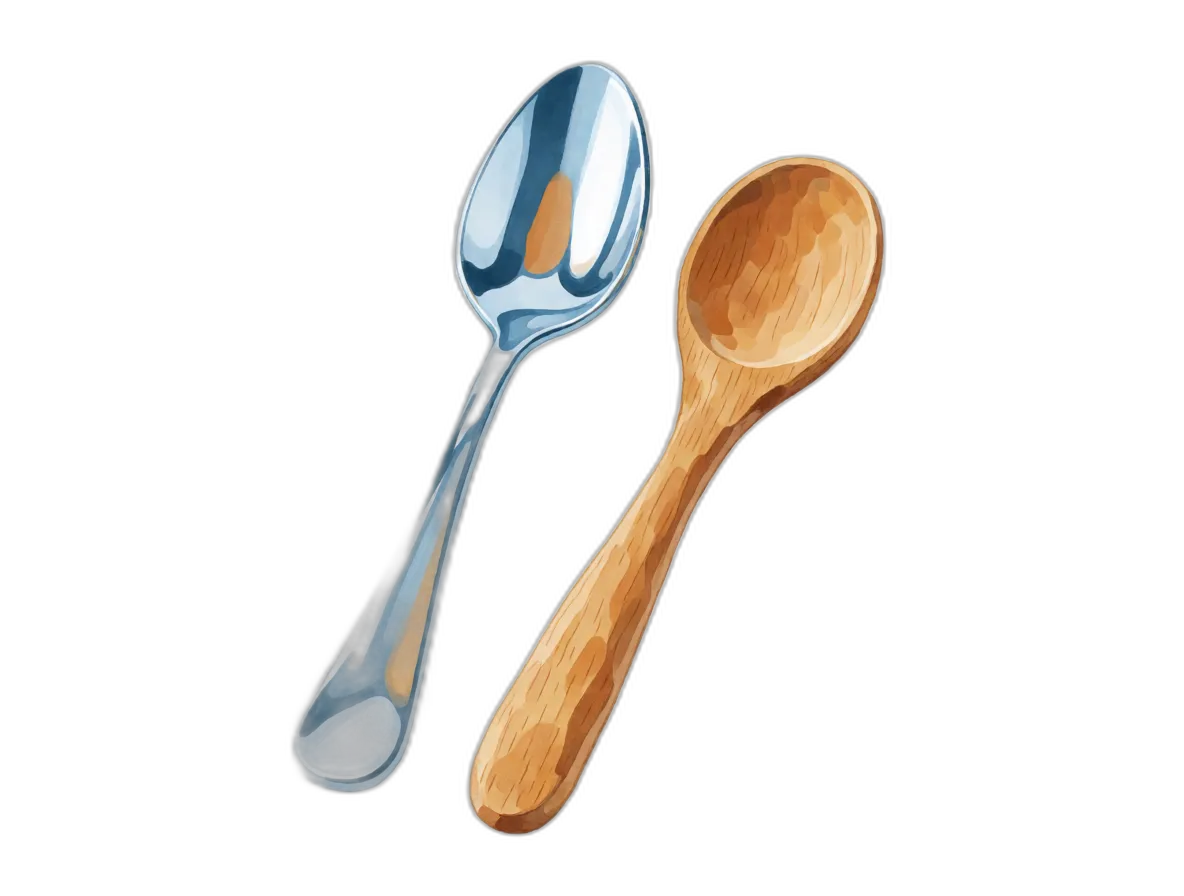
Put one hand flat on the metal leg of a table and the other on the wooden top above it. The metal is freezing. The wood is almost comfortable. Both have been standing in the same room since yesterday, in identical still air, with nothing to warm one and not the other. Lay a thermometer on each of them in turn and you get the same reading twice. So what exactly is your hand telling you?
Your skin never measures temperature. It measures how fast heat is escaping from it, and metal drains it far faster than wood does.
Your skin has no thermometer in it
Just beneath the surface of your fingertip lie nerve endings called thermoreceptors, whose only job is reporting on their own temperature. They cannot sample the table. They sit inside you, describing whatever is happening to themselves.
They also have a strong preference. A thermoreceptor fires hardest while its temperature is falling, and it fires harder the faster that fall. Held steady, it goes quiet within seconds.
You are demonstrating that right now, without noticing. You cannot feel your socks. You felt them this morning, briefly, while they were still changing the temperature of your feet. Then the change finished, and the reports finished along with it.
John Locke found a sharp way of proving this in 1690 — twelve or so generations before you were born, when nobody owned a fridge or a reliable thermometer. Soak one hand in hot water and the other in cold water. Wait a while. Then plunge both into a single bowl of lukewarm water.
That one bowl feels hot to one hand and cold to the other, simultaneously. A single bowl of water cannot be two temperatures at once, so the reading was never coming from the water.
Your fingertips report a change occurring inside themselves. That leaves an obvious puzzle. Why should a metal leg and a wooden tabletop, sitting at identical temperatures, change your fingertip by different amounts?
Heat only ever runs downhill
Heat travels one way. It abandons the warmer place for the cooler one, and it never reverses by itself.
The surface of your hand is around 33 °C(91 °F). The surrounding room is nearer 20 °C(68 °F). Every object in it is cooler than you are, so the instant you touch anything, heat begins escaping from your hand.

The escape route matters enormously. Every material is built from atoms, the tiny particles that everything is made of. Inside a solid, each atom is locked among its neighbors, yet it is never still — it vibrates. Hot simply means vibrating harder.
A hard-vibrating atom knocks the atom beside it, which knocks the next, and the vibration spreads outward. Scientists call that handing-on conduction, and it is how heat crosses a solid.
Touching something therefore begins a one-way delivery of vibration out of your hand. How quickly the delivery runs depends entirely on what is waiting on the other side.
Metal carries heat away about a hundred times faster
Press a finger onto the wooden tabletop. The vibration is handed onward so sluggishly that it piles up exactly where you are touching. Within seconds, that small patch of wood has warmed to nearly the temperature of your finger.
Now very little can flow. Heat only runs downhill, and you have flattened the hill. Your thermoreceptors stop falling, so they stop reporting, and the wood feels mild.
Press a finger onto the metal leg and the pile never forms. The vibration is whisked sideways into the remainder of the leg almost as quickly as your hand supplies it. Metal touching your skin stays close to room temperature however long you hold on.
The wood beneath your finger warms up. The metal never gets the chance.
So your fingertip continues losing heat at full speed, and its surface continues dropping. Against stainless steel it falls to somewhere near 22 °C(72 °F). Against wood it barely reaches 29 °C(84 °F). The room never altered. Only your finger did.
Both numbers measure how fast heat crosses an identical slab of each material. Steel wins by roughly a hundred.
Two objects at one temperature, then, can empty your hand at wildly different speeds. Which leaves the question of what metal possesses that wood does not.
Metal has a second way of moving heat
Wood has only the single method. Atom knocks atom, and the vibration shuffles along a tangle of dead cellulose fibers, plenty of which are not touching properly. Pockets of trapped air sit among them, and air is an even worse path than the wood itself.
Metal has a second method, and it is dramatically quicker. Atoms are built partly from electrons, particles far smaller than the atom itself, which normally stay bound to one atom each. Inside a metal, some come loose and roam throughout the entire object.
A roaming electron collects energy at the warm end and delivers it to the far end in a single journey, without waiting for any atom to knock any other. That is what makes steel a conductor, a material heat crosses easily, and wood an insulator, a material heat struggles to cross.
Every material either speeds up your escaping heat or slows it down, and your skin reports the difference as cold or comfortable. That instinct is powerful enough that scientists once built an entire theory on the wrong side of it.
People once believed that cold could be reflected
In Geneva in 1790, Marc-Auguste Pictet arranged two polished concave mirrors facing each other across a room. Mirrors curved that way gather whatever arrives and squeeze it into a single point. Place something hot at the point in front of one mirror, position a thermometer at the matching point of the other, and the thermometer climbs. Heat had crossed the room with nothing touching at all.

Pictet then replaced the hot object with a flask packed full of snow. The thermometer fell. It fell sharply, and only when the snow sat exactly at the point the mirror aimed at. Cold appeared to be traveling across the room and focusing like light.
Several excellent scientists concluded that rays of cold were genuinely real, and gave them a name. The correction arrived a year afterward from Pierre Prevost, a neighbor of Pictet in the same city, in a paper published in 1791.
Everything, he pointed out, is radiating heat outward continuously. Warm objects radiate more and cold objects radiate less, but nothing radiates nothing. The thermometer was hurling heat at the snow and receiving very little in return. It fell because it was losing, not because anything was arriving.
That is the identical account to your hand on the table leg, with the touching removed. Nothing cold ever travels anywhere. There is only heat, escaping at various speeds, and a nervous system describing a fast escape as cold.
Race two ice cubes and watch the cold surface win
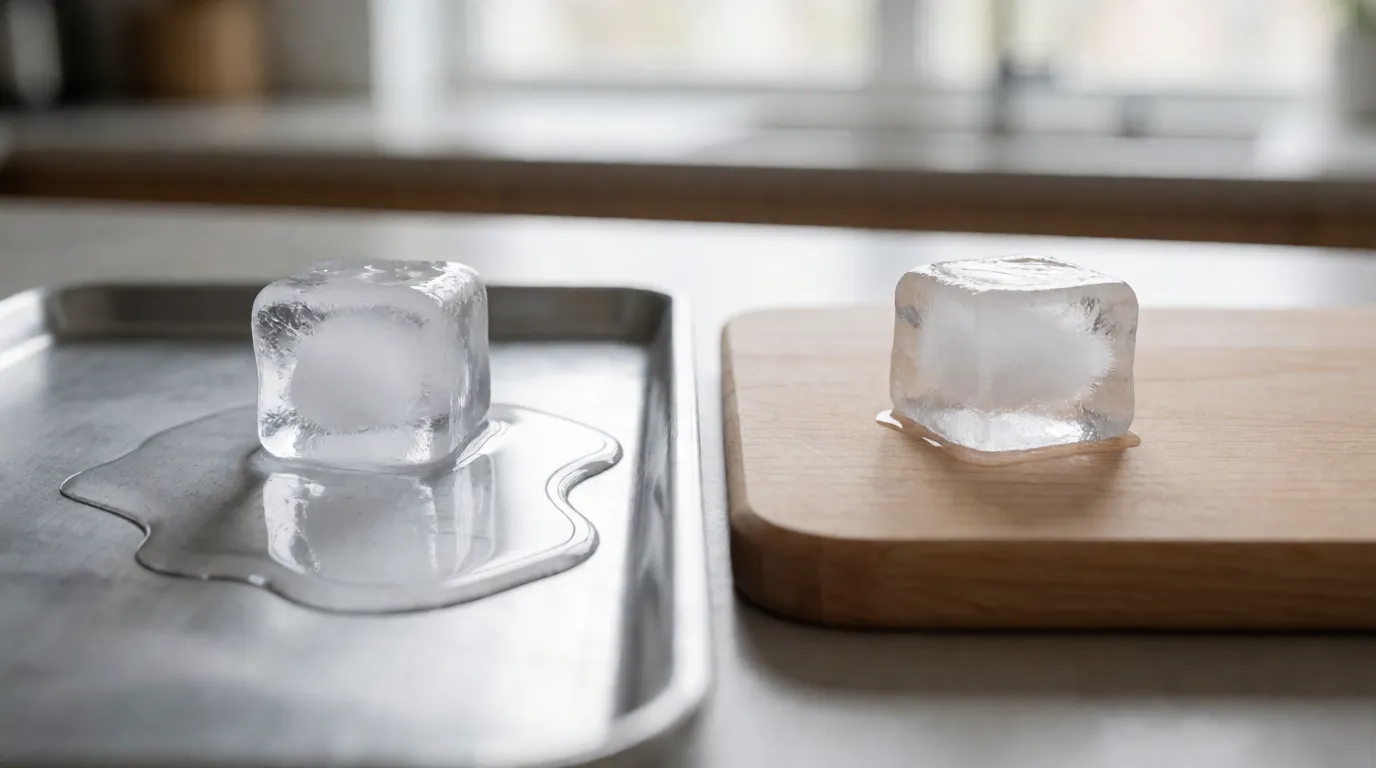
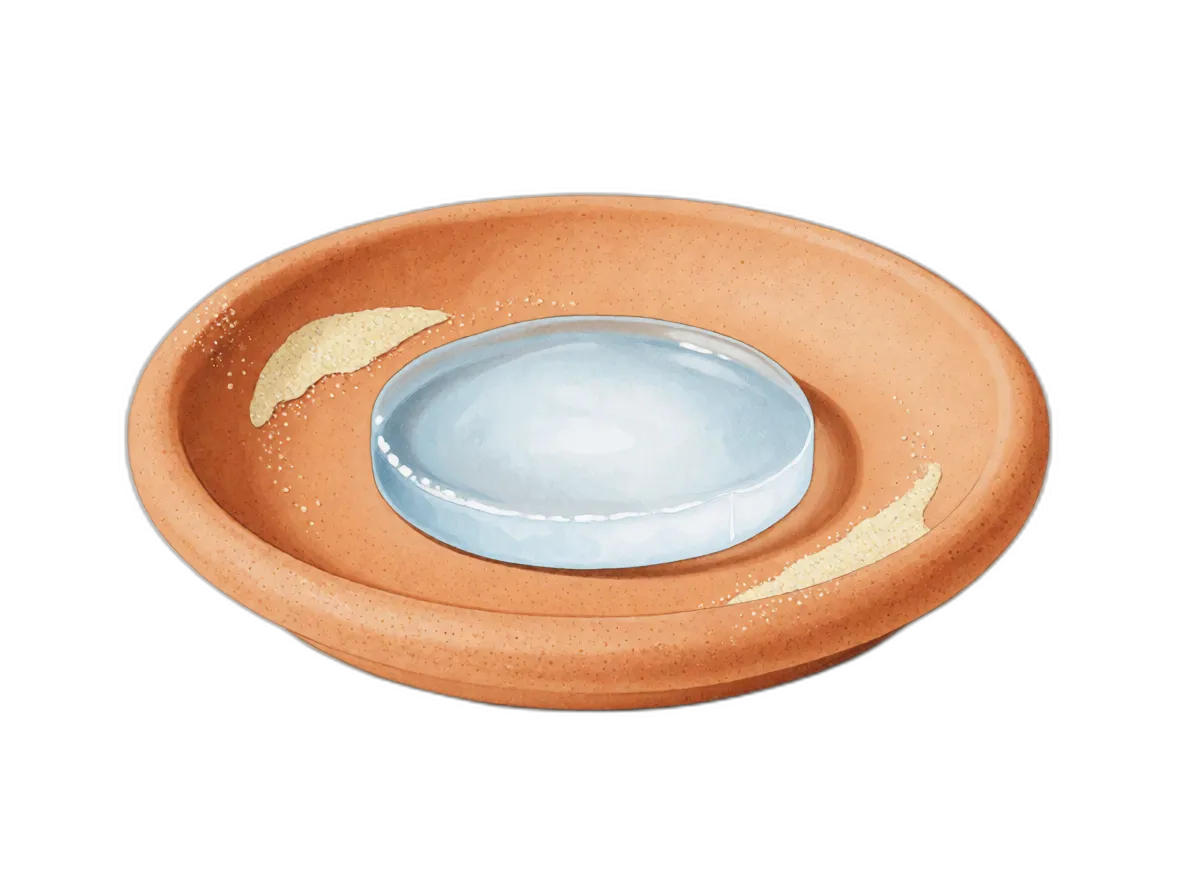
The cube on the metal disappears first, usually by a long way. That is the entire argument, in one puddle. The tray was never colder than the board. It is simply better at moving heat, which is why it pours heat into ice quickly — and why it emptied your fingers quickly.
Anything that feels sharply cold to touch is, for precisely that reason, quick at delivering heat to something colder than itself. A cold-feeling surface is a fast surface. That is all the sensation ever meant.
The only warm thing in the story is you
Return to the table and put your hands down again, knowing what is genuinely happening. The metal is sending you nothing whatsoever. It is accepting what you send it, rapidly and without pause, and your thermoreceptors are reporting the size of your own losses.
This is why a tiled bathroom floor is agony in bare feet while the mat beside it is fine, and why campers put foam mats underneath their sleeping bags. The ground is not out to get them. It is an enormous, patient sink that will accept their heat all night, and a finger of foam is enough to slow the delivery down.
You spent this entire article believing you had been touching cold objects. You were standing in a room where everything sat at one temperature, holding the only hot thing in it.