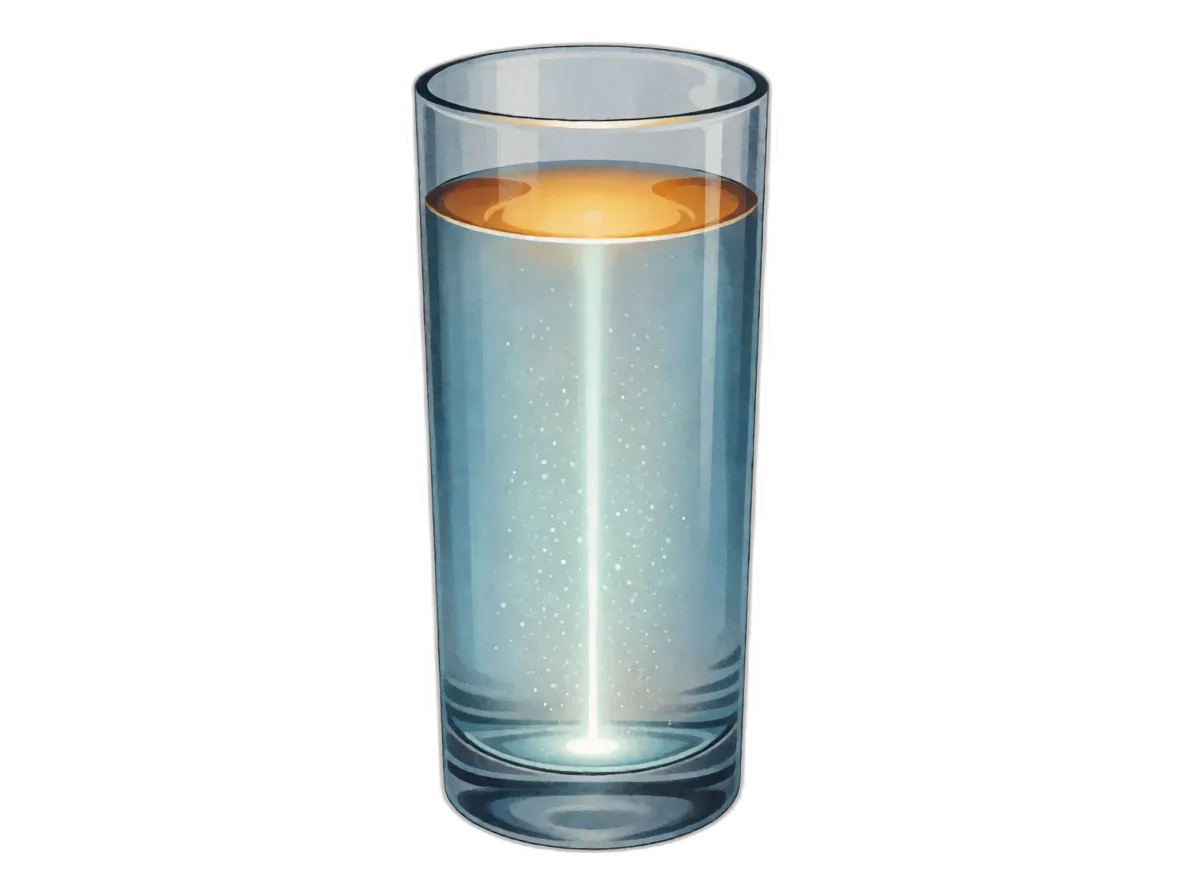
Why does a desert get so cold at night?
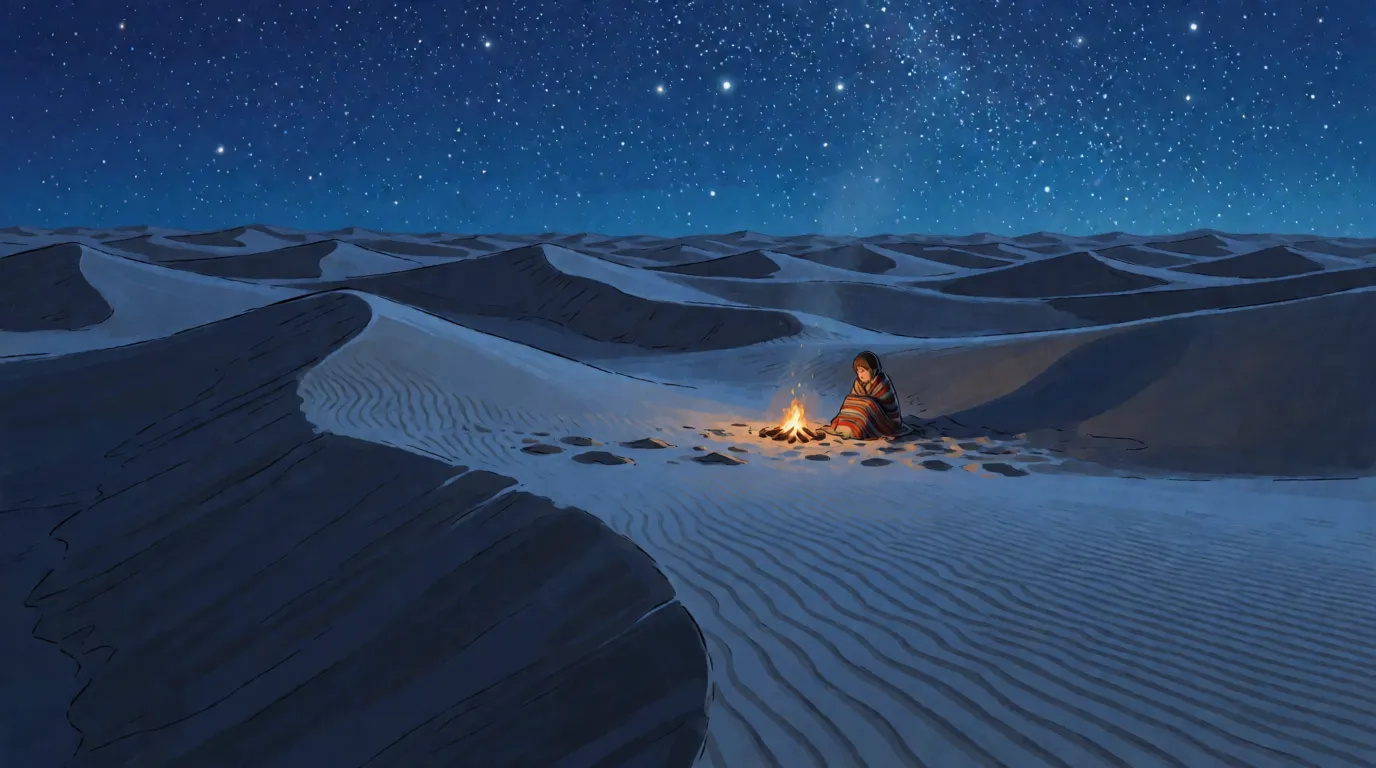
A summer afternoon in the Sahara can push the sand past 80 °C(176 °F), hot enough to blister a bare foot. Then the sun goes down, and by the small hours people are pulling blankets around their shoulders. The sand has not changed. So where does an entire afternoon of heat go in a few hours, and why does the same thing never happen at the beach?
Heat leaves the ground as light your eyes cannot see. Damp air catches most of that light and throws it back down. Desert air catches hardly any, so it leaves and never returns.
The ground is glowing right now
Every warm thing gives off light simply for being warm: your skin, a chair, the ground under your shoes.
Almost none of it is the kind eyes can pick up. It is infrared, lying just past the red end of the colors we see. Warmer surfaces send out more of it, and that is the only rule you need.
The equipment firefighters carry into smoke works on nothing else. A thermal camera ignores ordinary light and assembles its picture from infrared alone, so a person glows in a pitch-dark room.
To give off energy as light is to radiate, and physicists call it thermal radiation. Nothing needs to touch, and nothing in between has to carry it.
Feel it tonight. Find a brick wall that stood in the sun all day, wait until dark, then hold your palm a hand’s width away without touching. The warmth crossing that gap is infrared.
All day the sun pours in more than the ground gives away. At sunset the paying-in stops. The radiating does not.
So every patch of ground on Earth spends the night losing heat. Why one patch loses far more than another is a question about the air above it.
Most of the air lets the glow straight out
Aim that rising infrared at the sky, and most of the atmosphere ignores it.
Air is roughly four parts nitrogen to one part oxygen. Both are almost perfectly transparent to infrared. The glow travels through them the way daylight travels through a window.
One small ingredient behaves completely differently: water vapor, water floating in the air as single molecules, far too scattered to feel wet. Vapor absorbs infrared, warms slightly, then radiates infrared of its own in every direction — including straight back down.
That returned glow is the whole trick. The ground loses heat upward and gets a share back, so the loss runs slower. Damp air overhead behaves like a blanket, making no heat of its own and simply returning yours.
An American scientist and inventor named Eunice Newton Foote caught the first hint in 1856, standing glass jars of different gases in the sun. The jar of carbon dioxide heated most and cooled slowest.
In 1859, in London, the Irish physicist John Tyndall built an apparatus delicate enough to take the atmosphere apart. His measurements of infrared absorption ran gas by gas. Nitrogen and oxygen barely registered. Water vapor absorbed more strongly than anything else the instrument tested.
Damp air hands the ground its heat back. How much water does a desert night have to work with?
Desert air has almost nothing to send back
Humidity means how much water vapor the air is carrying. It has a ceiling, and the ceiling climbs as air warms.
Take a block of air one meter along every edge and warm it to 30 °C. Filled right up to that ceiling, or saturated, it holds about 30 g(1 oz) of water: two tablespoons, invisible, spread through a block the size of a refrigerator. Air over a hot damp coast sits near its ceiling all night.
Desert air is nowhere close. Vapor climbs into the sky by evaporation, off oceans, rivers and wet soil, and a desert supplies almost none of that. In Salah, a town in the Algerian Sahara, has an annual rainfall of 14 mm(0.6 in). Some places collect that in one afternoon.
It shows in the town’s records. In January, In Salah averages 22.1 °C(72 °F) in the afternoon, warm enough for short sleeves. The same nights average 6.8 °C(44 °F), cold enough for a coat.
An average January day and night at In Salah, Algeria.
A desert night falls a long way because almost nothing overhead returns its glow. That is a fact about the air. The sand has not come into it yet.
The sand story is only half right
Heat crawls through dry sand extremely slowly, which makes sand a poor conductor and a superb insulator. Sunshine never gets far below the surface.
By mid-afternoon the top of a dune can pass 80 °C(176 °F) while sand a knee’s depth down is barely altered. Geckos, kangaroo rats and scorpions escape underground into sand the heat never reached.
That thin warm skin is everything the desert has stored, and it is almost nothing. The ocean is the opposite. Seawater has an enormous heat capacity, soaking up far more energy than sand before its temperature shifts. Sunlight reaches meters down, waves stir it deeper still, and that reservoir gives heat back all night.
Sand is a real part of the answer, and it is the smaller part. Sand decides how fast the surface lets go of its heat. The air decides whether any of that heat is coming back.
Dew does not fall out of the sky
For two thousand years, everybody had this backwards. Dew is the water that appears on grass overnight, and the obvious explanation was that it fell out of the sky. Later scientists went one worse, deciding that dew and frost were what made the ground cold.
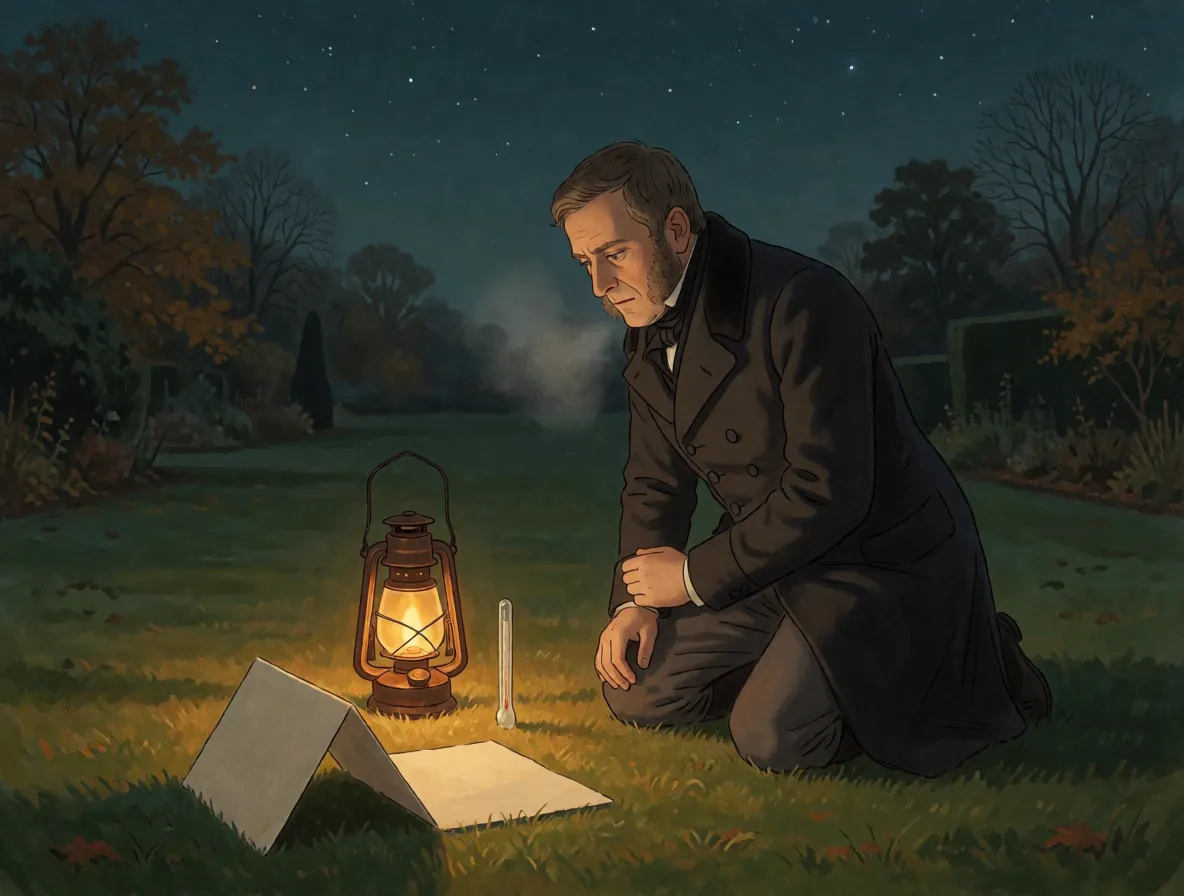
William Charles Wells, a physician in London born in Charleston, South Carolina, decided to check. He began measuring in 1811, back beyond your great-great-grandparents, and three autumns went by kneeling on cold lawns with thermometers.
On clear, still nights he recorded the grass well below the air a few feet up. The gap ran seven to nine degrees Fahrenheit, or four to five Celsius. The cold arrived first. Dew appeared afterward, onto a surface already losing the race.
The grass does not wait for the air to freeze. It gets there first, on its own.
Then came the experiment that settles it. He bent a stiff card into a low roof and stood it over one patch of grass. Under the card, and on open grass beside it, he laid matching wool parcels. By morning the sheltered wool had absorbed a little water, and the exposed one eight times as much.
He noticed something anyone can check: on cloudy or windy nights, the grass was never much colder than the air. Cloud is water too, in droplets rather than invisible vapor, and a far better blanket. Wells published it all in 1814, and the Royal Society gave him a medal.
So the ground does not simply cool at night. It overshoots, sinking below the air on top of it, unless something overhead stops the fall.
Two dishes and one clear night
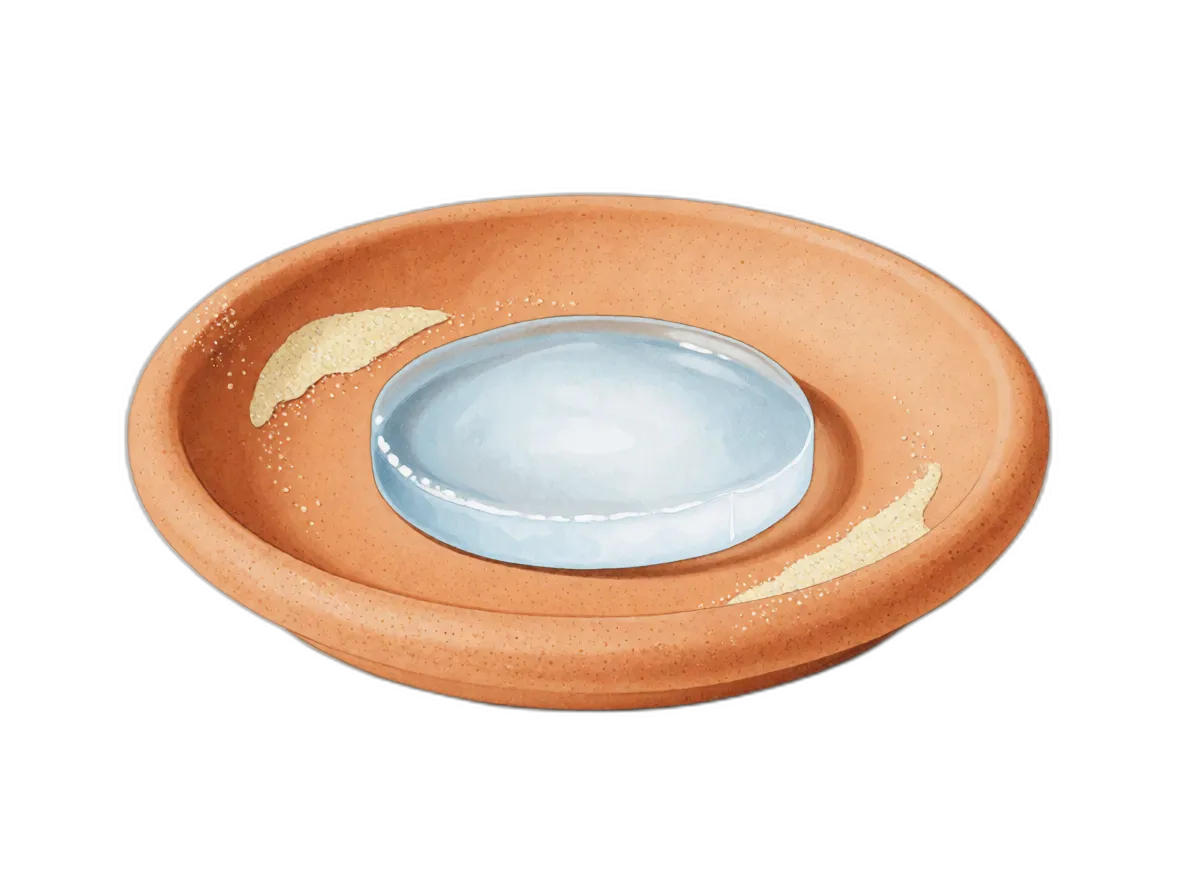
The sheltered dish should sit near the air temperature. The open dish should be colder, often by a few degrees, and on a cold night it may carry a skin of ice while its neighbor stays liquid. Both sat in identical air. The only difference was how much sky each could see.
Frost on a night that never froze
Push this one step further, and the strangest result of the lot appears.
Nitrogen and oxygen barely radiate, so the air holds on to its warmth while the ground sheds its own. Once a surface radiates faster than the air can top it up, it ends up colder than the air. Cool it enough and water vapor turns back into liquid where it touches, which is condensation. The temperature where that begins is the dew point. Carry on past freezing, and the water arrives as ice instead. That is frost.
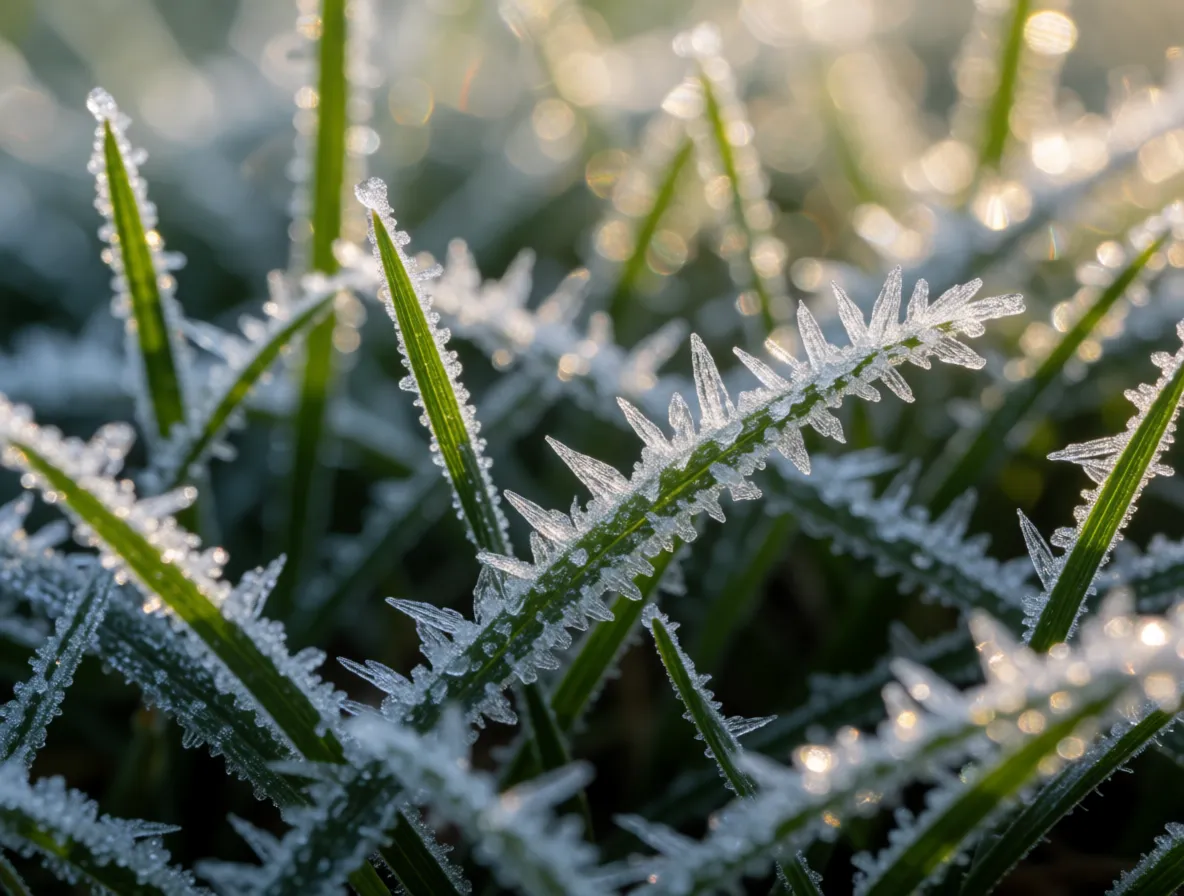
Now the giveaway. Meteorologists measure air temperature inside a white slatted box called a Stevenson screen, a meter above the ground. On a clear calm night the grass below can sit several degrees colder than that screen, exactly as Wells recorded. So the official low can read 3 °C(37 °F) while every blade of grass is below zero and white by dawn.
Check it from a bedroom window on the next frosty morning. The open lawn is white. Grass under a tree, or beneath a garden table, is still green. Same night, same surrounding air, same grass. All the green patches had was something overhead returning their heat.
A desert has nothing overhead at all: no cloud, barely any vapor, and beyond that, space, which returns nothing. The sand hands over its thin skin of stored warmth in the first hours of darkness, then has nothing left. By sunrise, a place that could burn your hand at noon has spent the whole night shining its heat quietly into the sky, with nobody up there to catch it.