Why does ice float when almost every other solid sinks?
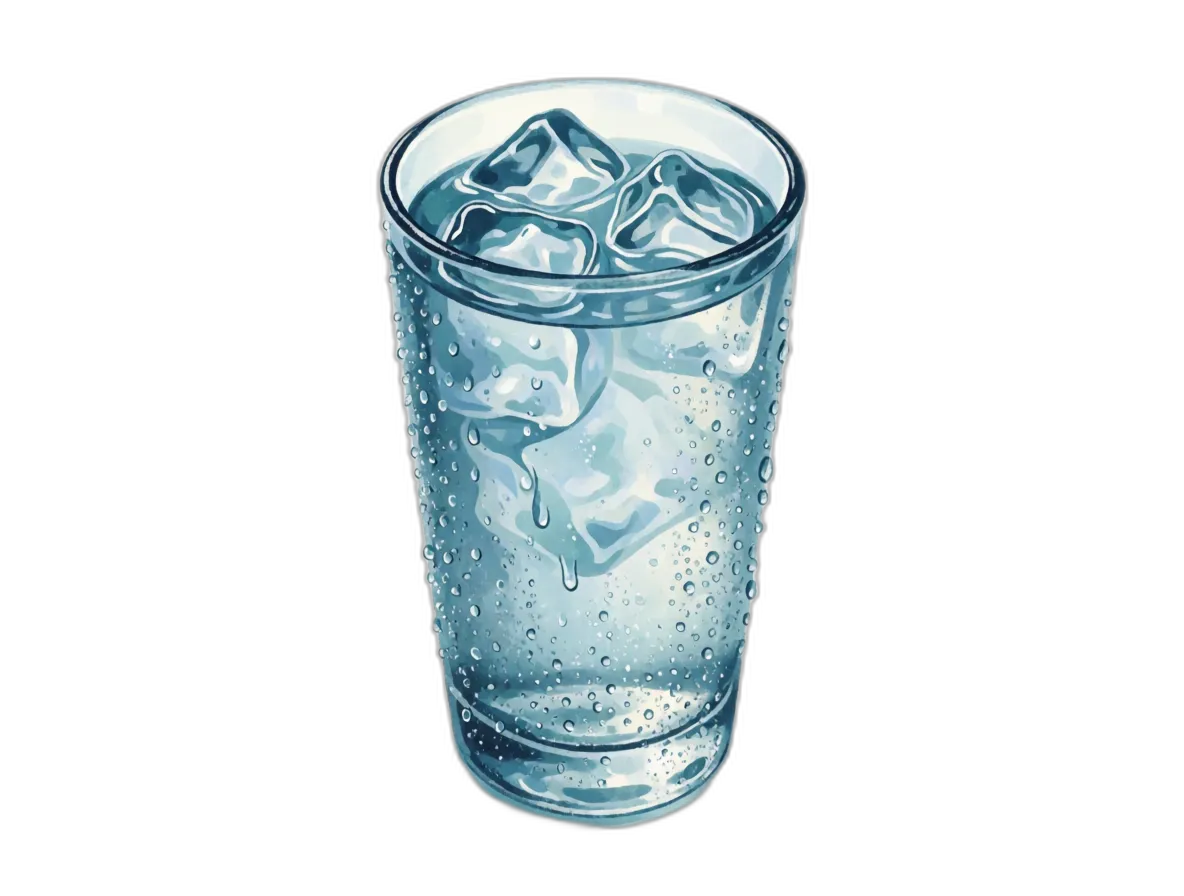
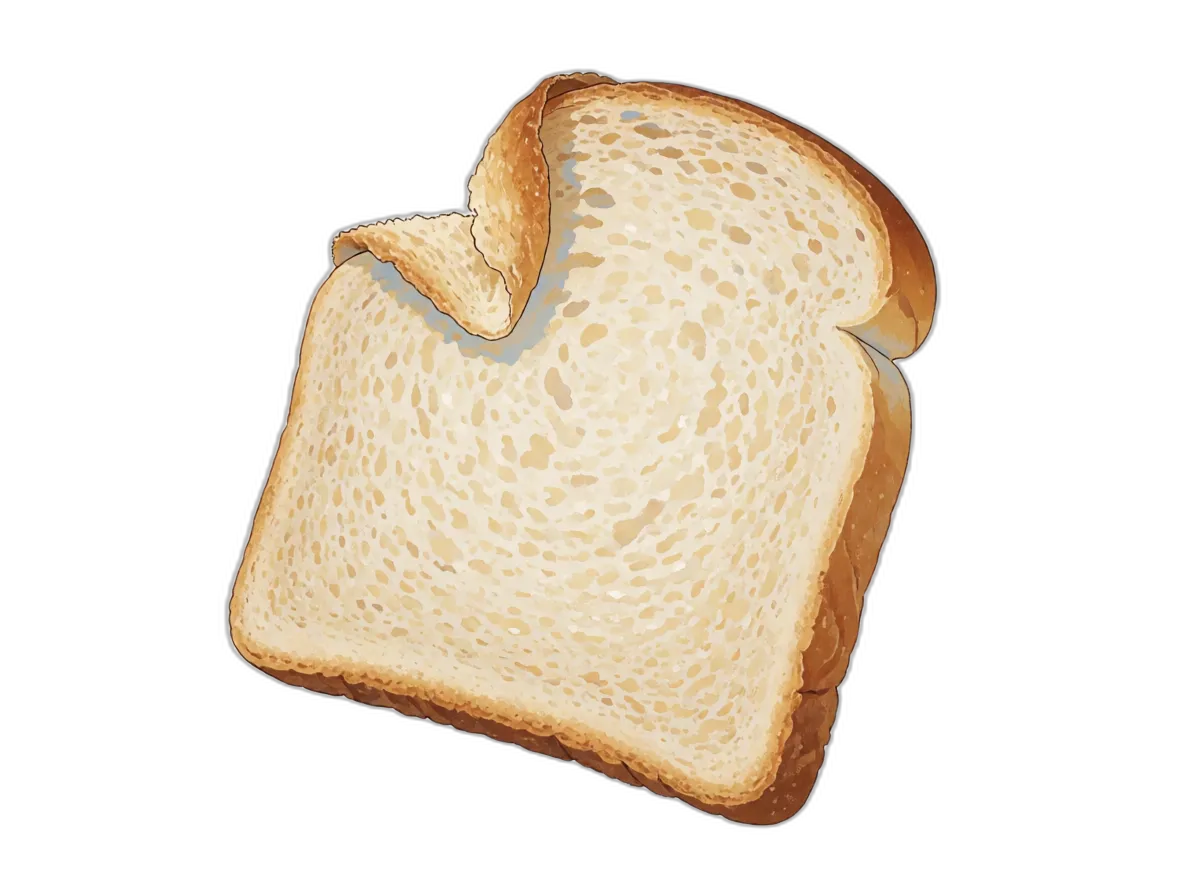
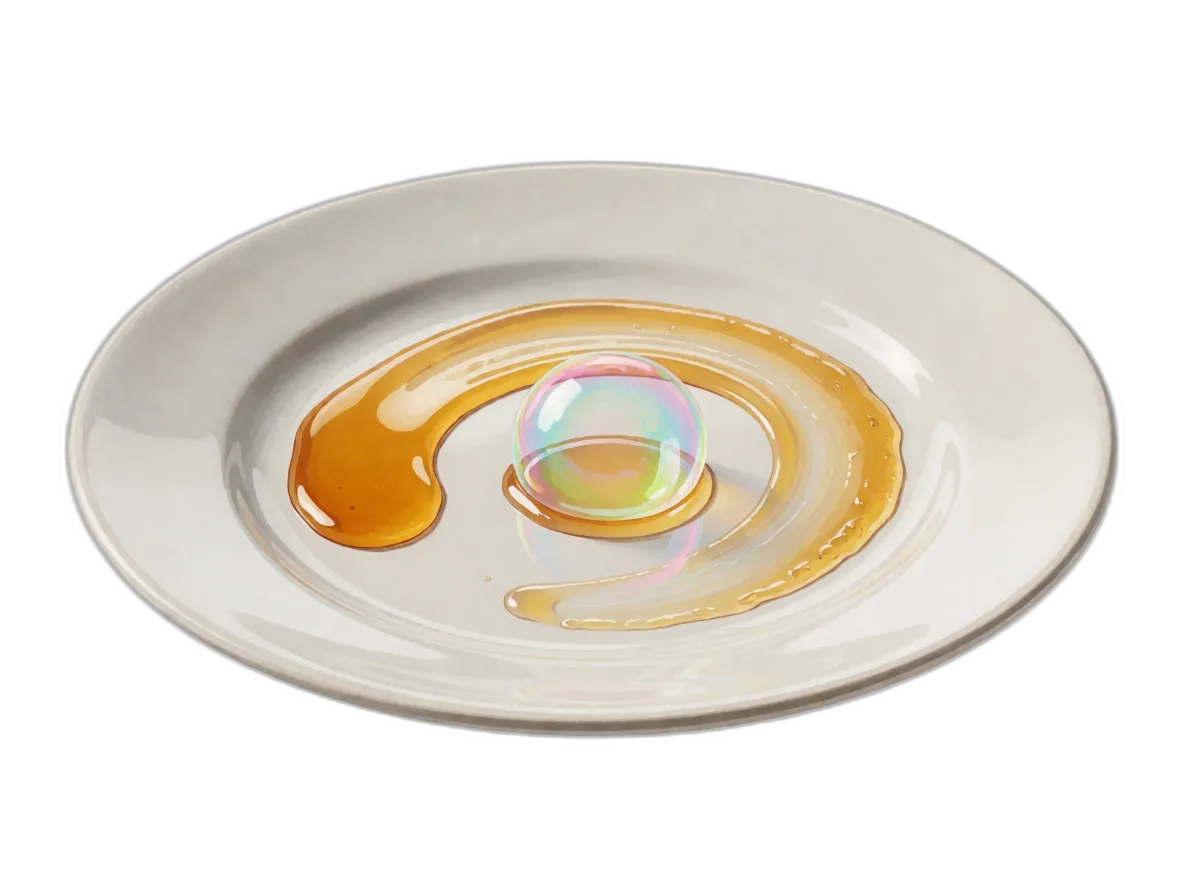
Ice cubes sit at the top of a drink and nobody thinks twice about it. Now look at a candle that has been burning a while. Drop a chip of hard wax into the pool around the wick and it sinks. Chocolate does the same in melted chocolate. Almost every solid on Earth sinks in a puddle of itself, and ice is the odd one out. So why does frozen water float on the water it came from?
Freezing normally packs a substance tighter. Water does the opposite: as it freezes, its tiny pieces lock into a rigid pattern full of holes, and holes need room. That oddity is why there are fish alive under a frozen pond.
Cold usually packs things closer
Everything around you is built from atoms, the smallest pieces an ordinary substance can be broken into. Atoms rarely sit alone: they join into small groups, and a group like that is a molecule.
Molecules never hold still. Heat is the energy of that movement: the hotter something gets, the more violently its molecules vibrate and shove past one another.
Cool a liquid and the shoving weakens. Below a certain temperature the molecules can no longer barge around, and they settle into a regular repeating arrangement. That is freezing.
Settling into an arrangement almost always means settling closer. The same molecules occupy less room, so the frozen version is heavier for its size than the liquid was. Heaviness for size is called density.
Anything denser than the liquid surrounding it sinks: candle wax, chocolate, almost everything else.
Freezing normally squeezes a substance smaller, so its solid drops to the bottom. Water refuses. To find out why, look at a single water molecule.
A molecule with a negative end and two positive tips
A water molecule holds three atoms: one oxygen, with two hydrogens attached. The hydrogens do not sit on opposite sides. Both stick out from the same side, so the molecule makes a wide V with the oxygen at the point.
Wherever two atoms join, they share a pair of electrons — the specks of negative charge that hold every join together. Oxygen pulls on that shared pair harder than hydrogen does.
So the shared charge sits closer to the oxygen, leaving the point of the V slightly negative and the two tips slightly positive. The molecule is electrically lopsided.
Opposite charges attract, so a positive tip on one molecule is tugged toward the negative point on another. That faint attraction is a hydrogen bond.
It is a feeble grip next to the joins inside the molecule. On a warm day the molecules vibrate far too violently for it. A grip forms, survives less than a millionth of a millionth of a second, and is torn apart.
That endless grabbing and letting go is why water pours: nothing stays caught, so molecules keep sliding into any gap. Taking heat away changes that.
Freezing locks each molecule onto four neighbors
Take enough heat away and the shoving finally loses. At 0 °C(32 °F) the vibration can no longer break the grips, and every molecule keeps hold of its neighbors.
Now the angles matter. Each molecule has two positive tips to offer, and room on its negative point for two grips arriving. So each one links to exactly four neighbors.
The geometry is fixed. Those four spread as far apart as four directions allow, pointing at the corners of a tetrahedron: a pyramid with a triangle base.
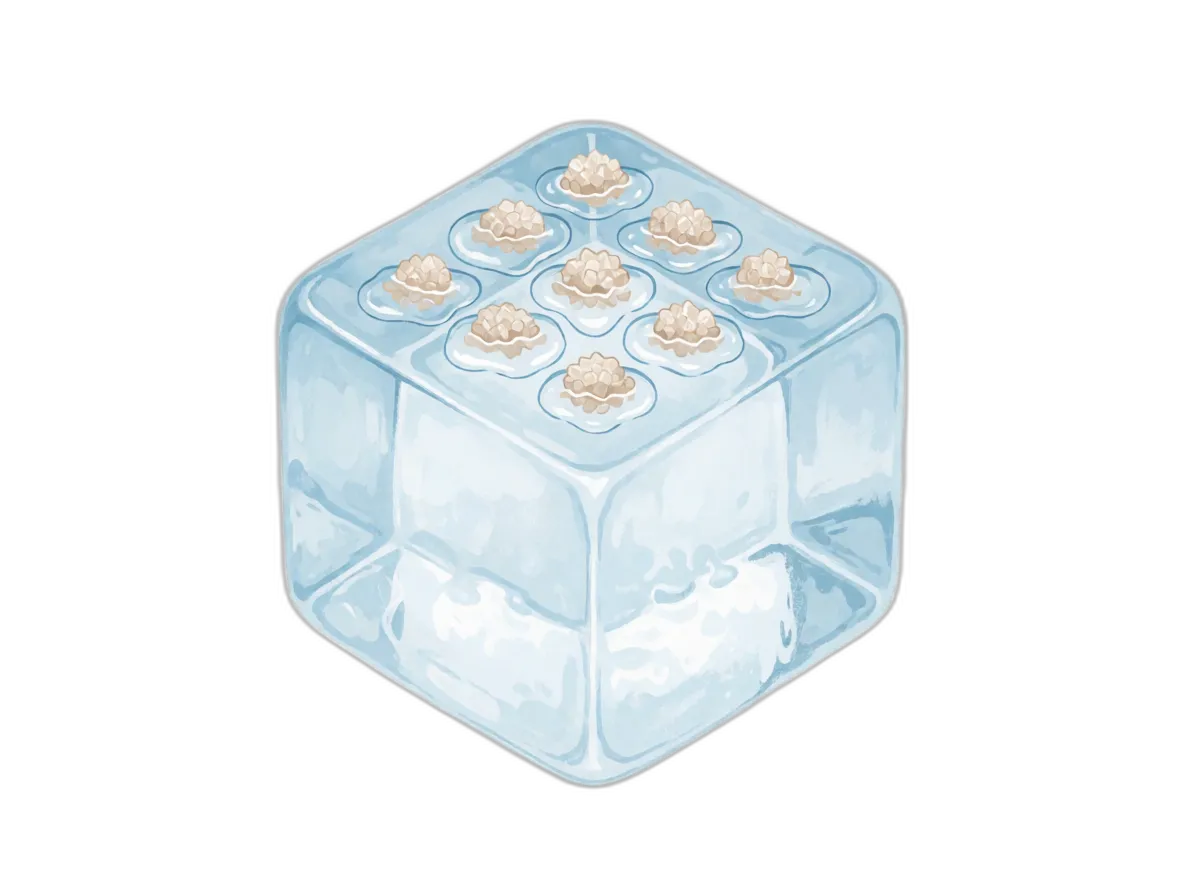
Once every molecule is doing that, only one arrangement works. The molecules build six-sided rings — hexagons — joined edge to edge and repeating everywhere. A regular pattern like that is a crystal, and this hexagonal one is why a snowflake has six arms.
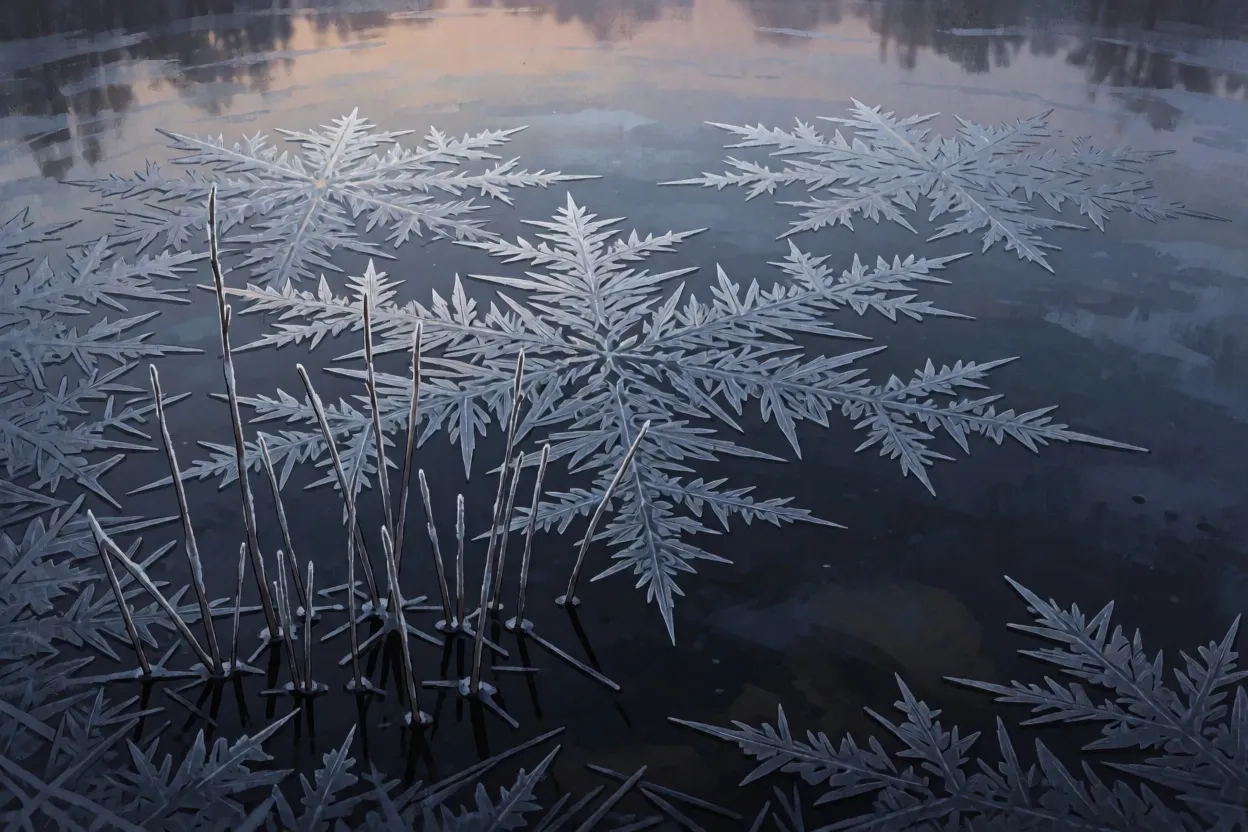
Here is the part that matters. Holding on at a fixed angle means holding at arm’s length. A moment ago these molecules could crowd into any gap; now each one is pinned, and the middle of every hexagon is empty.
The arrangement holds them further apart than the sliding ever did.
Nine parts in a hundred
Holes take up room. Freeze a jug of water and not one molecule escapes, so the ice weighs precisely what the water did. It simply needs a bigger jug.
The expansion comes to about nine parts in every hundred. A cupful of water makes a cupful and a bit of ice.
Bigger for the same weight means less dense, so ice floats — always to the same depth, because the expansion never changes. Eleven twelfths of a bobbing cube hang below the surface. Only the last twelfth shows.
Go and open the freezer. Cubes frozen in a filled tray carry a dome or a spike on top, and a bottle left in there too long splits down its side. That bump is the extra room, with nowhere else to go. Most people explain the floating a different way.
The bubbles are only passengers
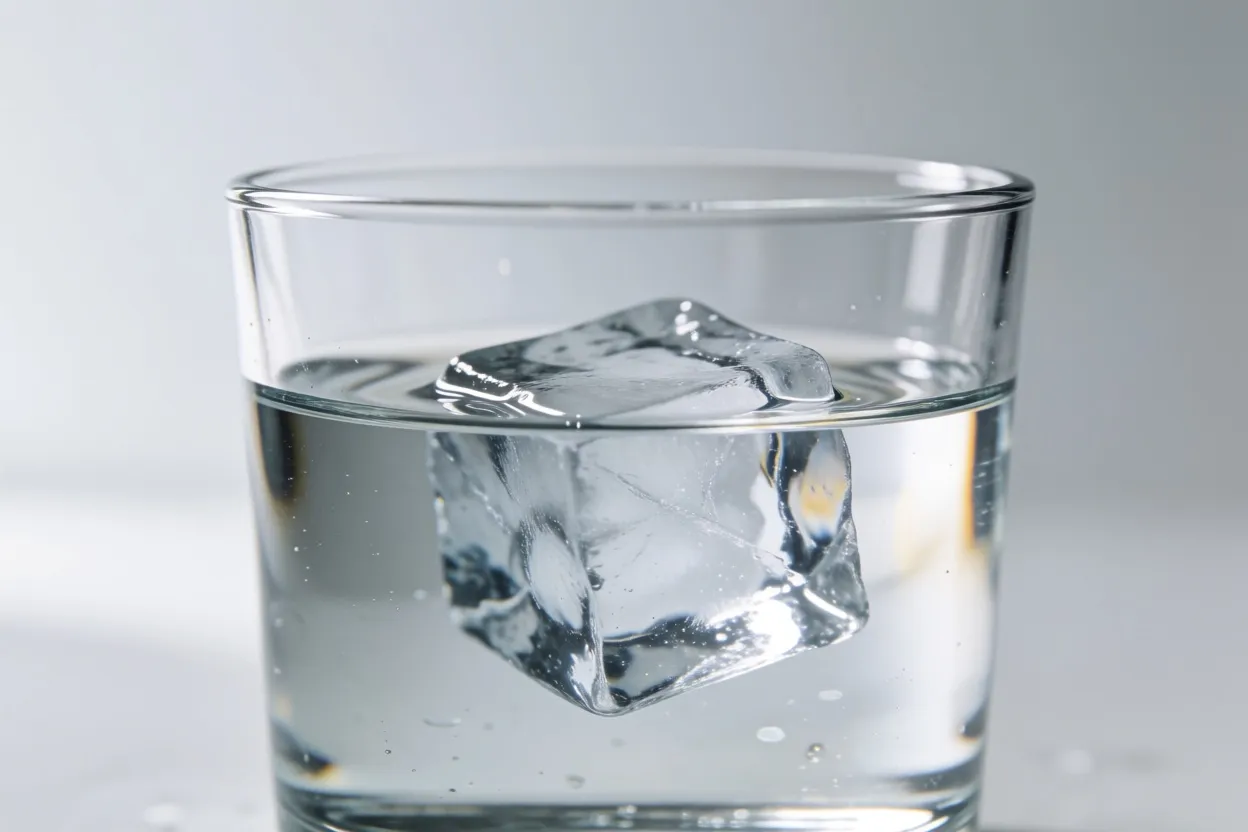
The bubbles are passengers: the gaps doing the lifting are inside the crystal, far too small to see.
So the floating has nothing to do with anything trapped in the ice, and everything to do with how the molecules are stacked. Nobody could see that stacking until roughly a hundred years ago — but its shape had been landing on people’s sleeves the whole time.
The shape was on people’s sleeves for four hundred years
Every snowflake has six arms, and anyone standing outside in falling snow can see it.
In 1611 Johannes Kepler, then about forty and the emperor’s astronomer in Prague, watched snow settle on his coat as he crossed a bridge. He wrote a short book about it as a New Year’s present, asking one question: why always six? That was long before your great-great-grandparents were born.

Kepler guessed the answer lay in packing: in how the tiniest particles of anything stack together. Pile up cannonballs, or pomegranate seeds, as tightly as possible, and each one touches six others in its layer. It was a fine guess and the wrong one, because ice packs as loosely as its grips allow.
Then very little happened for three centuries, for an unglamorous reason. No scientist could look: the instruments did not exist, and a molecule is invisible under any microscope.
On a January morning in 1885 a nineteen-year-old farmer in Jericho, Vermont, named Wilson Bentley bolted a camera onto a microscope and photographed a snow crystal. He kept going all his life, making more than five thousand photographs. No two crystals matched, and every photograph had six arms.
The evidence was beyond doubt. What made the shape was still a guess.
X-rays finally found the holes
Send X-rays through a crystal and they bounce off the layers of atoms inside, throwing a pattern of spots onto a photographic plate. The spots can be worked backward into the arrangement.
In 1921 the physicist David Dennison did exactly that with a lump of ice, and the pattern came back six-sided. Reading his measurements, William Henry Bragg worked out how the molecules must be sitting. Every oxygen sat at the middle of a tetrahedron of four others, with an empty space at the heart of every hexagon.
Four hundred years after Kepler, the holes were on the page. The swelling they cause is big enough to measure at home.
Measure the swelling with a ruler
The ice should stand about 9 mm(⅓ in) above your tape. Measuring at the wall matters: the middle finishes as a dome, because it freezes last with nowhere left to expand except upward.
What the ruler should show if your water started 10 centimeters deep.
If you measure six millimeters instead of nine, look at your container: sides that lean outward give the ice extra width, so it climbs less.
Almost nothing else on Earth floats on a puddle of itself, and every fish under every frozen pond depends on the exception.
Why there are fish under the ice
Take that number outside to a pond in winter.
When the air above a pond drops below freezing, the surface freezes first. If ice behaved like every other solid, that sheet would sink, the next would sink onto it, and the pond would fill from the bottom.
Instead the sheet floats and stays where it formed, as a lid.
Water is also at its heaviest at about 4 °C(39 °F), a few degrees above freezing, because below that its molecules already begin spreading into the open arrangement. So the chilliest water rises to the top and freezes there, while the water underneath stays near four degrees.
The lid stops the pond evaporating and holds off the wind that would stir that cold back down. Snow landing on top is a real insulator: a material that slows heat escaping. Frogs hibernate in the mud, absorbing oxygen through their skin, and fish keep swimming below them. A shallow puddle can freeze solid, but a proper pond almost never does.
So the answer was bobbing in your drink the whole time. Candle wax and chocolate sink in themselves because freezing pulls their molecules closer. Water freezes into hexagons with a hole at every middle, so it needs more room instead of less. The cube in your glass and the lid on a winter pond are one trick: a grip that only works at one angle.