Why doesn’t your stomach digest itself?
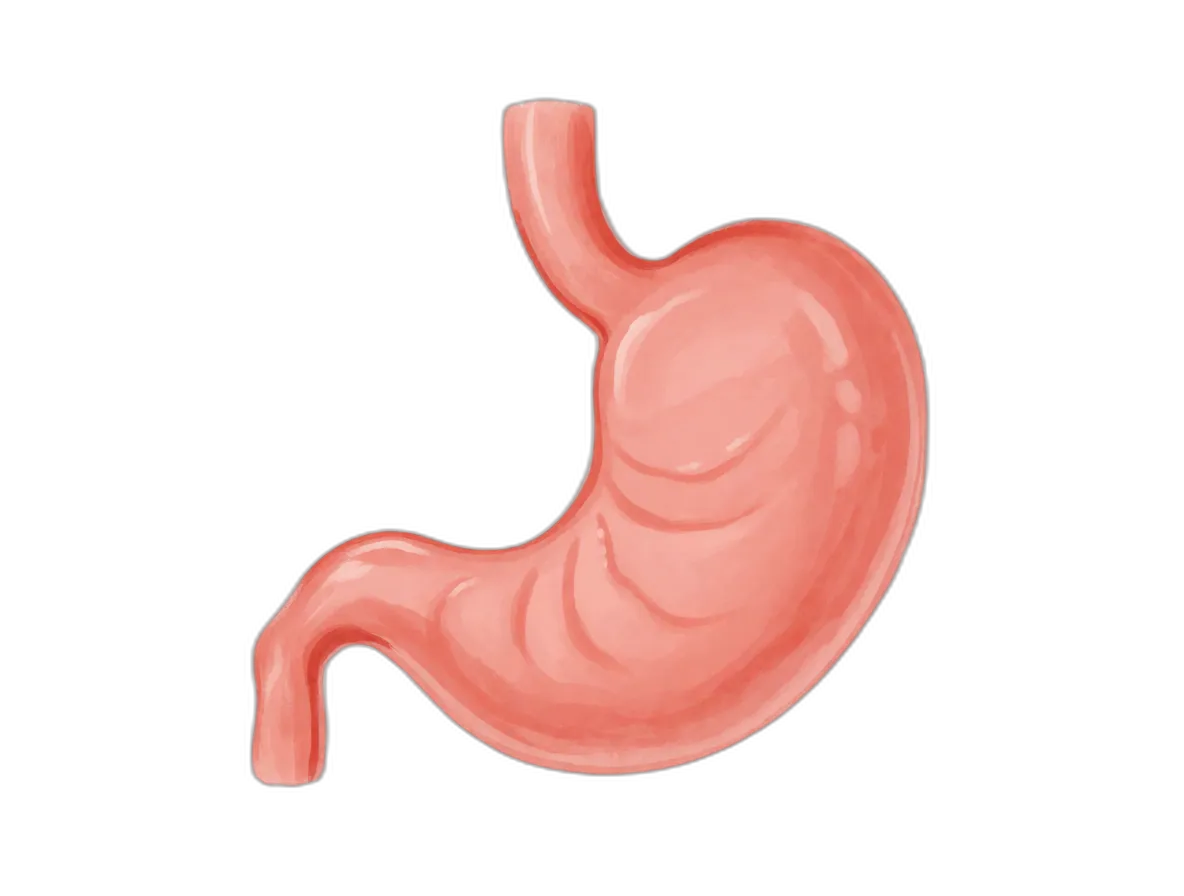
Swallow a mouthful of chicken and it has about two hours left. By then it will have been taken apart into pieces far too small to see. That takes acid, and a tool built for slicing meat into bits. Your stomach is meat. So why is the chicken gone and the bag that held it perfectly fine?
Nothing about the lining of your stomach is tougher than your dinner. It survives because of three tricks, and not one of them is armor.
Your dinner and your stomach are made of the same stuff
The juice inside your stomach is hydrochloric acid: mostly water, with a small amount of one very sour chemical dissolved in it. You make up to 2 liters(2 quarts) of that corrosive juice a day. Picture a big bottle of soda, brewed fresh, every day of your life.
Acid alone would not get far with a drumstick. Vinegar is acidic too, and meat left in it overnight goes pale and soft while staying obviously meat. A second ingredient does the real digestion.
It is an enzyme: a tool your body builds to hurry along one particular chemical change, over and over, without ever being used up. This enzyme is called pepsin. Its only job is cutting up protein, the building material of meat, egg white and most of you. Pepsin chops long strands of protein into short ones, short enough to absorb.
And that is where the trouble starts. Your stomach lining is protein, and so is every layer underneath it.
In 1772 the London surgeon and anatomist John Hunter told the Royal Society something odd. Animals found dead were often eaten through from inside their own stomachs, while living animals never were. Your great-great-grandparents were not yet born, and Hunter could not say what switches off at death.
The cutter leaves the cell switched off
The first defense arrives before either tool reaches your dinner. Your lining is a close-packed sheet of living cells, the microscopic sealed units every living thing is built from. Some of those cells make the acid, except that they never actually contain any. An acid is really loose hydrogen adrift in water, and these cells push that hydrogen out through their own surface one particle at a time. Inside, the cell stays as mild as ordinary tap water.
Pepsin gets the same treatment, done better. Pepsin is a molecule: a fixed group of atoms locked into one shape. A groove runs along it, and a strand of protein dropping into that groove gets snipped in half. The cells build pepsin with forty-four spare pieces trailing off one end, folded down over the groove. Capped like that, the tool is called pepsinogen, and it cuts nothing at all.
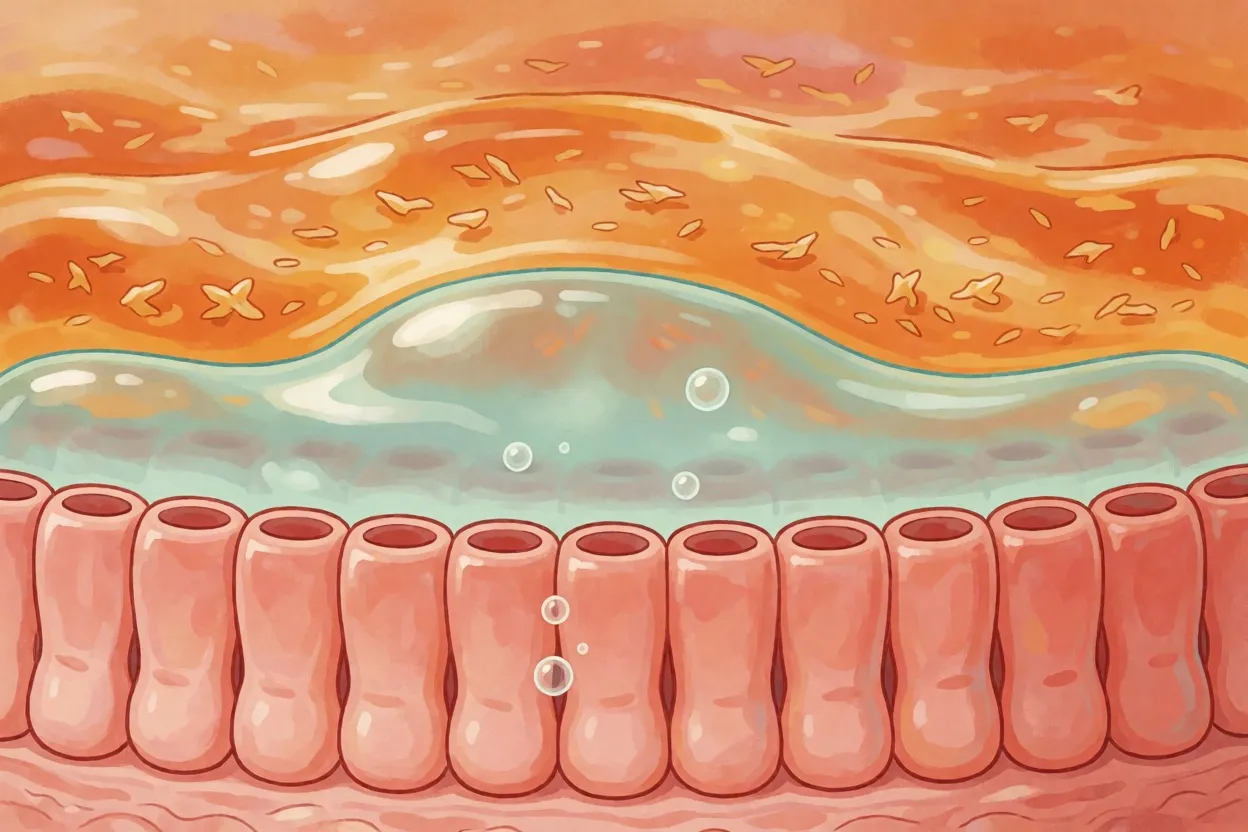
The acid removes the cap. Once the surroundings turn sour enough, the folded tail loosens and swings clear, and the freed groove snips it off. A capped tool has armed itself in the open, a safe distance from the cell that made it.
Neither tool is ever dangerous inside the cell that builds it. Both are assembled into something harmful only out in your dinner. That solves half the problem, because your dinner is pressed straight against the lining.
Under the blanket, the acid runs out
Not quite straight against it. Run your tongue along the inside of your cheek. That slipperiness is mucus, a thick watery gel your body lays down wherever something harsh must be kept off something delicate. Your stomach spreads a protective blanket of it across its inner surface, 0.2 mm(0.008 in) deep. A fifth of a millimeter is two sheets of paper.
A blanket that thin sounds hopeless. It works because it is a gel rather than a liquid, so nothing swirls inside it and the only way through is to seep. Pepsin cannot even do that. As molecules go it is a monster, far too bulky to squeeze between the tangled strands.
Loose hydrogen is harder, being the smallest thing there is. So the cells below fight it with the opposite chemical, pushing bicarbonate — baking soda — up through the blanket. Bicarbonate neutralizes loose hydrogen the instant they touch. Every particle seeping down meets one coming up, and both are destroyed on the way. Physiologists call this the mucus-bicarbonate barrier.
Researchers have measured the result with electrodes fine enough to slide into the blanket without tearing it. At the top it is as sour as vinegar; at the bottom it is as mild as plain water. Chemists count acidity in steps, each step down ten times weaker, and the blanket spans five.
Five steps down the acidity scale, across two sheets of paper.
A hundred thousand times weaker, across a gap thinner than a page. And mildness is where pepsin dies: past a certain point the tool falls apart for good. So the blanket does two jobs at once, stopping the cutter physically and draining the acid chemically.
The lining is rebuilt faster than it wears away
A blanket can be scraped, and yours is scraped all day: by food, by the stomach’s own muscular churning, and by pepsin, which nibbles the top of it constantly.
The renewal never stops. Fresh mucus is pushed up from below as fast as the surface is eaten away, so the blanket stays about the same thickness. The lining beneath is replaced too: cells at the very surface last several days at most before they are shed, swallowed and digested along with lunch.
Not one cell on the surface of your stomach today will still be there next week.
When something does break through, the repair is startlingly quick. In 1984 researchers stripped patches of stomach lining bare in rats and watched. Within thirty minutes the surviving cells on either side had flattened out and begun sliding across the gap. Within an hour the bare patch was covered again.
So the lining holds together by being continuously remade. Any part of that can fall behind, and then you get a hole.
What a hole in the blanket looks like
Where the blanket fails and the repair cannot keep pace, the acid and the armed pepsin treat the lining exactly as they treat a drumstick. What is left is a raw crater, sometimes as wide across as a coin. It is called an ulcer, and before medicine understood it, it killed people.
Every word of that follows from the blanket: an organism that cannot survive acid still lives in your stomach, provided it gets under the slime and stays there. Which is precisely why nobody found it for a century.
Nobody looked, because nothing could live in there
More than a century ago the Italian scientist Giulio Bizzozero drew spiral organisms in the stomach lining of dogs. Others found the same shapes in people, and all were ignored: everybody knew bacteria cannot survive stomach acid.
By the time your parents were small, the explanation was settled and comfortable: ulcers came from too much acid, brought on by worry and bad food. The extremely profitable medicines that eventually turned acid down worked beautifully, and the ulcers returned the moment you stopped.
Then in 1979 Robin Warren, a pathologist at Royal Perth Hospital in Australia, kept meeting curved organisms under his microscope. They always sat exactly where the stomach lining was damaged. He was told it was contamination from the instruments. In 1981 a young doctor called Barry Marshall took his side.
Growing the organism took a year, because the dishes were thrown out after two days. Over Easter 1982 the laboratory was too busy to look, and one batch sat in the incubator five days. The colonies were there.
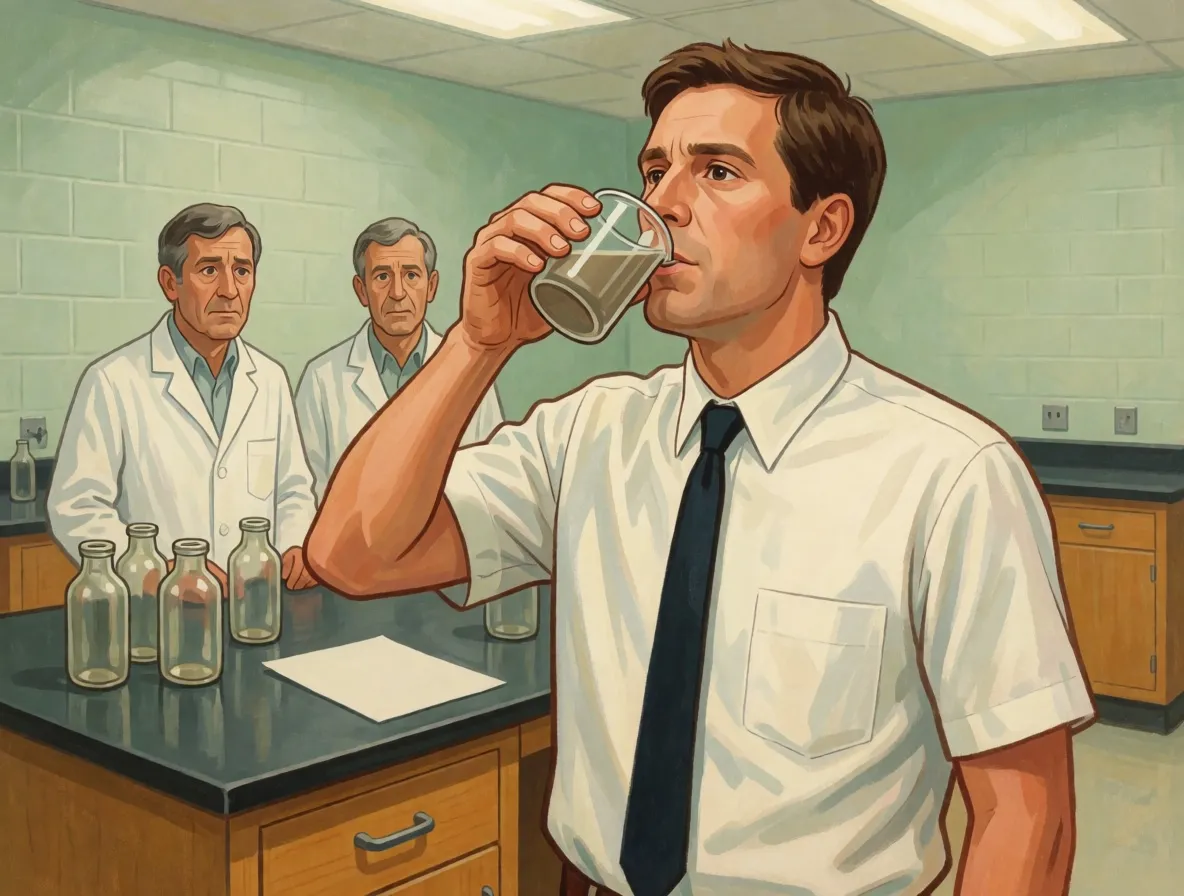
Papers followed in 1983 and 1984, and almost nobody was persuaded. So in July 1984 Marshall swallowed a dose of the organism himself. Ten days later a biopsy, a snippet of his own lining, showed gastritis — the inflammation that comes before an ulcer. He and Warren shared a Nobel Prize for the discovery in 2005. Ulcers are now cured with antibiotics.
Watch a blanket hold acid back
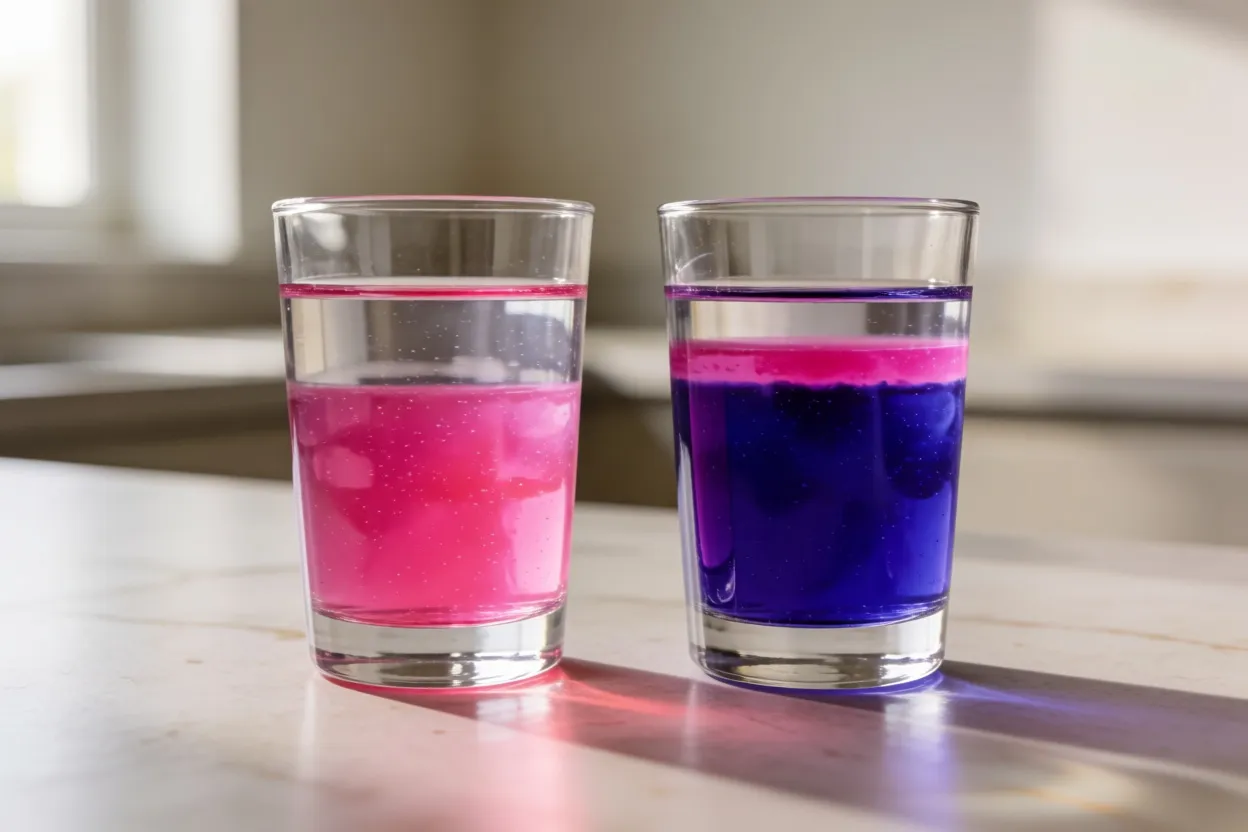
The plain gel usually goes pink to the bottom inside ten minutes. The one holding baking soda keeps a pink band at the top and stays purple beneath. Same acid, same depth: the only difference is what was waiting inside.
The defense is repair
So the chicken and the stomach are made of the same material, and the acid would take the stomach apart. It is stopped three times over. Nothing dangerous is built inside a cell. The blanket drains the acid before it ever lands. And the lining is rebuilt faster than anything can eat it.
Not one of those defenses is permanent. Every one costs energy, and your stomach pays that bill every second you are alive. Which is what Hunter saw in 1772. A body that has stopped paying stops repairing, the blanket thins, and within hours the stomach begins to digest itself after all. The bag was never tougher than the meat. It was only ever faster.