Why don’t birds fall off branches when they sleep?
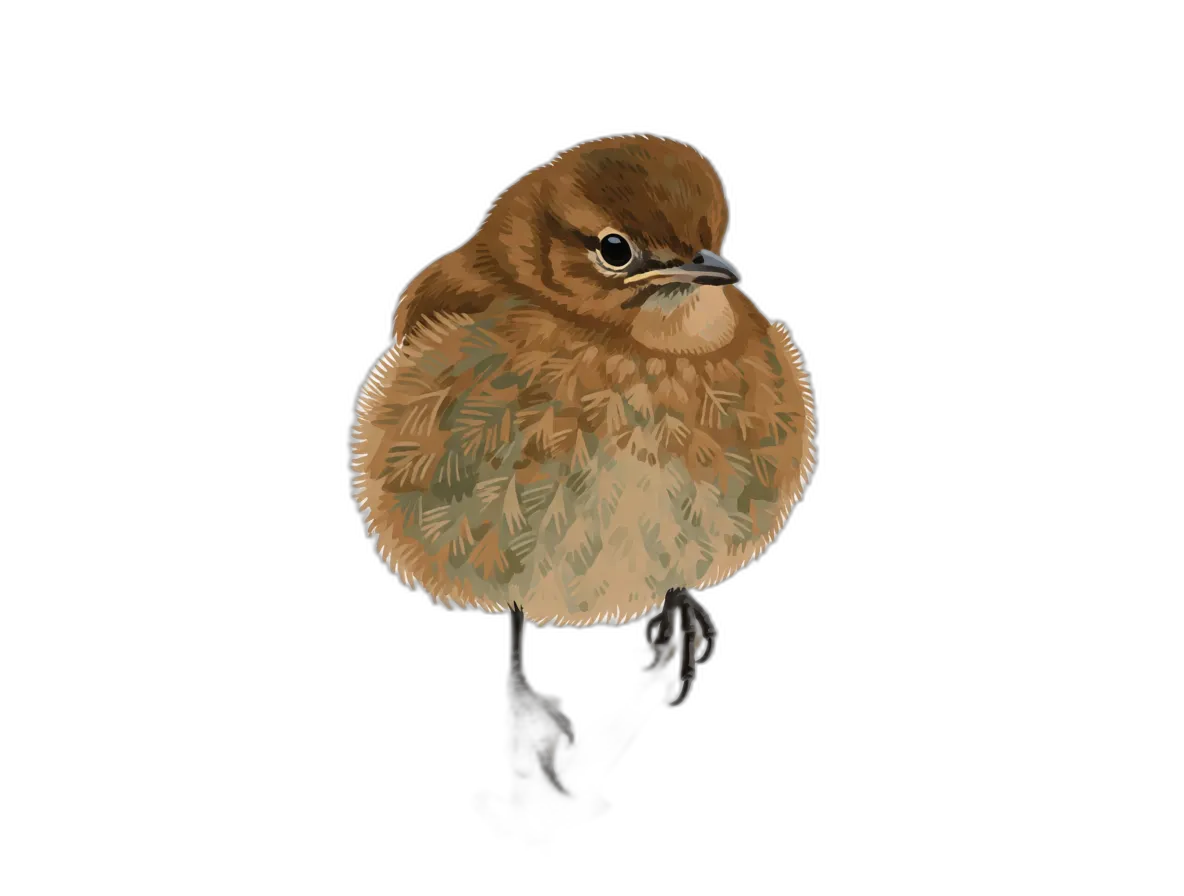
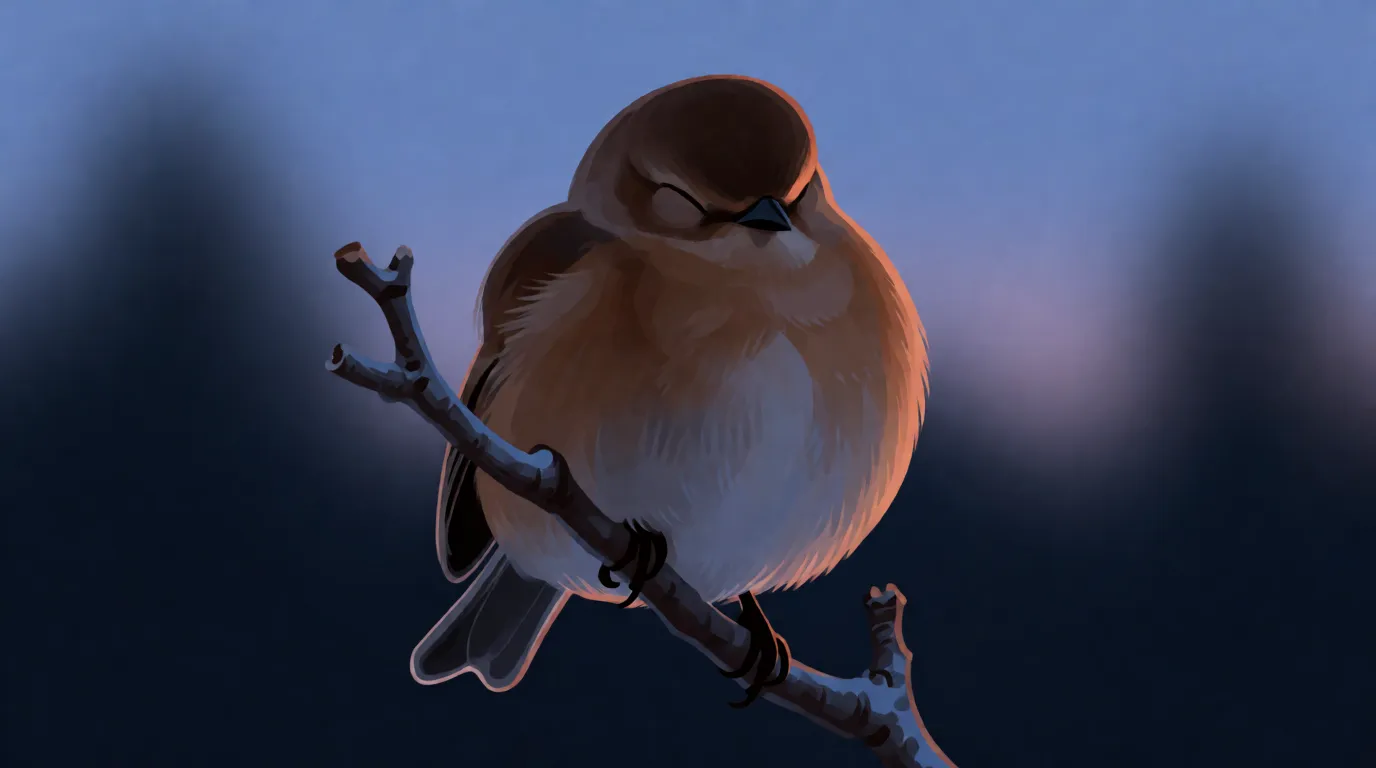
A sparrow spends the night on a twig thinner than a pencil, in the wind, with its eyes shut and its head tucked backward into its own feathers. You would fall off a park bench doing that. Every explanation you have ever been given involves a clever tendon that locks the toes shut, so the bird cannot let go even if it wanted to. Somebody finally tested that, and the answer was not what anybody expected.
The famous locking mechanism is real, and it is not what keeps a sleeping bird on a branch. Birds simply never stop balancing.
The foot is worked by ropes from a long way off
A bird has almost no muscle in its foot whatsoever. Skin and scales cover the toes, and the machinery that curls them sits considerably higher up, in the thick portion of the leg you would call the drumstick. On a sparrow that whole foot spans about 3 cm(1¼ in).
The muscles up there connect to the toes through tendons: tough cords that transmit a pull without stretching, in the same way a bicycle brake cable does.
Those cords descend behind the ankle and the knee, following a longer route than a straight line would. That arrangement matters enormously, because a rope passing behind a joint is automatically pulled tight whenever the joint bends.
So when a bird crouches, the leg folds, the cords are stretched around the back of the bending joints, and the toes curl closed without the bird deciding anything. That is genuinely how it works, and it is called the automatic flexor mechanism — flexor simply meaning a muscle or cord that bends something.
Then somebody added a ratchet to the story
Birds possess a second piece of anatomy that appears even more convincing. Along part of the tendon sit hundreds of microscopic ridges, and the sheath the tendon slides through carries matching ridges on its inner surface.
Push the two together and they interlock, like the teeth on a zip tie. Anatomists named it the tendon locking mechanism, and it is straightforward to photograph through a microscope in a great many species. The individual ridges are under 0.1 mm(0.004 in) tall.
From there the explanation wrote itself. A bird settles down, its weight presses the ridges together, the tendon locks, and the toes are held shut all night by a purely mechanical catch. The bird sleeps safely because it is physically incapable of releasing its grip.
That explanation is in books, on posters and in most nature programs. It is also the part that turned out to be wrong.
The test that took the ratchet out of the story
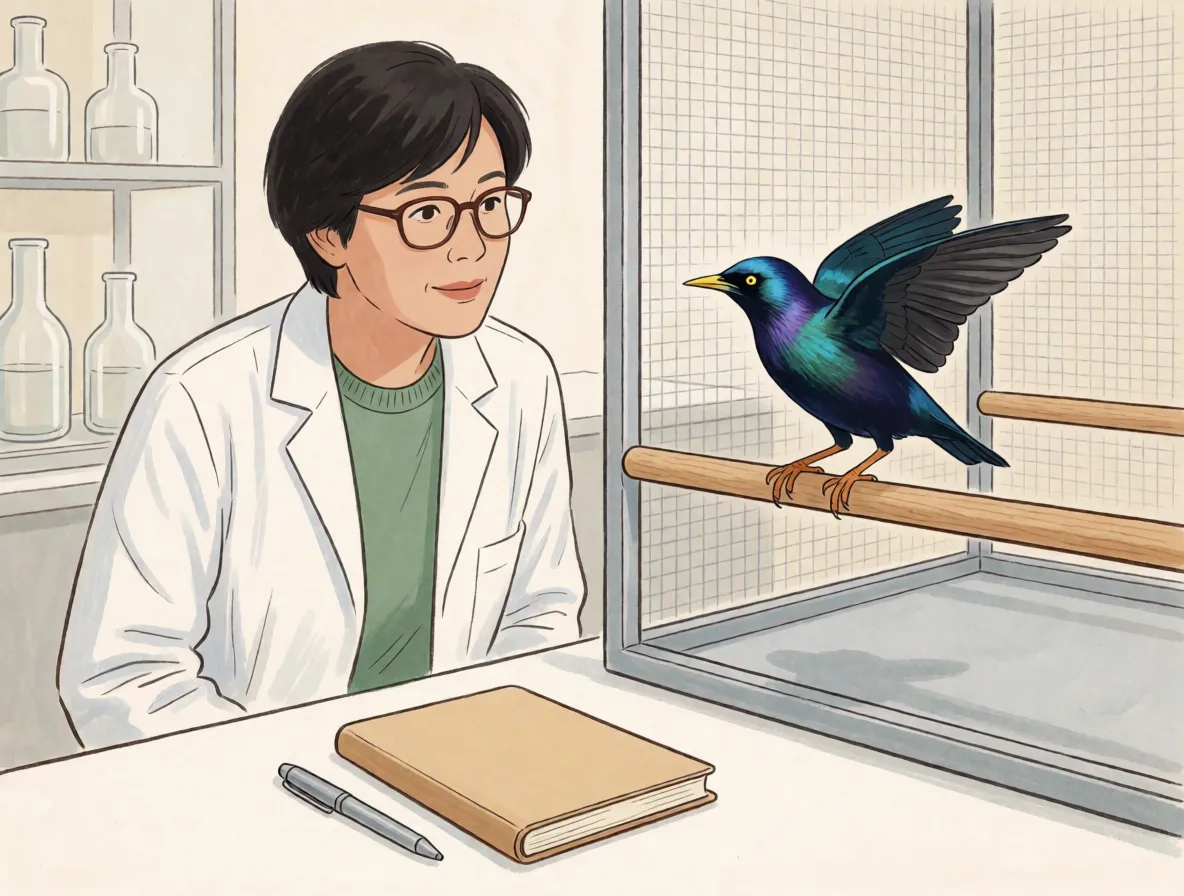
So the ridges accomplish something, and it is evidently not this. They appear to matter for gripping in other circumstances, where a bird hauls hard on a branch or clamps onto prey, with the muscles actively contracting.
That leaves the original question standing, and the answer is less exotic than a ratchet.
Sleeping birds are still doing the work
A sleeping bird has not switched its legs off. It maintains muscle tone: a background level of tension that muscles preserve even at rest, without any conscious effort. Scientists call the sleep it manages with half a brain awake unihemispheric sleep, and birds are unusually good at it.
You possess it too. Somebody genuinely unconscious collapses completely, whereas a sleeping person in an armchair still holds their head approximately where they left it. Tone is the difference between resting and limp.
Perching supplies two additional advantages requiring nothing clever. The bird’s weight drags its entire body downward, which folds the legs further, which tightens the cords and curls the toes harder. Weight assists rather than hinders.
Nothing locks. The bird is holding on the entire time, and holding on costs it almost nothing.
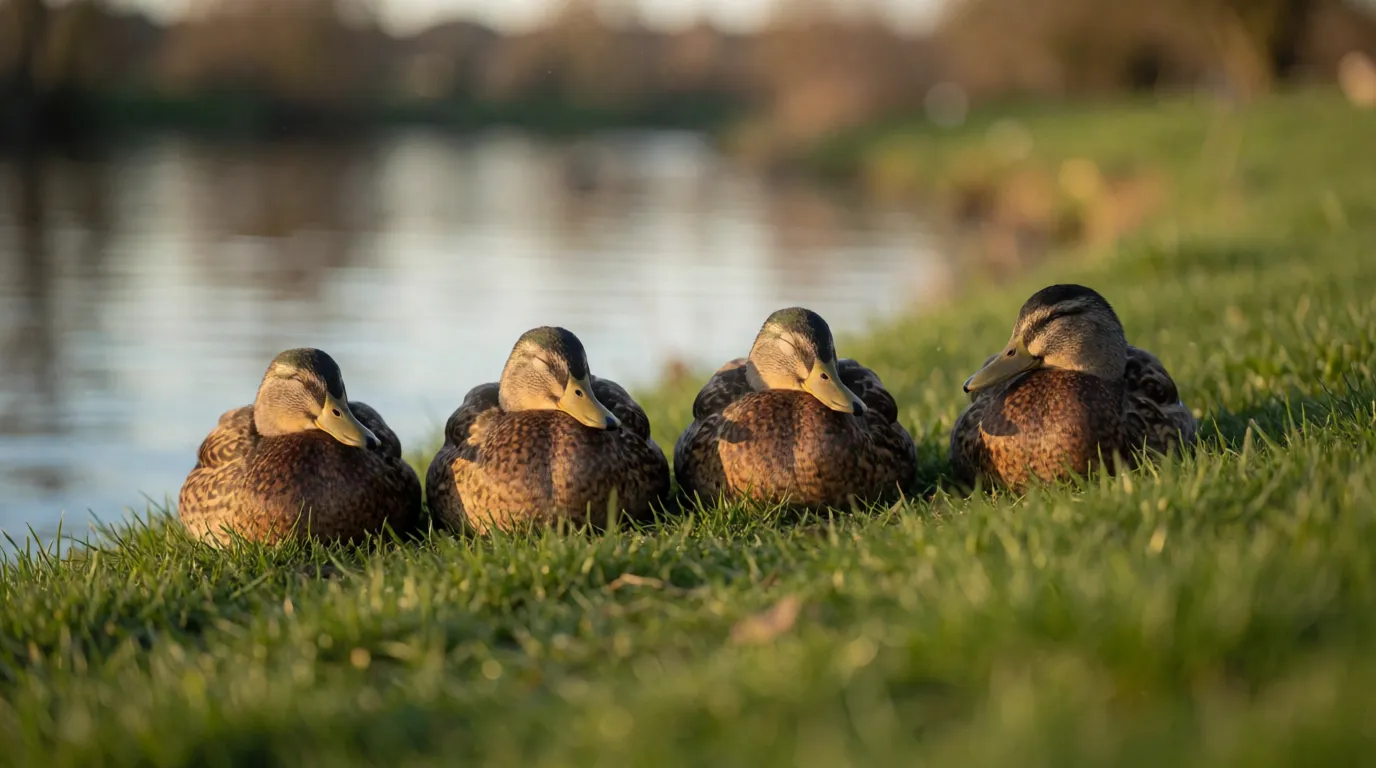
The second advantage is that half a bird can stay on duty. In 1999 Niels Rattenborg and colleagues lined up ducks in a row of clear tanks and watched which eye each one closed.
The ducks positioned in the middle, surrounded by companions, slept with both eyes closed. The ducks occupying the ends kept the outward-facing eye open for approximately a third of the night, with the hemisphere connected to that eye remaining awake.
Try holding on for a night
Almost everybody lasts considerably longer hanging than squeezing, and the reason is identical to the bird’s. When your weight performs the closing, the muscles only maintain a light tension instead of generating the entire grip.
That is the shape of the answer for a sparrow. It is neither locked nor switched off. It is resting in a position where remaining attached is practically free, with sufficient tone to maintain the shape, and sufficient brain awake to correct any wobble.
What the ratchet story got wrong
There is a lesson buried in this worth considerably more than the bird. The locking mechanism was a beautiful explanation: mechanical, visible under a microscope, and apparently a complete answer to the question.
None of that made it accurate. The explanation survived for decades because nobody had verified whether an unconscious bird genuinely grips, which turns out to be the single measurement the entire story depended upon.
So the next sparrow you see asleep on a wire is not clamped there by a catch. It is balancing, all night, with almost no effort, on a foot designed so that falling asleep tightens rather than loosens its hold.