Why does a mosquito bite itch?
You slept through the whole thing. A mosquito landed on your arm, drank for three minutes and left, and you never woke up. Yet by breakfast there is a raised pink lump the size of a coin that will pester you for two days. Something that gentle should not leave a mark at all. So where is the damage coming from?
The mosquito took some blood and left behind a little spit. Everything after that is your own body, overreacting to the spit.
The bite is astonishingly gentle
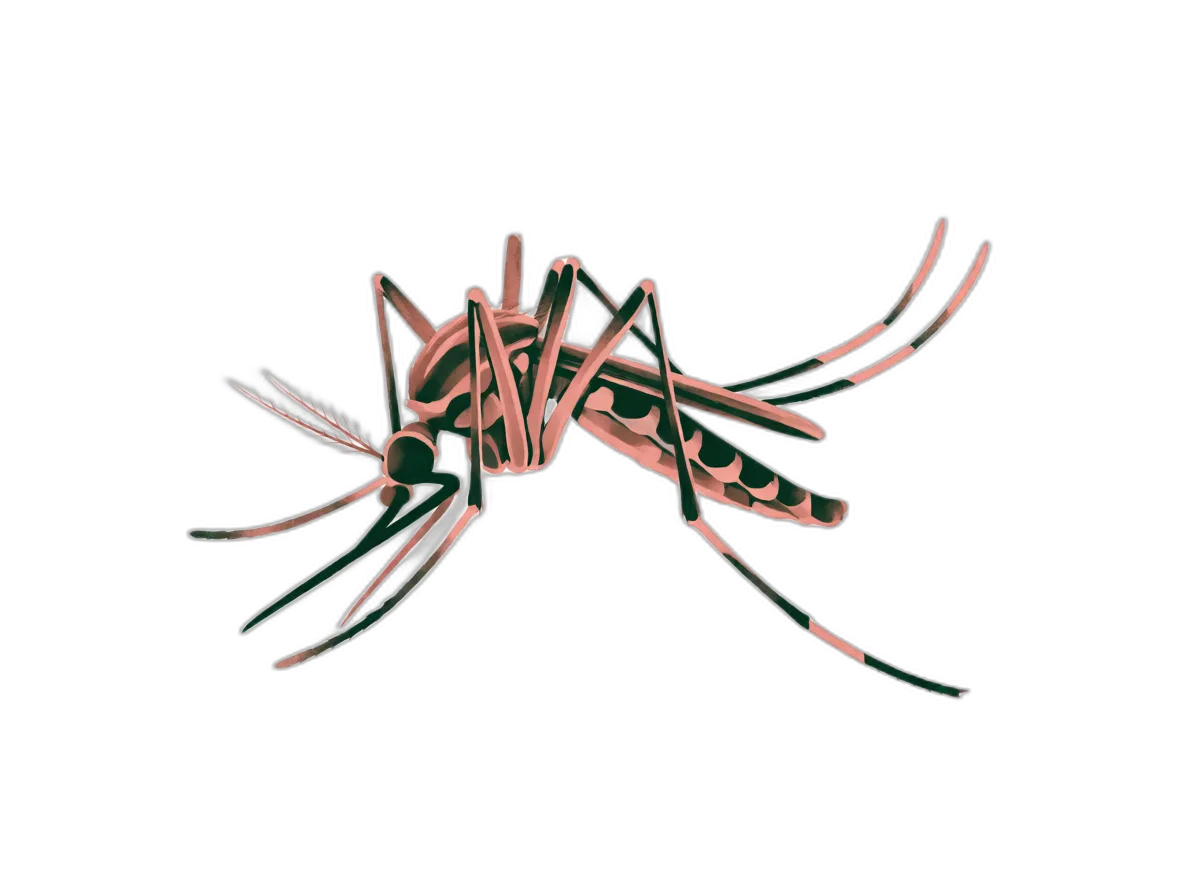
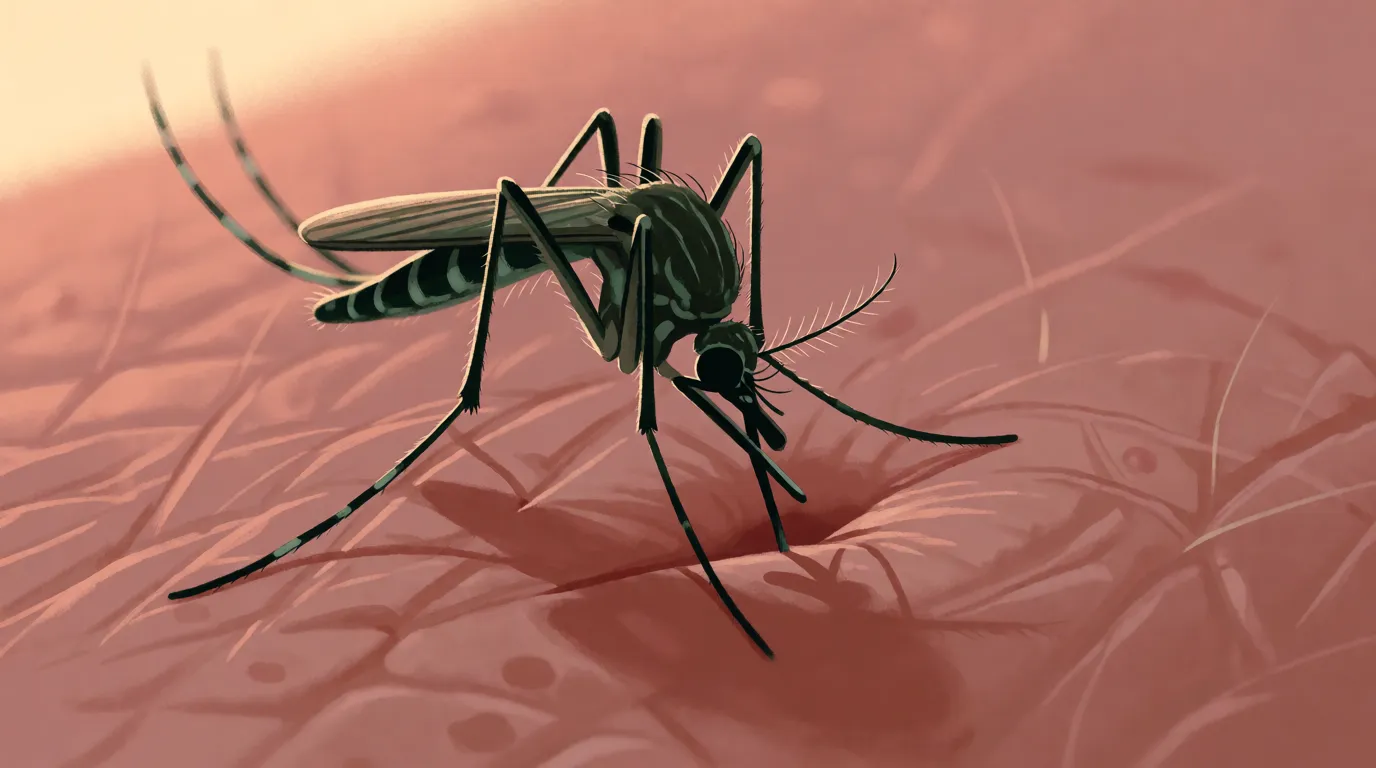
The mouthpart a mosquito feeds through is a bundle of six needles, and the whole bundle is thinner than a human hair. It slides between your cells rather than tearing through them.
Two of the needles saw gently through the surface, two hold the opening apart, one hunts for a blood vessel and one delivers saliva. Watch a mosquito feed under a microscope and the searching needle bends and probes like a walking stick in the dark.
She has a problem, though, and it is the reason this article exists. Blood is built to clot the instant it meets anything that is not a blood vessel, and a clot inside a needle that thin would end the meal in seconds.
So she pumps in saliva containing an anticoagulant: a substance that stops blood clotting. Her spit also widens your blood vessels, so the blood comes faster, and numbs the spot slightly so you do not swat her.
A typical meal against the weight of the insect drinking it, both in milligrams.
She departs carrying more than twice her own weight in blood, and you are left with roughly 1 microliter(1/50 drop) of mosquito saliva beneath your skin. Nothing in that description itches.
Your body has never seen these proteins before
Your immune system is the collection of cells and chemicals that hunt for anything foreign in your body. It is extremely good at noticing substances that belong to some other creature, and mosquito saliva is exactly that.
Sitting all through your skin are mast cells, small round cells packed with granules like a bag of gravel. Their job is sounding an alarm the moment something foreign appears, and they are the first responders here.
When mast cells detect the saliva they burst their granules open, releasing a substance called histamine into the surrounding tissue. Histamine is the alarm, and it produces two extremely obvious consequences.
Leaky vessels above, and an alarm below
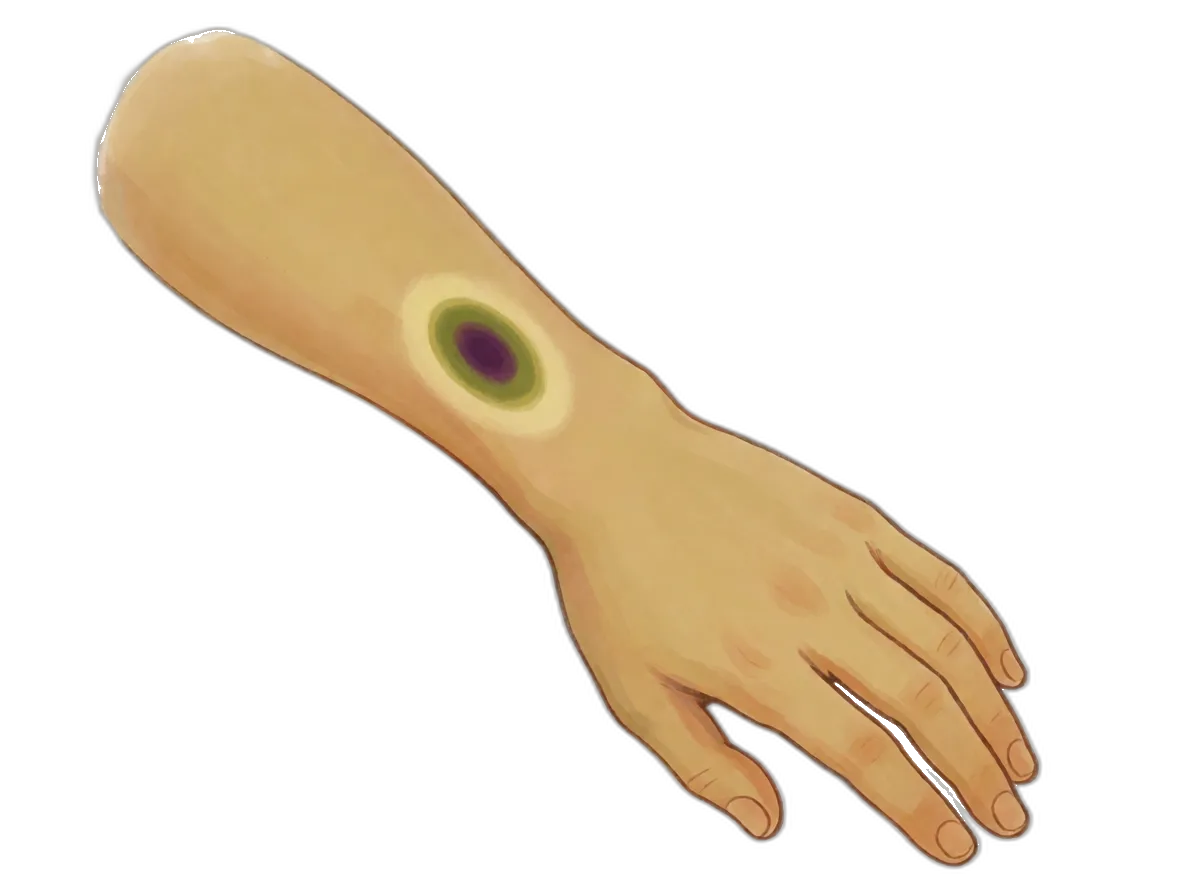
The first consequence is plumbing. Histamine makes the walls of nearby blood vessels leaky, so watery fluid escapes into the skin and the area swells into a pale raised bump. Doctors call that bump a wheal.
The second consequence involves your nerves: the fine fibers carrying information from your skin to your brain. Histamine irritates the tips of one particular variety of them, and those fibers report exactly one sensation. Not pain, not heat, not pressure — meaning a push against the skin. Itch, and nothing else.
The mosquito made a hole thinner than a hair. Everything you can see and feel was added afterward, by you.
Three things happen, always in the same order
Watch a fresh bite closely and it performs a sequence that is the same on everybody. A small red spot appears where the needles went in, within seconds, as the vessels right there open up.
Then a red blotch spreads outward around it, much wider than the bite, over about a minute. That spreading redness is called the flare, and it comes from nerve signals traveling sideways through the skin and opening vessels the saliva never reached.
Last comes the wheal, rising in the middle over the next few minutes, pale because the swelling squeezes the surface blood out of the way.
Red spot, flare, wheal. That sequence is so dependable that doctors have used it as a diagnostic test for a century. You can produce a version of it on yourself in thirty seconds, without any insect whatsoever.
Scratching is the worst possible plan
Scratching additionally tears the surface, which summons more mast cells and releases additional histamine, which is precisely the itch you were attempting to stop. Everything about it guarantees a worse hour afterward.
The remedies that genuinely work are the unexciting ones. Something cold slows the entire chemical business down and quietens the irritated fibers. Firm pressure with a thumb, maintained for thirty seconds, generates the masking pain without damaging anything.
The doctor who mapped the lump
Nobody knew what histamine was when the pattern was first described. Henry Dale and a colleague had extracted the substance from tissue in 1911 and shown that injecting it made blood vessels leak, but whether it existed naturally in skin was an open question.
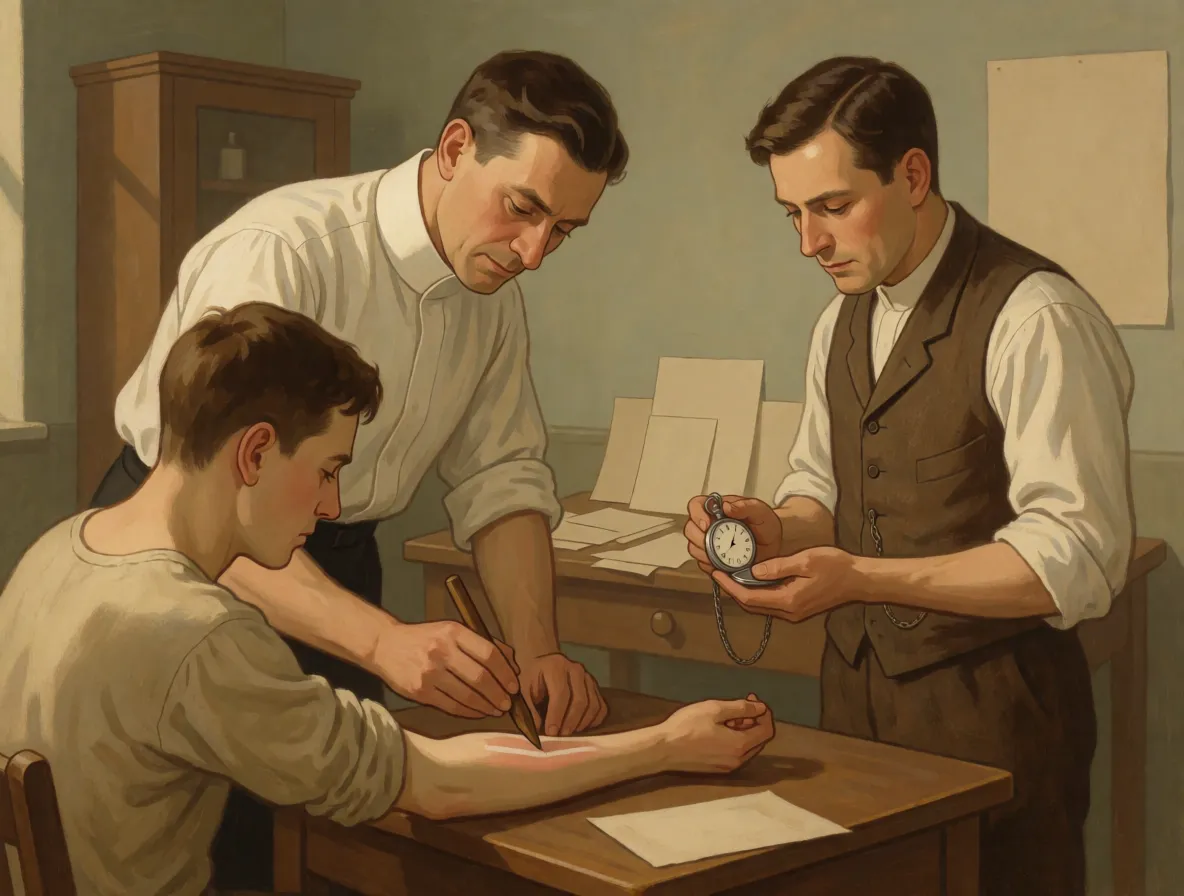
Thomas Lewis was a heart specialist in London who became fascinated by skin instead. Through the 1920s he stroked, scratched, warmed and injected thousands of forearms, and in 1927 he published the sequence: red spot, flare, wheal, in that order, every time.
He was scrupulous about what he could prove. The cause, he wrote, was an unknown “H-substance” released by disturbed skin. He strongly suspected histamine, and declined to state it as a fact, which is why the sentence survives a century of rereading.
He was right. The substance was histamine, released by mast cells, and the triple response is now the standard demonstration that they exist. The first medicine to block it arrived in the 1930s, and antihistamine creams in the bathroom cupboard are the great-grandchildren of that work.
Draw the response on your own arm
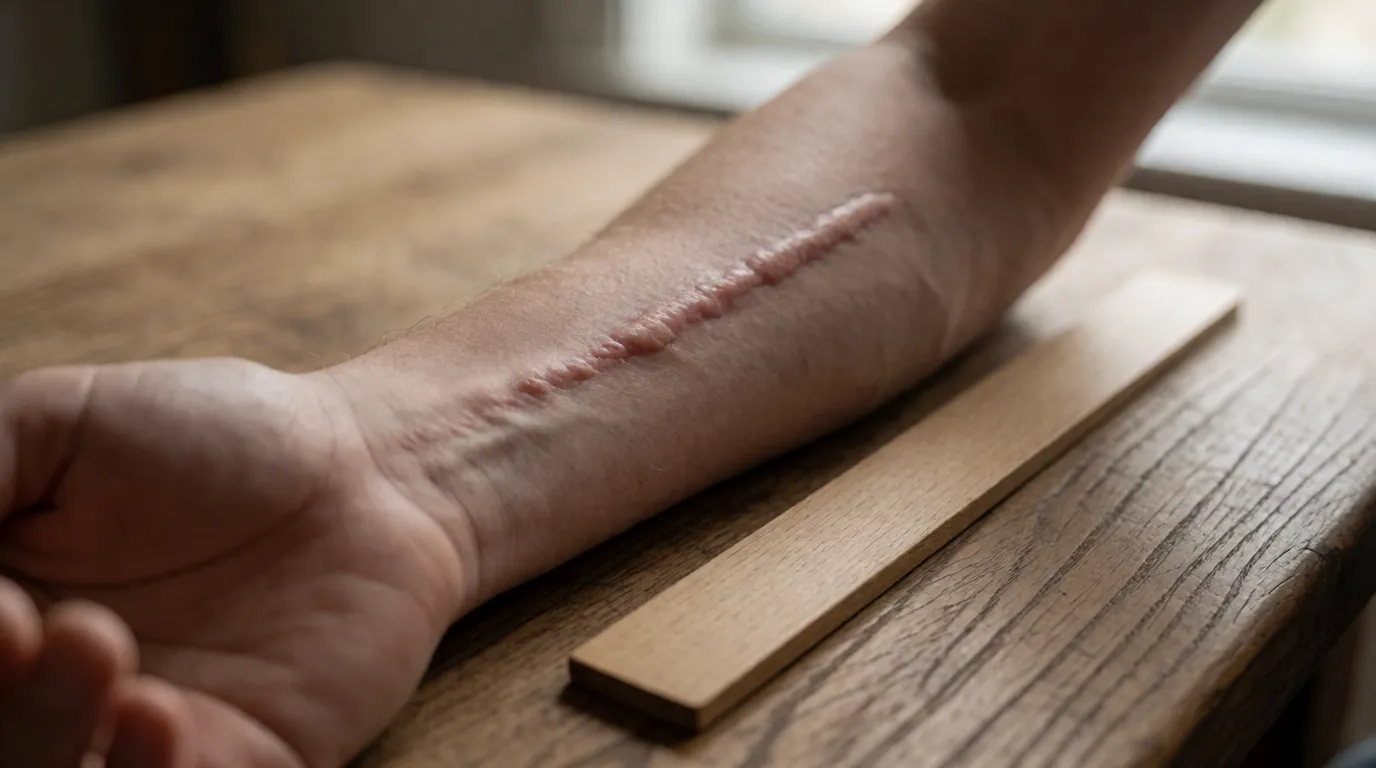
On most people the red band reaches 20 mm(¾ in) or so and fades within twenty minutes. On about one person in twenty it goes further and the line rises into a genuine wheal, which is exactly what a mosquito bite does without the mosquito.
Now compare it with a real bite if you have one. Measure the wheal and the flare the same way, and you will find the same shape of response, slower and larger, because the saliva keeps the mast cells firing for hours instead of seconds.
The bite you never feel is the one that itches
There is a final oddity worth noticing. The people who react least to mosquito bites are not the ones who never get bitten. They are the ones whose immune systems have stopped bothering.
Get bitten by an identical species often enough and the response fades over years, because your mast cells gradually stop treating that particular saliva as an emergency. Visitors to a tropical country are eaten alive while residents barely notice, and both groups are being bitten equally.
Which puts the whole lump in a strange light. It is not an injury and it is not poison. It is a defense system that has correctly spotted something foreign, sounded a full alarm over half a millionth of a liter of spit, and left you scratching your ankle for two days.