How does sunscreen stop a sunburn?
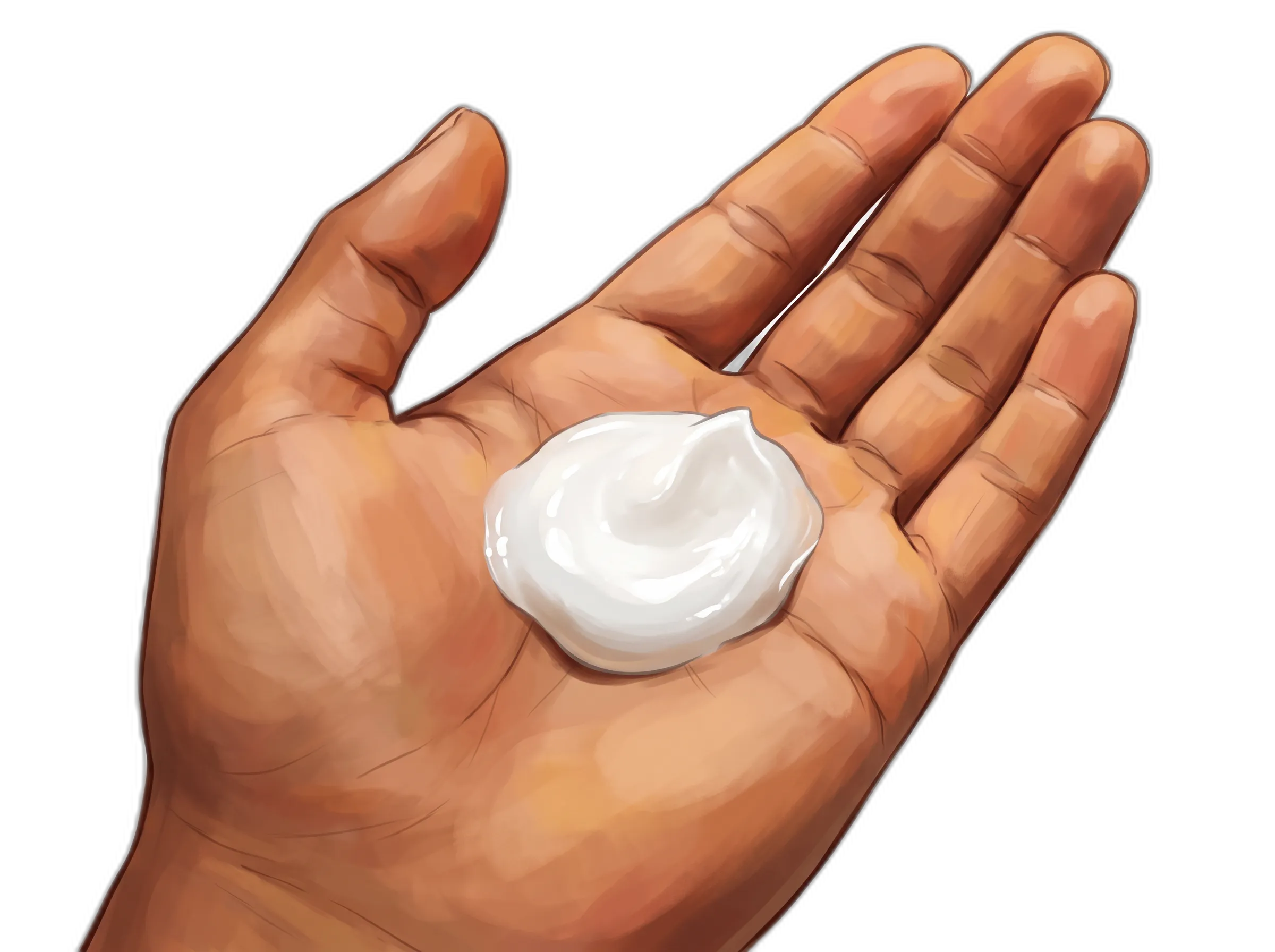
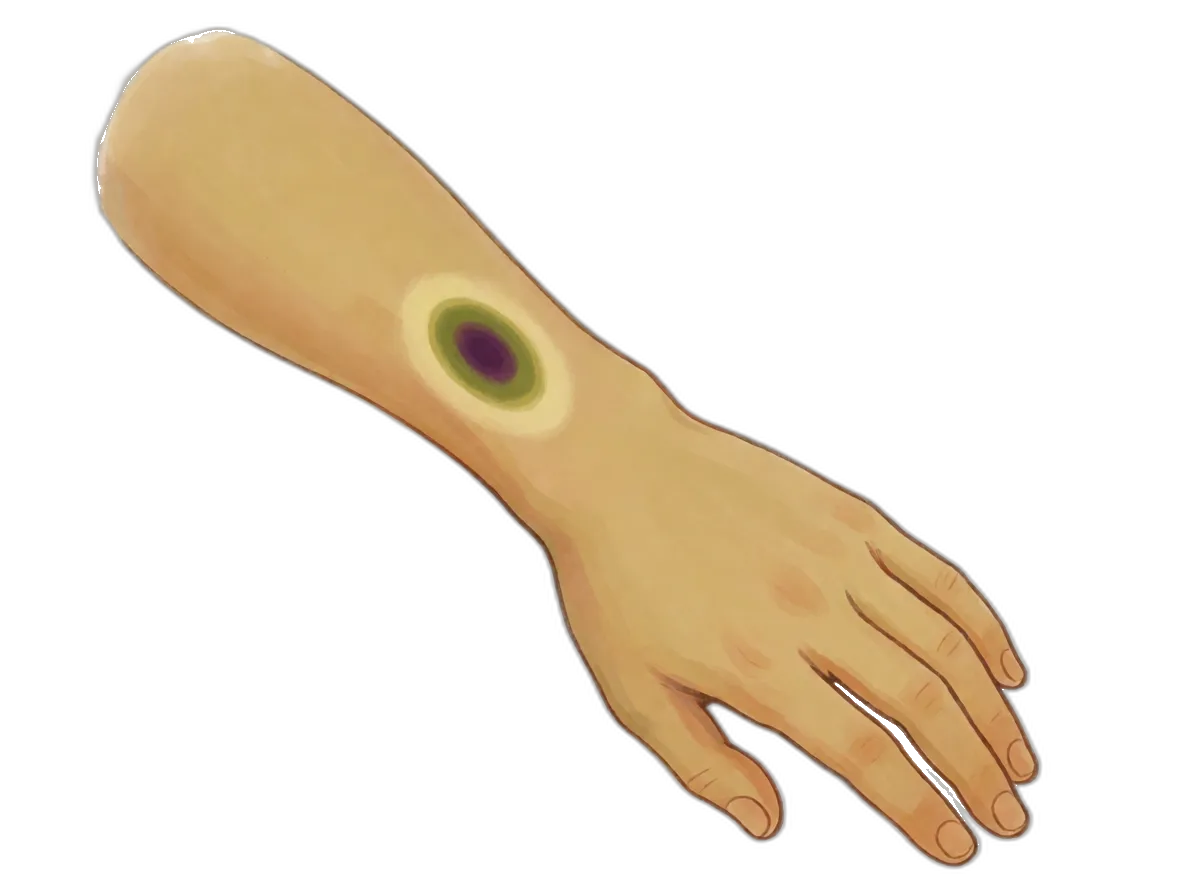
You rub sunscreen into your arm and it disappears. The skin underneath looks exactly the same. Sunlight still lands on it, the sun still feels hot, and you can count every freckle. Nothing appears to have been stopped by anything. Yet the arm with sunscreen on it is fine at bedtime, and the bare one is pink.
That film is not standing in the way of the sunlight. It is taking the dangerous part of it and handing that back to you in a form which cannot hurt you.
Sunlight arrives in packets, and some are too big
Light does not pour out of the sun as a smooth stream. It arrives in separate lumps. Each lump is a photon, a single indivisible parcel of light energy. Your eyes catch photons all day without noticing one, because they land by the trillion.
The useful thing about a photon is that its size is fixed by its color. A red photon carries very little energy. A blue one is more energetic. Past the violet end of the spectrum the parcels keep growing, and your eyes give up. That invisible band is ultraviolet light, and the sun emits it constantly.
An ultraviolet parcel can do something no visible one can manage. Landing inside a living skin cell, it damages the DNA stored there — the instruction manual a skin cell duplicates every time it divides. Damaged instructions, copied, are where sunburn begins. Brightness barely matters: a dim lamp of pure ultraviolet would scorch you, and a dazzling red one never could.
You have already tested this without meaning to. Sit in a sunbeam coming through a shut window on a hot day. It is bright, it is warm, and it does not burn. Ordinary glass swallows nearly every burning parcel before it reaches the room.
So the danger has little to do with how much sunlight lands on you. What matters is the size of each individual parcel. Which raises an awkward question: what could possibly catch something that small?
A film thinner than one of your hairs
Everything in the bottle, and everything in you, is built from molecules: small groups of atoms locked together in a fixed arrangement. Sunscreen is a deliberately chosen layer of molecules, spread over the dead outer surface of your skin, above all the living skin below.
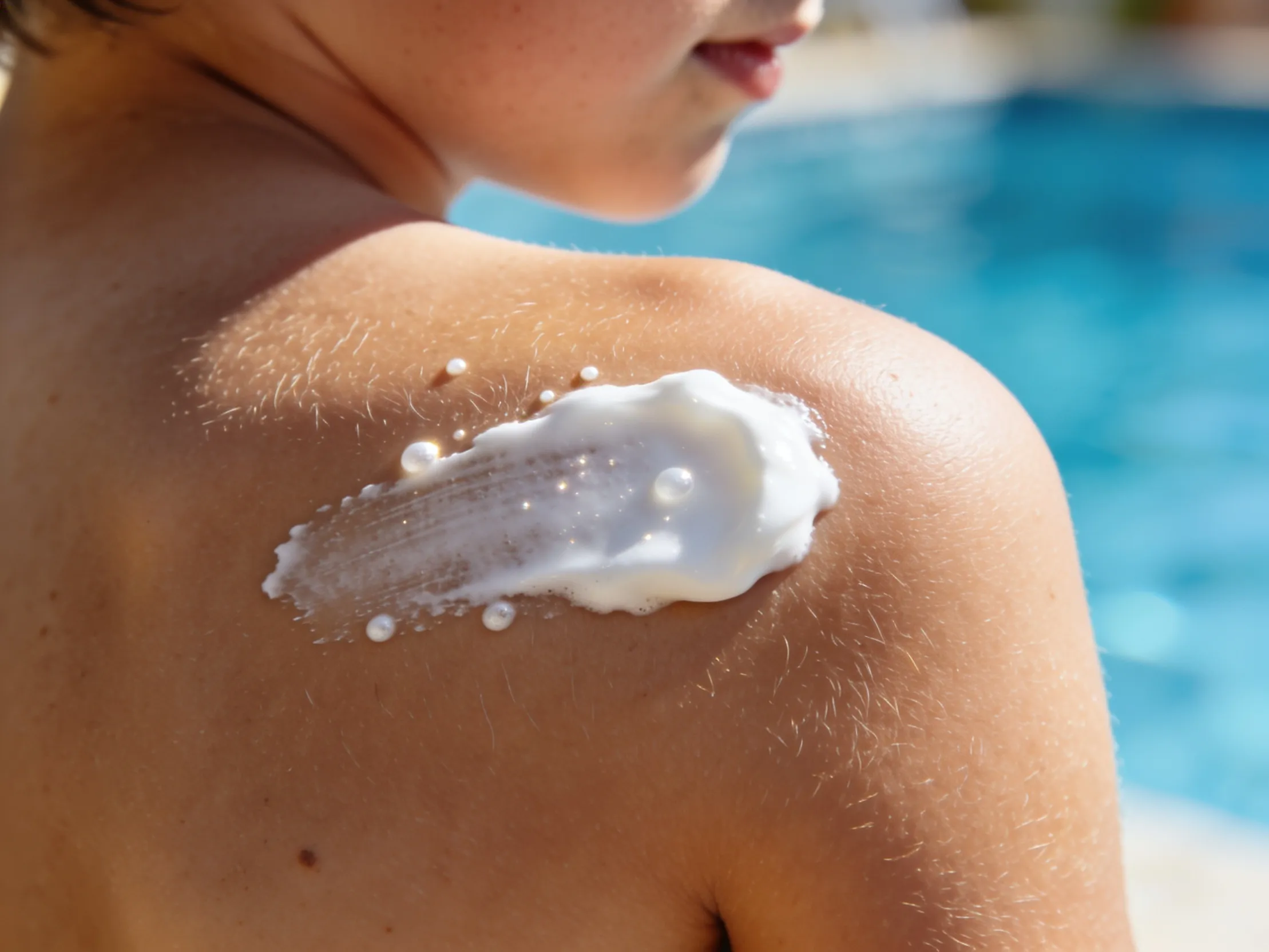
That layer is astonishingly thin. Sunscreen is tested at a thickness of about 0.02 mm(0.0008 in), roughly a third of the width of one of your own hairs. Covering a whole body properly at that thickness takes around 30 mL(1 fl oz) of cream, enough to fill two tablespoons. Almost nobody uses that much.
One of the commonest molecules doing the work is avobenzone. Its shape lets it swallow exactly the photons you cannot see, and almost none of the ones you can. That is why the cream vanishes on your arm. Visible photons sail straight past it into your eyes. Ultraviolet photons do not get through.
So the cream is a crowd of molecules a hair’s width above living skin, removing the invisible parcels and letting everything else by. Catching one is only the start of the problem. That energy is now inside the molecule, and it has to go somewhere.
The molecule stretches, then snaps back
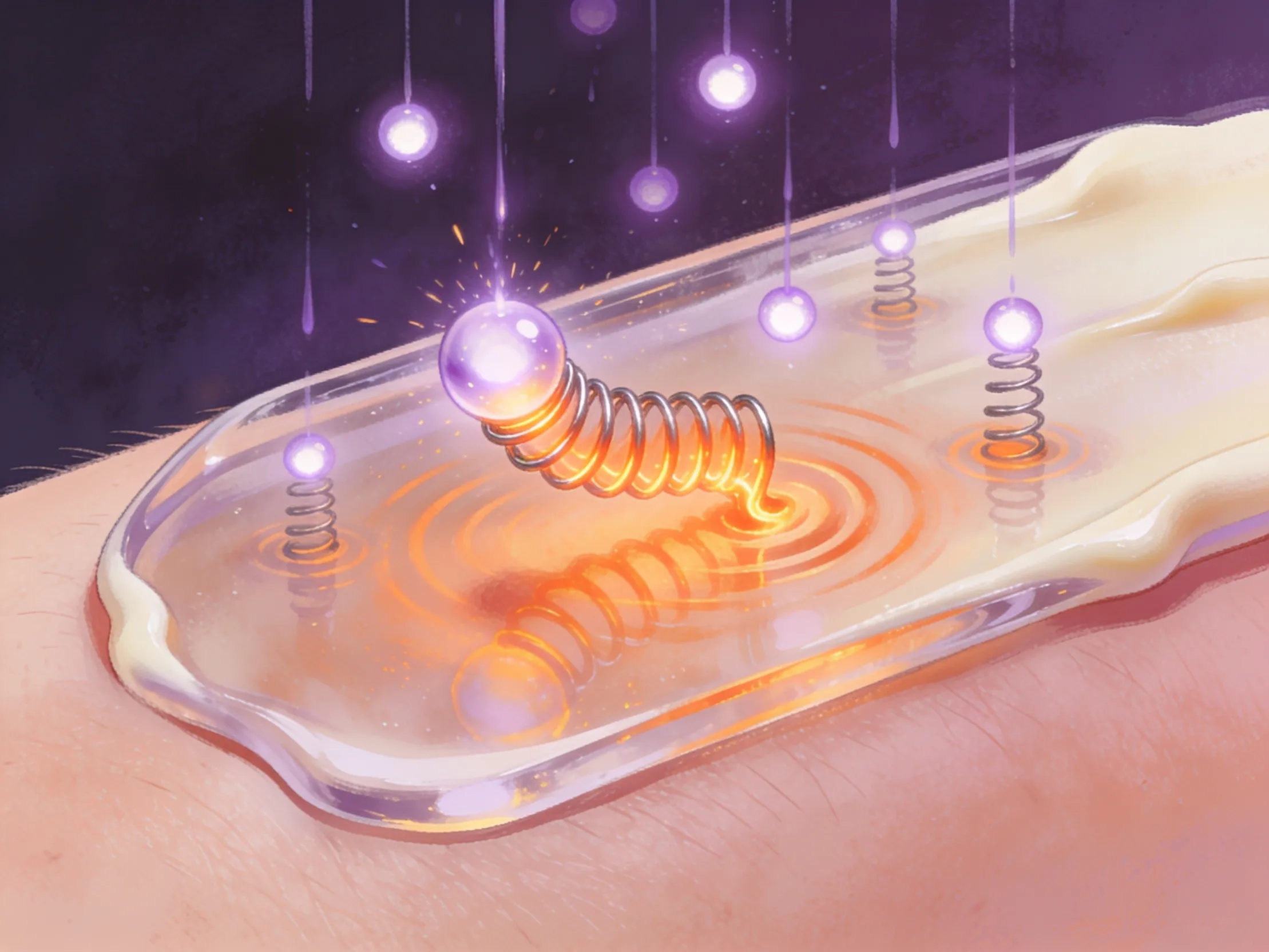
Picture avobenzone as a spring. When an ultraviolet photon strikes it, the photon vanishes and its energy goes into the spring, hauling it out of shape. A molecule loaded with surplus energy is excited, which in physics means carrying more than it should rather than feeling pleased about it. An excited molecule is unstable and cannot stay that way.
So it snaps back, absurdly fast: within a few trillionths of a second. It recovers its normal shape long before the next photon could arrive, which is why a single molecule can do this over and over all afternoon.
The snap-back is where the answer lives. The energy leaves the spring as vibration. The molecule shudders violently, shoves the molecules packed around it, and those shove their own neighbors. That spreading shove already has a name you know. Heat is nothing more than molecules jostling one another.
An ultraviolet photon went in and a faint puff of warmth came out. No energy was destroyed, and none was sent back where it came from. It only changed form. Which leaves an obvious objection. If all the energy is still here, why is it suddenly harmless?
The same energy is harmless once it is shared out
Because a photon and a puff of warmth deliver energy in completely different ways. A photon hands its whole load to one molecule, in one spot, in one instant. Concentration like that is what lets it break something. Warmth distributes the identical load in crumbs, among an enormous crowd, and every crumb is far too small to damage anything.
The difference is not marginal. One ultraviolet photon carries roughly a hundred and fifty times the energy of a single ordinary jostle at skin temperature. Divided that many ways, what survives is indistinguishable from the warmth already present.
The only part of a sunscreen you can actually watch bouncing light is the part that was never protecting you.
Every sunscreen on the shelf performs that identical conversion, white or clear, mineral or chemical. It absorbs ultraviolet photons and returns their energy as warmth. You never notice the extra, because ultraviolet supplies under a tenth of the energy in sunlight.
What took people a staggeringly long time was suspecting light at all.
Everyone blamed the heat
For thousands of years the explanation was the obvious one. The sun is hot. Hot things burn. So the sun burns your skin.
Two hundred years ago, before your great-great-grandparents were born, a London surgeon and anatomist tested that on himself. In 1820 Everard Home sat in strong sunlight with one hand bare and the other wrapped in thick black cloth. The cloth trapped the sun’s warmth beautifully. Skin beneath it ran about 4 °C(7 °F) hotter than the bare hand alongside. The bare hand burned. The hotter hand did not.

He also held his hands in air hotter than any bath he would have climbed into, and came away undamaged. The single thing he kept off them was light. He reported the result to the Royal Society that November. Heat was innocent.
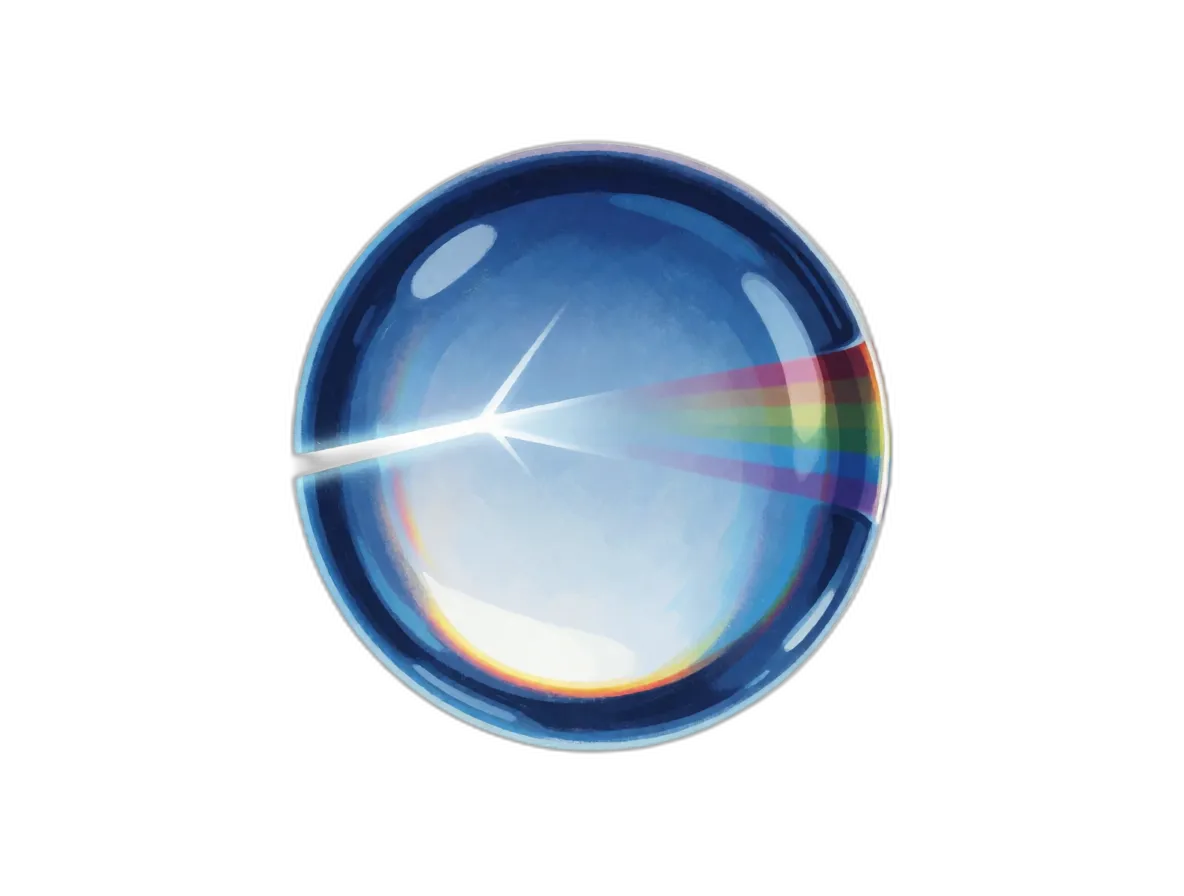
Naming the actual culprit took another sixty-nine years. In 1889 a Swedish doctor called Erik Widmark spread the fierce light of an electric arc lamp into a spectrum with a prism. He strained the heat out through a screen of water. Burns appeared anyway, and they came from the invisible end. They stopped completely once the lamplight passed through ordinary window glass, which is the result you can check from an armchair.
Widmark then blocked the burning band using quinine, the bitter chemical in tonic water. He picked it because quinine fluoresces under invisible light, so it had to be absorbing that light. A molecule that swallows ultraviolet is a sunscreen, and Widmark had one forty years before anybody sold one in a bottle. His test is also cheap enough to repeat.
Watch a newspaper go brown, or not
You need neither an arc lamp nor Home’s patience to watch this happening. Cheap paper does the measuring for you.
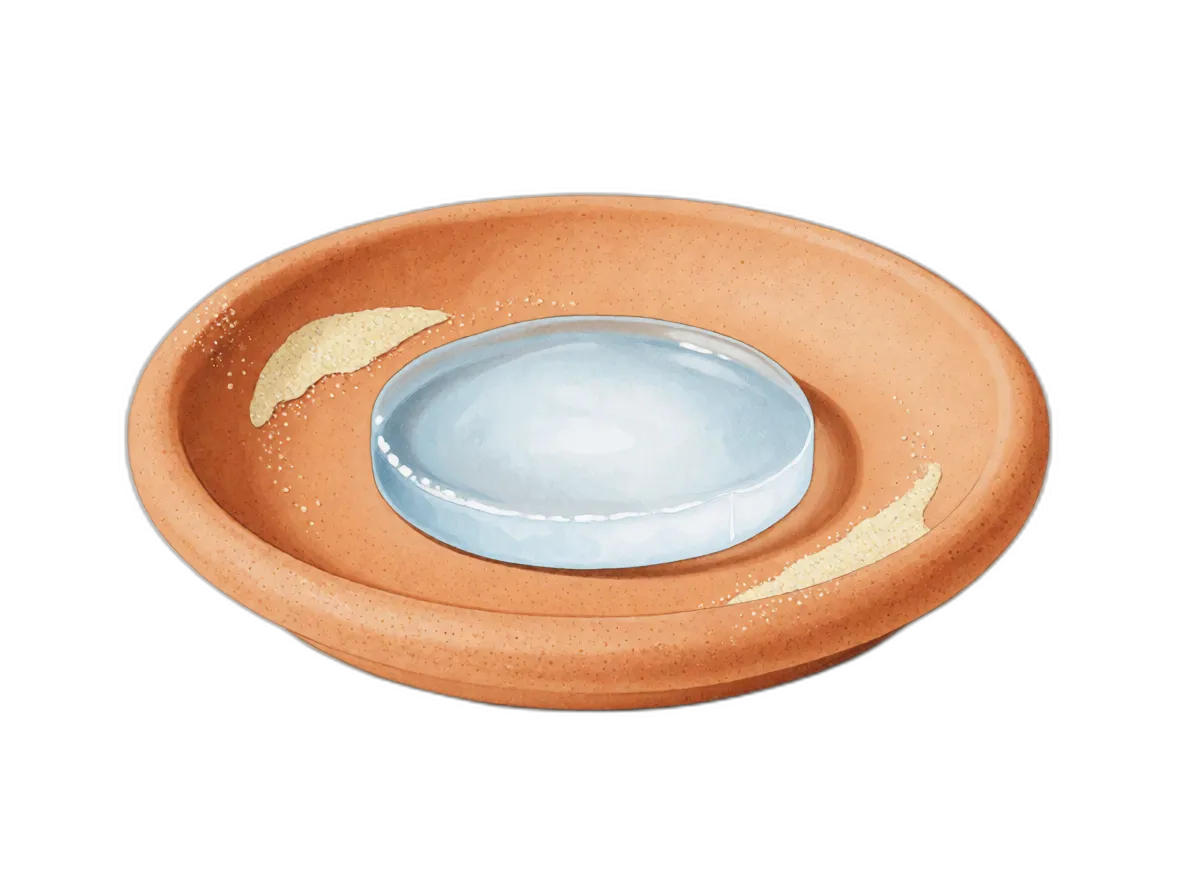
The bare newsprint and the patch under the clean plastic will both have gone visibly browner. The patch under the sunscreen should be close to the little white disc that hid beneath the coin. Every patch received identical heat and identical visible light. The only difference was the parcels nobody can see.
There is one more thing to notice, and you will only spot it if you skip that fresh smear each morning.
Why it runs out
Everybody knows sunscreen has to go back on every couple of hours, and everybody assumes it rubbed off or washed off. Plenty of it did. Some of the loss, however, happens with nobody touching it.
A spring stretched trillions of times will eventually stretch the wrong way. Very occasionally an excited avobenzone molecule comes apart instead of relaxing back into shape, and a broken one will never catch another photon. In some sunscreens more than half the avobenzone is gone within an hour of hard sun. That is why modern bottles carry stabilizers, partner molecules whose only job is to steady it, and why the ingredients list runs so long.
So the film that looked as though it were doing nothing was quietly being spent the entire time. Every faint puff of warmth inside it marks one ultraviolet parcel that hit a spring instead of your skin, and a few of those springs did not survive the encounter. That is what you top up when you reapply. Some of it wore away. The rest was used up doing the only thing it was ever for.