How does a young sunflower follow the sun?
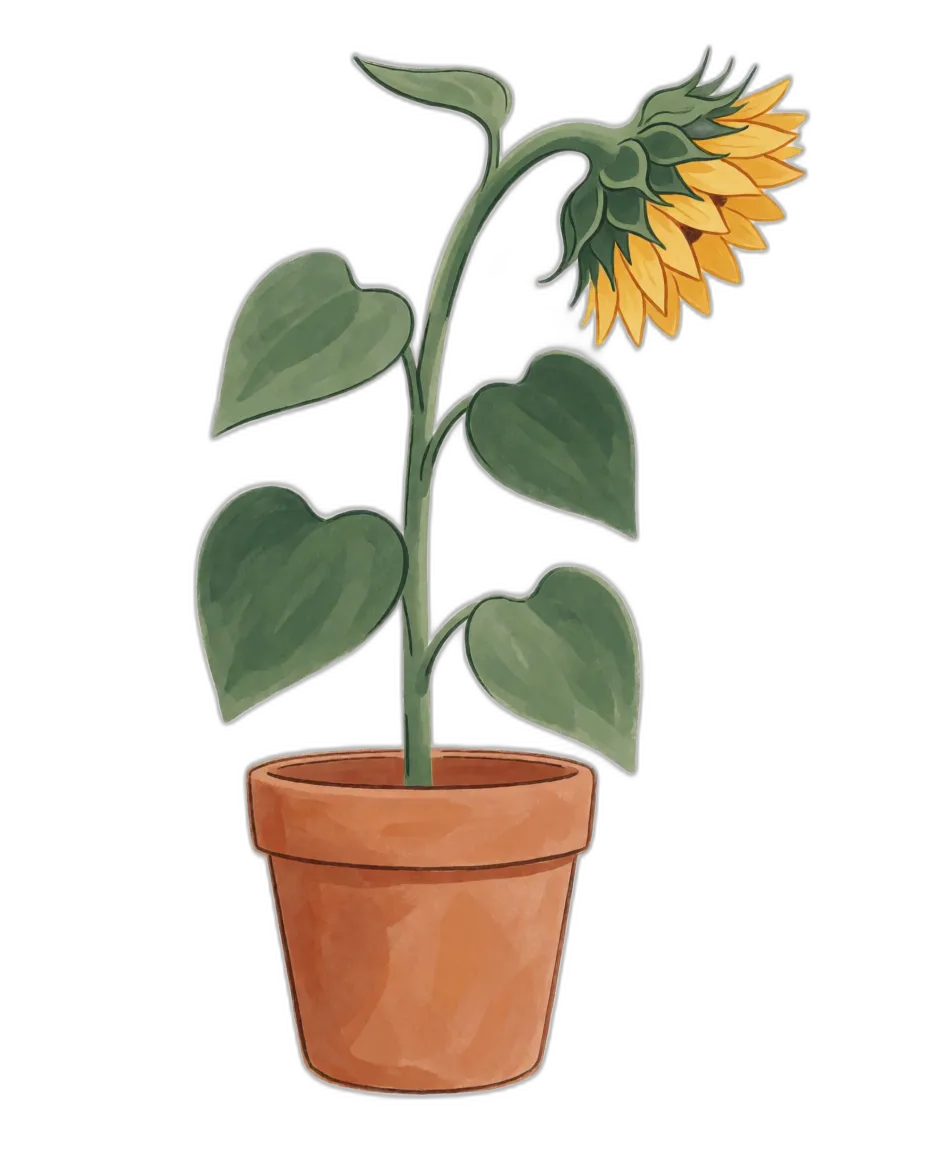
Walk past a field of young sunflowers early and every head is aimed east, into the sunrise. Come back after lunch and the whole field has swung west. That much you might expect. Now return at midnight with a flashlight. Every head has already turned east again, in the dark, hours before there is anything there to face. So what does the turning, and how does it know what the sun will do next?
A sunflower has no muscles. Nothing inside it can pull, push or twist. A young sunflower carries its head across the sky by doing the only thing a plant can do to move: growing, and growing unevenly.
A stem bends by growing
Start with the stem, because that is where the movement happens. The head is only a passenger on a stalk that changes shape beneath it.
A stem is built from cells, the microscopic units every living thing is made of. Just below the head, in the youngest stretch of stem, those cells are still elongating: soaking up water, lengthening, shoving the head higher.
Picture that stretch as two towers of bricks glued side by side, one facing east, the other west. Add a brick to the eastern tower and the pair stops standing straight: it tips west, away from the taller side.
That is the whole trick, and it has a proper name. Heliotropism means sun-following, from the Greek for sun and turn. A sunflower never swivels; it bends, and it bends by building.
What nobody could say until recently was which tower does the building, and when.
One side by day, the other by night
The answer arrived with a felt pen. In 2016 Hagop Atamian, a plant scientist at the University of California, inked a row of dots down the eastern side of a young sunflower stem. A second row went down the western side. Then he aimed a camera at the plant and left it recording for days.

On the sped-up film the dots drift apart. How far each pair separates records how much that side elongated, and when.
From sunrise to sunset, the eastern dots separate faster than the western ones. The eastern tower is winning, so the head tips west — at almost exactly the rate the sun crosses the sky. Half a turn, across twelve hours of summer daylight.
How far a young sunflower head travels in an hour.
An hour hand covers thirty degrees in an hour, so the flower travels at half that speed.
Then the sun sets and the pattern reverses. All night the western dots are the ones separating, and the head swings gradually back east.
Each side of the stem takes a turn at elongating, and the head rides along. The timing of the night shift is the strange part.
It turns east before the sun is there
A plant drifting west through the afternoon could simply be leaning toward the brightest thing available. In darkness there is nothing to lean toward, and the head moves anyway, anticipating a sunrise that has not happened.
You carry a circadian clock yourself: a chemical timer inside your cells, running at close to twenty-four hours whether or not you can see the sky. Test it now. Without checking a clock or a screen, say what time you think it is. You will probably land within half an hour.
Atamian’s team tested the sunflower’s clock by removing the thing it was supposedly following. They carried tracking plants indoors, beneath a single lamp bolted to the ceiling. The heads swung east and west for several days, in a room where nothing had moved.
Then they hung lamps that did travel across the ceiling, on an invented day they could set to any length. Given twenty-four hours, the plants tracked it accurately. Stretched to thirty, they lost the plot, and their eastward swings arrived at unpredictable times.
The swing back east happens in total darkness, hours before there is any sun to swing toward.
So the clock, not the sun, decides which side stretches next. A clock that always agreed with the sun would be invisible; stretch the day and it disagrees out loud. That is how the first one was caught.
Two centuries of blaming the sun
A plant with a clock inside sounds like a modern discovery. The first evidence is nearly three hundred years old, and the man who found it would not believe it.
In 1729, ten generations before you were born, a French astronomer called Jean-Jacques d’Ortous de Mairan was watching a mimosa. It is the houseplant that spreads its leaves at dawn and folds them at dusk. He shut it inside a dark cupboard and kept looking in. The leaves went on opening and folding, exactly on schedule, in total blackness.
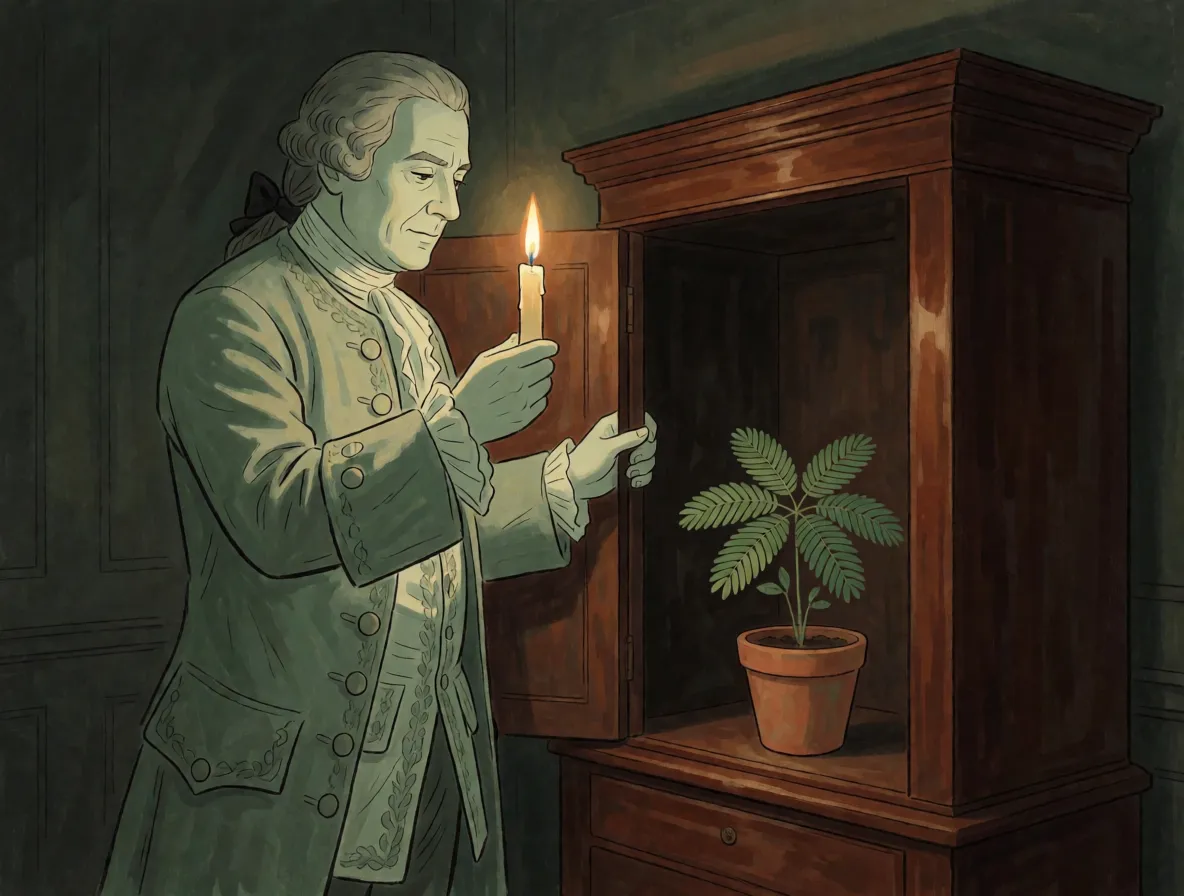
De Mairan had his answer in front of him and reached straight past it. The plant, he suggested, could sense the sun without ever seeing it. Nobody could describe such a sense, which discouraged nobody from hunting it. In 1758 Henri-Louis Duhamel du Monceau repeated everything in a cellar, eliminating temperature as the hidden signal. The rhythm continued anyway.
The wrong turn was not stupid; it was cautious. There is always one more hidden signal you have not eliminated yet.
Closing the door took a Swiss botanist, Augustin Pyramus de Candolle, in 1832. He kept a mimosa beneath lamps that never dimmed and timed the rhythm properly. It ran a cycle of roughly twenty-two hours, not twenty-four. Anything secretly following the sun would keep the sun’s own time; a clock built by the plant runs a little fast.
What all that swinging buys
Growing a stem lopsided twice a day costs a sunflower energy, and only makes sense if the turning pays.
Leaves feed the plant by photosynthesis, the trick of assembling sugar out of light, water and air. A leaf square to the sun captures the most light; edge-on it captures almost none. Tracking keeps a plant’s leaves square all day.
Atamian’s team priced it. Every evening they rotated each pot: half got a half-turn, so those plants woke facing the wrong direction and spent the day struggling to catch up. The rest got a full turn — identical handling, same finishing position. Weeks later the half-turned plants carried about a tenth less leaf.
So the swinging earns its keep. It buys leaf, and leaf is how a sunflower gets big enough to flower at all.
The day the swinging stops
A sunflower does not grow taller forever. As the head prepares to open, the stem beneath it stops elongating and fills with lignin. That is the stiff brown material which turns a bendy green stalk into something close to timber.
The bricks have run out. Neither tower can gain height, so the daily swings eventually stop. They stop at the eastern end of the swing, because east is where every night leaves the head.
Being stuck facing east turns out to be worth a great deal, and the reason arrives at dawn.
Why a warm face collects more visitors
An east-facing head is illuminated the instant the sun clears the horizon, and it warms while a west-facing head sits in its own shadow.

Bees have opinions about this. The same team turned potted sunflowers around to face west and counted the insects arriving. East-facing heads attracted roughly five times as many pollinators: the insects that ferry pollen between flowers, which is how a sunflower makes seeds at all. Aiming a portable heater at the west-facing heads brought the visitors back. Stacey Harmer, who ran the laboratory, summarized the finding in 2016. Bees like warm flowers.
A cold flower is expensive for a bumblebee, which must shiver its flight muscles warm before it can fly. A sunlit one is breakfast on a warm rock, and the bees choose accordingly.
Turn a pot and watch it argue
The stem will have swung back toward the window, and your numbers explain how. The gap on the shaded side has widened more than the gap on the sunlit side, usually by a millimeter or so. That is the mechanism in your own handwriting: the shaded side elongated, and the stem tipped away from it.
What the head is really following
So nothing turns a sunflower. The head is carried by a stem elongating a fraction more on one side than the other, swapping sides at dusk and at dawn. The plant does watch the sun all day; it simply refuses to wait for it.
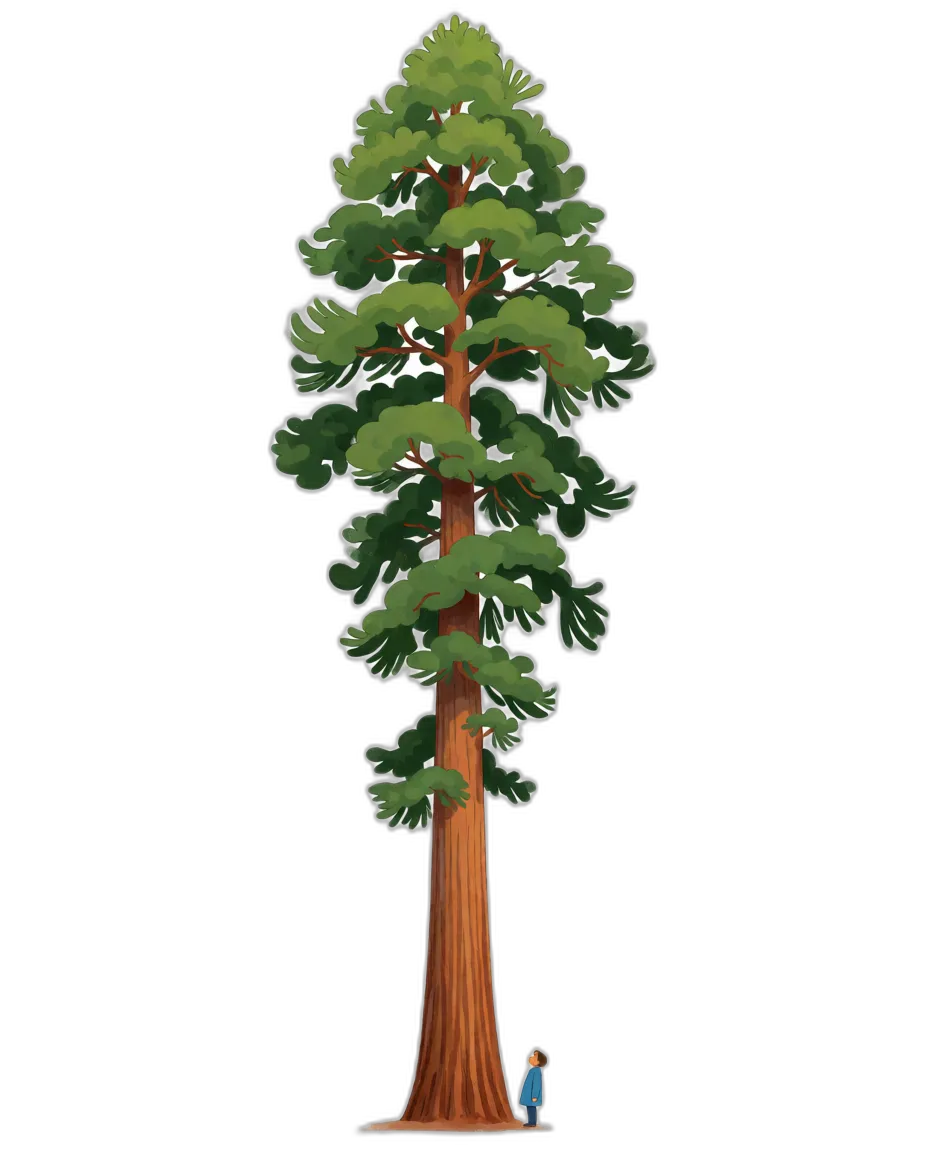
Go back to that midnight field with your flashlight. Every green head is aimed at a sunrise hours away, because a clock inside each plant has decided morning is coming and switched the elongation to the other side. Beside them stand last month’s plants, 3 m(10 ft) tall and finished growing, stopped mid-swing, waiting for sunlight to warm their faces before the bumblebees arrive.