Why are there 60 minutes in an hour?
You have ten fingers, and almost everything you count goes in tens: money, meters, the columns in a big number. Then you look at a clock and it is running on sixties, with a twenty-four thrown in for the day and a twelve on the face. Nobody chose that yesterday. It has survived every attempt to tidy it up, including one where a whole country tried and gave in after seventeen months.
Sixty was not picked because of fingers. It was picked because dividing was the hard part, and sixty divides more ways than any smaller number.
Counting is easy, dividing is not
The number of digits you count in before starting a new column is called the base. We use ten, so after nine comes a fresh column, and that is almost certainly because of hands.
Ten is superb for counting. It is poor at the other job. A number that divides into whole pieces many different ways is far more useful, and each number that divides it evenly is called a divisor.
Ten has four: one, two, five and ten. Try to take a third of ten and you get a number that never stops. Sixty has twelve divisors, and among them are two, three, four, five, six, ten, twelve, fifteen, twenty and thirty.
A third of each number, worked out exactly. One of these is comfortable and one is not.
That mattered enormously to people with no way of writing 3.333 at all. A dot followed by digits is a surprisingly modern invention, and for thousands of years nobody had one, so a division that came out uneven was a real problem rather than a rounding.
The people who chose it were surveying fields
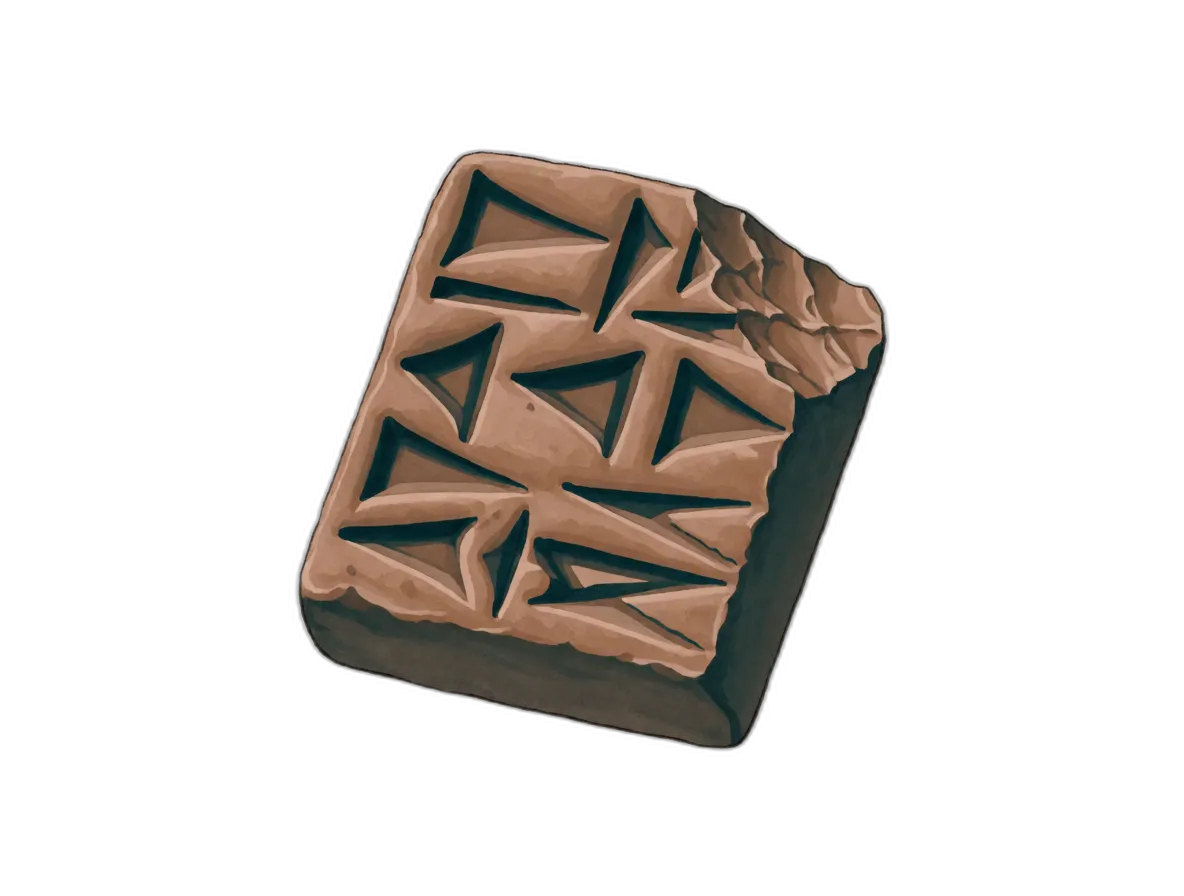
The choice comes from Mesopotamia, in what is now Iraq, roughly two hundred generations before you were born. Sumerian and then Babylonian scribes wrote numbers by pressing a cut reed into wet clay, and they counted in a sexagesimal system: base sixty.
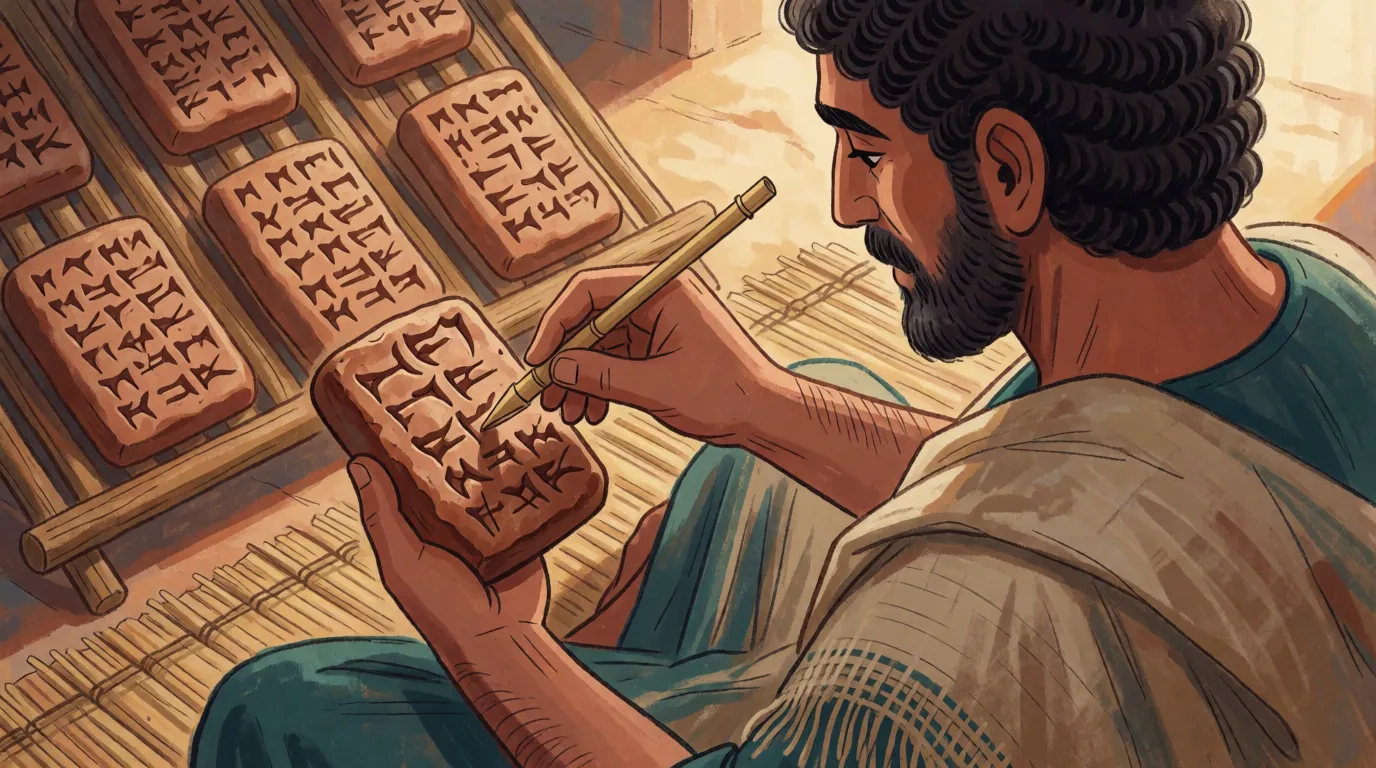
Their work was dividing things: fields between heirs, grain between workers, silver between merchants, the sky between star groups. Every one of those jobs asks for halves, thirds and quarters, and sixty supplies all of them without a remainder.
A surviving clay tablet is often no more than 8 cm(3 in) across and covered in these calculations. They were doing arithmetic four thousand years ago that European scholars would not match for another three thousand.
Their astronomy traveled with their arithmetic, and that is the crucial part. Anybody who wanted to predict the moon inherited both together, because the tables only worked in the base they were written in.
The words minute and second are a leftover
In the second century, in Alexandria, Ptolemy wrote an astronomy book that dominated the subject for well over a thousand years. He carved the circle into 360 degrees, and then each degree into sixtieths, and each of those into sixtieths again.
In Latin the first lot were called partes minutae primae, the first small parts, and the next lot partes minutae secundae, the second small parts.
Read those aloud and you can hear your own clock in them. Minute is simply the Latin for small part, and second means the second time you did it.
A minute is not a unit of time by birth. It is a leftover word meaning “one sixtieth, again”.
Applying that to time rather than angles took longer. In the eleventh century, around the year 1000, the Persian scholar al-Biruni wrote down times between new moons in hours, minutes and seconds. There was no instrument on Earth that could measure a second, and he used them anyway, because they were the natural next step down.
Clocks caught up centuries later. Minute hands became common only in the 1600s, and a clock that shows seconds was a scientific instrument long before it was furniture.
An hour was not always the same length
Those unequal ones have a name: seasonal hours, because their length followed the season. So the sixty is ancient and the equal hour is medieval, and they arrived from completely different directions. What we call telling the time is two separate inventions bolted together.
The country that tried to fix it
By the 1790s a great many people had noticed that this was all rather silly. The French Revolution set out to rebuild measurement from scratch, and it did a remarkable job on almost everything.
That is where the metric system comes from. A meter was defined as one ten-millionth of the distance from the north pole to the equator. That quarter of the way round the planet is about 10,000 km(6,200 mi), and everything else was built in tens from there.
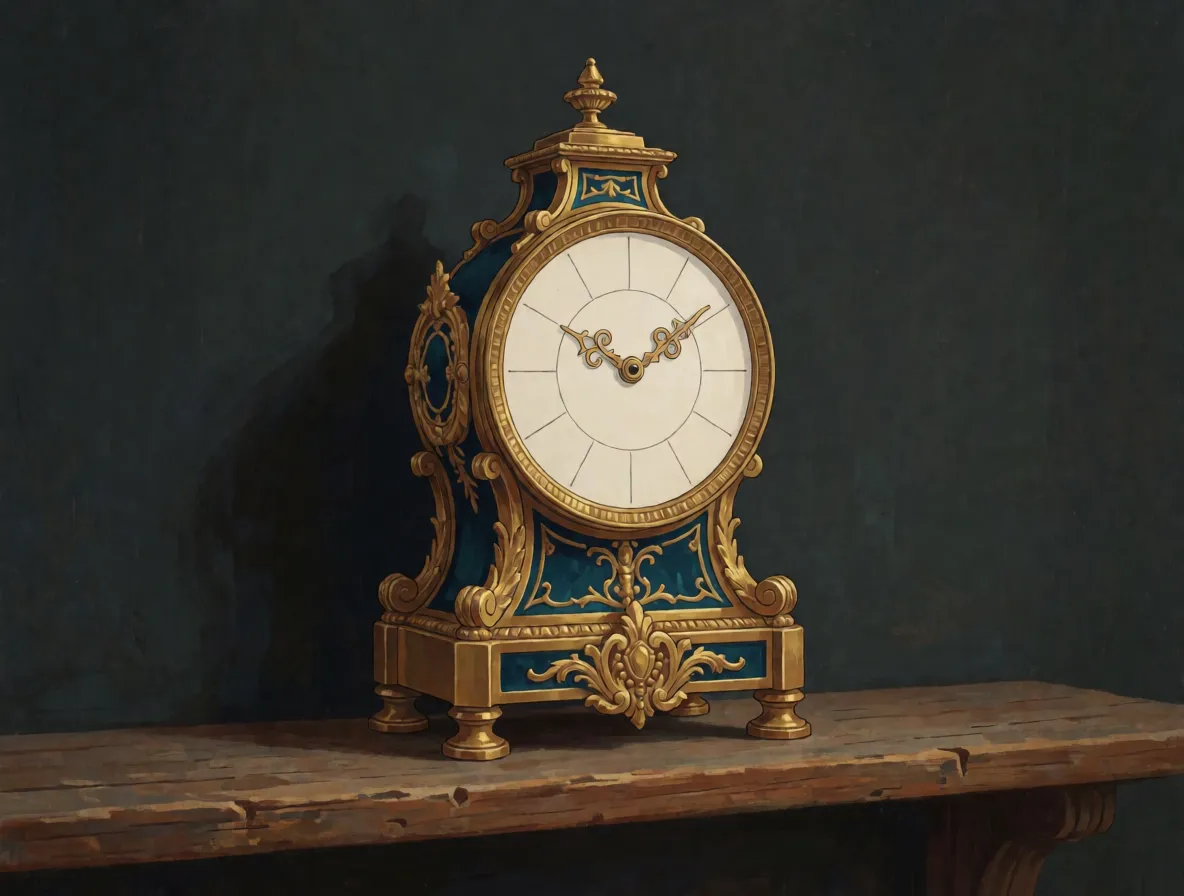
Then they came for the clock. Jean-Charles de Borda proposed dividing the day into ten hours of a hundred minutes, each of a hundred seconds, and it became law in 1793. Watchmakers produced dials with ten numbers on them.
It lasted seventeen months. The law was suspended in 1795 and quietly forgotten, while the metric meter and gram went on to conquer most of the world.
The reason for the difference is completely unromantic. Weights and measures varied from town to town, so merchants gained something real from a common system. Clocks already agreed with each other, so decimal time — counting in tens — offered nothing except the cost of replacing every clock in France.
Hunt for the champion number
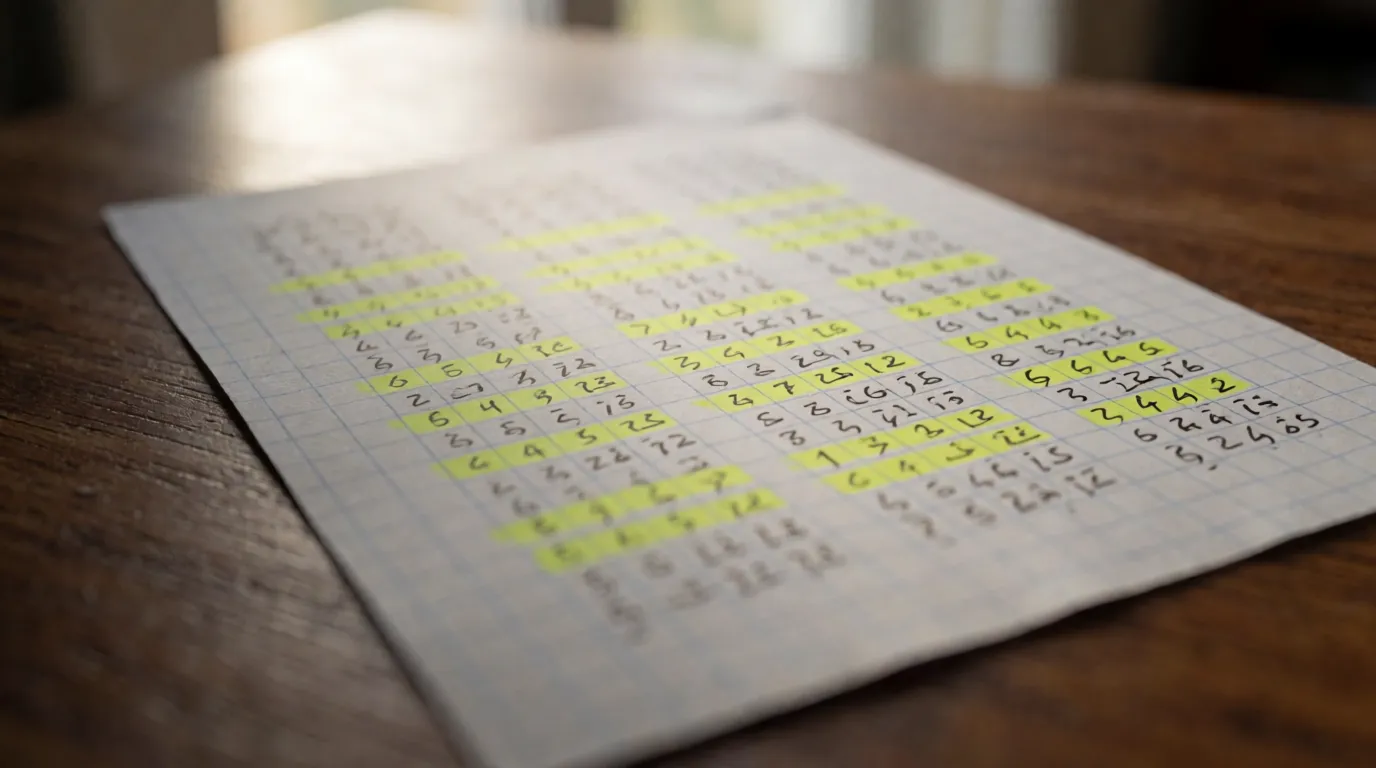
Sixty is the smallest number with twelve divisors, and that is not a coincidence dressed up as a reason. It is exactly the property you want if your everyday arithmetic is halves, thirds, quarters, fifths and sixths.
Keep going past a hundred and you meet the next champions: 120, then 360. Both are still with us, in the degrees of a circle and in the old habit of selling things by the dozen.
Why it never got tidied up
Every so often somebody points out that time is the last major measurement running on an ancient base, and they are right. It survives for a boring reason that has nothing to do with mathematics.
Changing it would mean changing every clock, every timetable, every recipe and every agreement about when to meet, all over the world, at once. The French managed it for weights because the old weights were a genuine nuisance. Nobody has ever been genuinely inconvenienced by sixty seconds.
So the clock on your wall is running on a decision made by people dividing barley between workers, five thousand years ago, in a country that no longer exists. It survived because it was a good decision, and because tidying it up was never worth the trouble.