Why is a keyboard in QWERTY order?
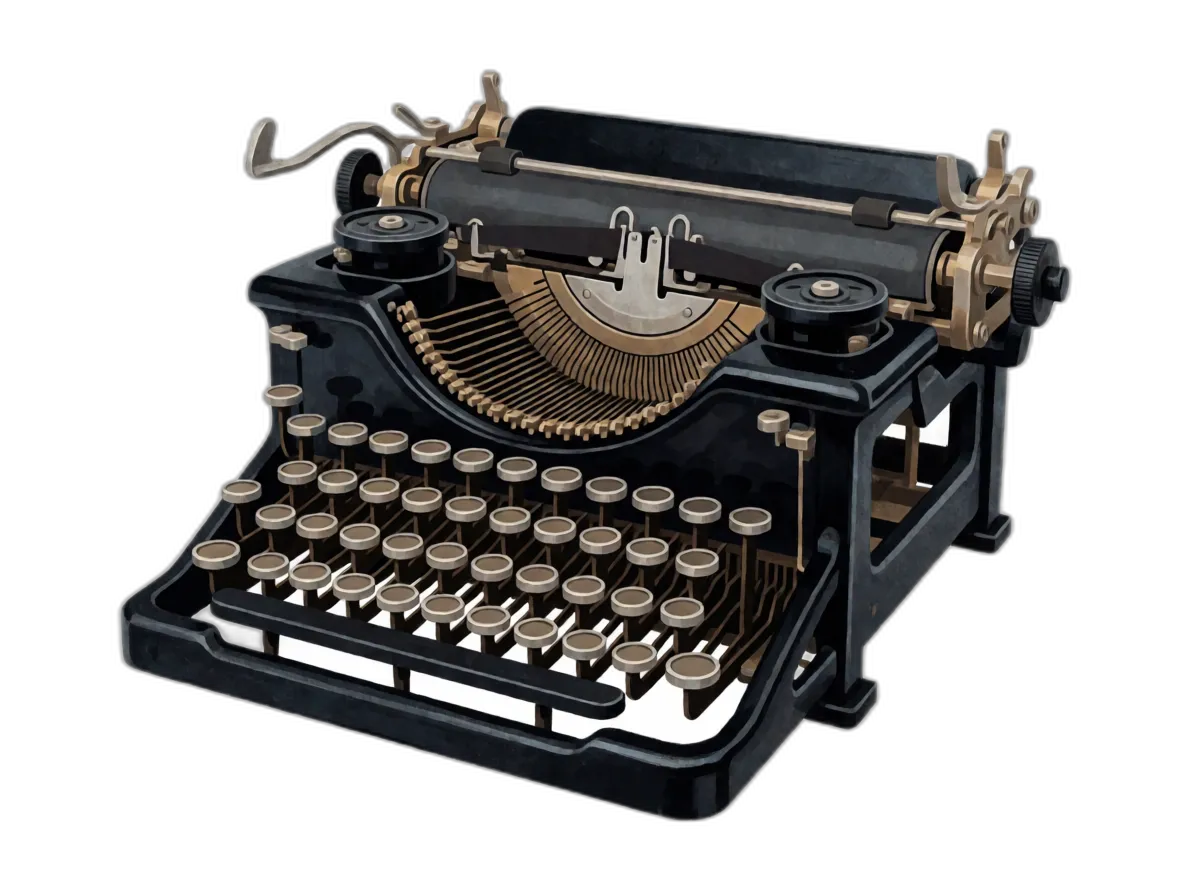
Look at the top row of any keyboard in the world. Q, W, E, R, T, Y. Not alphabetical, not grouped by how often letters appear, not arranged to keep your fingers comfortable. Somebody chose that order in the 1870s to solve a problem with metal levers. Every phone you have ever touched inherited it from a machine nobody has manufactured in your lifetime.
The layout was designed around a mechanical fault, and then it got stuck — for reasons that had nothing to do with typing at all.
A typewriter was a fan of little hammers
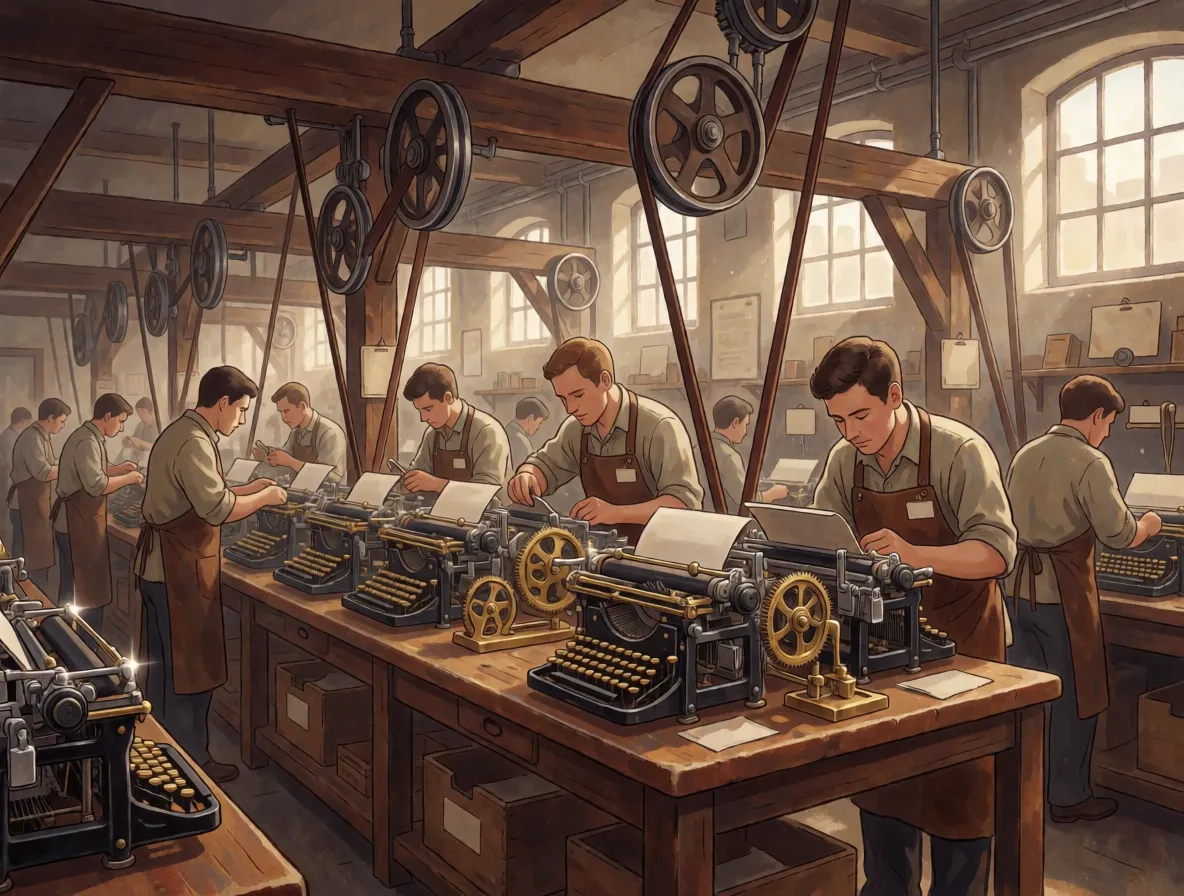
Inside an early typewriter, each key connected to a thin metal arm with a letter cast on its end. That arm is a typebar, roughly 15 cm(6 in) long, and pressing a key swung it up to strike the paper.
All of them swung up to the identical spot. They were arranged in a semicircular basket underneath the carriage, and each one traveled up through the middle to strike exactly the same position on the page.
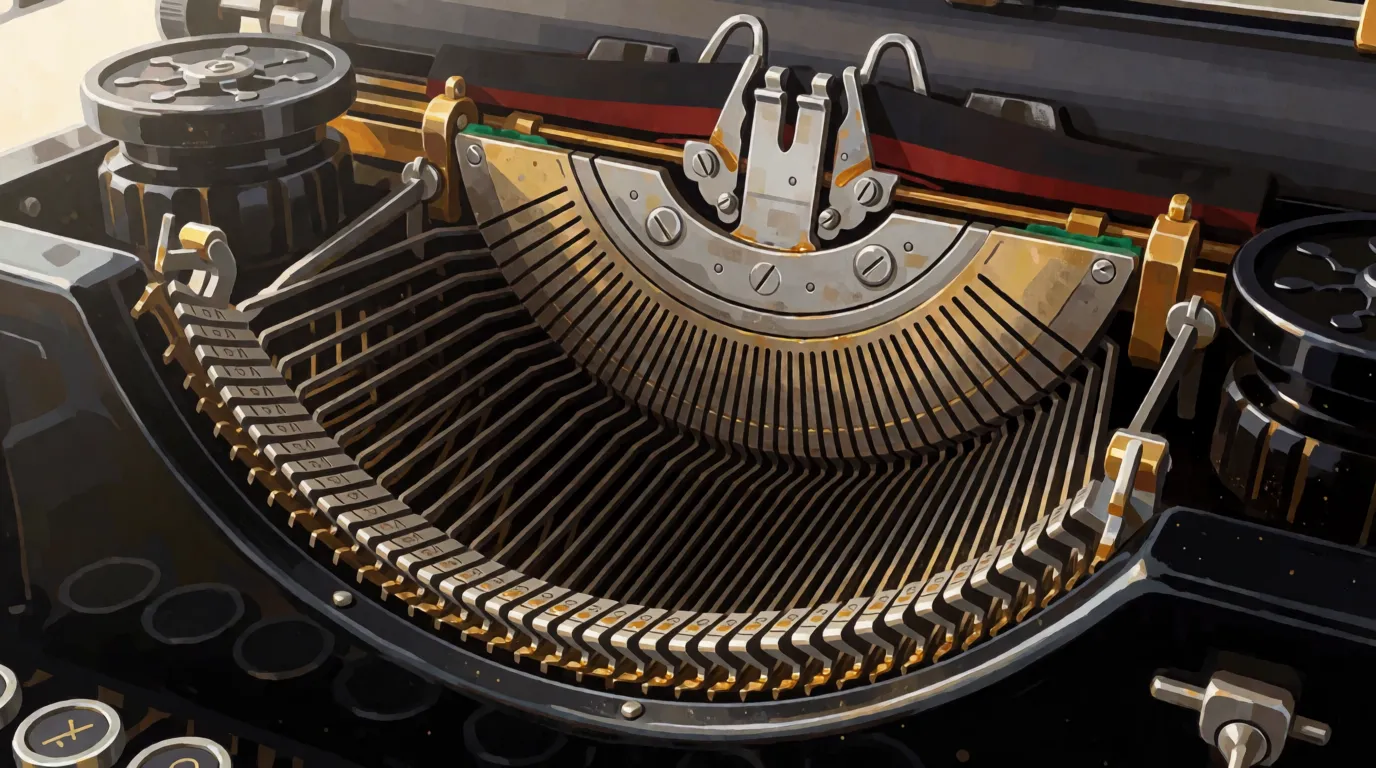
That arrangement creates one obvious weakness. If two arms rise in rapid succession from neighboring positions, the first has not descended before the second arrives, and they collide and stick together.
Early typists spent considerable time unhooking jammed arms with their fingers. A typical machine carried around 1 m(3 ft) of steel arms packed into that basket. Eliminate the collisions and the machine accelerates; ignore them and no amount of skill compensates.
The fix was to separate common letter pairs
The jam depends on which two letters follow each other, not on which letters are common on their own. A pair of letters that frequently appear together is called a digraph, and English is full of them: th, he, er, in, on.
How many ordered pairs of letters there are to worry about, from 26 letters.
Six hundred and fifty combinations, of which a few dozen perform most of the work. Christopher Latham Sholes and his collaborators spent years rearranging the letters, positioning the arms for those frequent pairs well apart in the basket, allowing each one time to descend.
The version they settled on went on sale in 1873, about six generations before you were born, and it is essentially the one under your hands. Its oddities are fossils of that rearranging. E and R sit side by side for a reason. The letters of “typewriter” are scattered along the top row, a detail people call a sales trick, and which nobody has ever demonstrated.
The layout is not a design for fingers. It is a design for levers, and the levers left a century ago.
It was never about slowing anybody down
Even the jamming story has been questioned, which is worth knowing. In 2011 Koichi Yasuoka and a colleague traced the layout’s development through its early drafts, and argued that a large influence came from telegraph operators.
Those operators transcribed an incoming stream of Morse code as it arrived, and the arrangement apparently suited the ambiguities of Morse rather than the mechanics of the basket. The honest position today is that both pressures were operating, and the exact recipe remains disputed.
Why nothing replaced it
A better layout is not hard to design. In 1936 August Dvorak published one built from the ground up around English: the commonest letters on the home row, the hands alternating, the fingers traveling far less.
His arrangement was aimed at ergonomics, meaning the study of designing objects to suit the body that has to use them — a discipline that barely existed when Sholes was shuffling his letters.
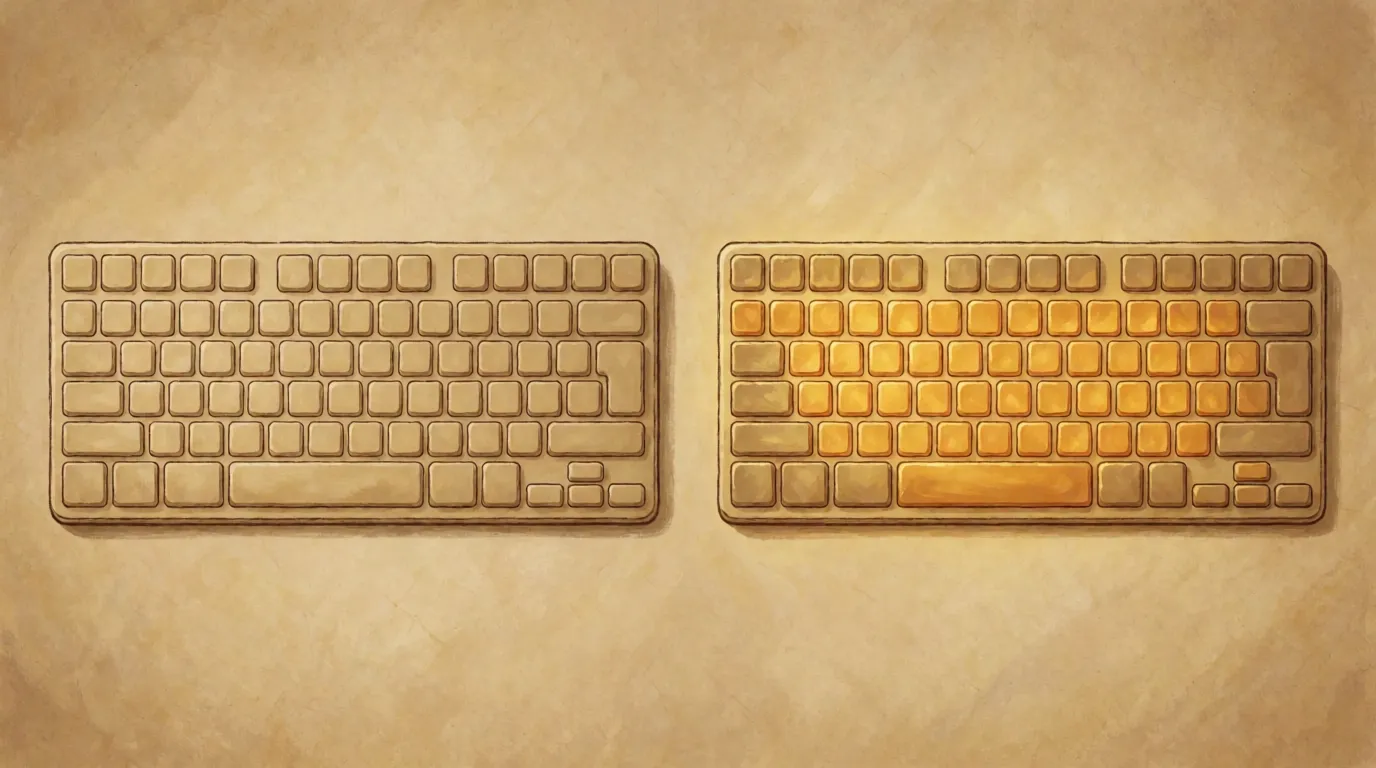
It never took over, and the reason is not that people are stubborn. A keyboard is only useful if everybody agrees, and the value of the agreement itself is enormous. Economists call that a network effect: something becomes more useful the more people already use it.
Every typist already trained on QWERTY, and every school teaching it, made switching pointless for anybody who tried it alone. You would be the only person in the room who could use your own keyboard. That kind of trap has its own name: path dependence, meaning the situation you end up in depends on the road you happened to take to get there.
The claims for Dvorak have also been exaggerated. Careful reviews of the original speed measurements found them badly conducted, frequently by people with a personal interest in the outcome. The honest conclusion is that the improvement is genuine but modest.
Time yourself on both

The first day is brutal, and the curve afterward is the interesting part. Most people are back to their old speed within a week or two, and a little faster after a month.
Then look at your first-day numbers again. That is what a whole country would have to pay, all at once, and it is why nobody ever has.
A fossil under your fingers
There is nothing wrong with QWERTY, and there was nothing especially right about it either. It was a reasonable answer to a mechanical problem, arrived at by trial and error, and then it stopped being about typewriters.
You can discover the identical story in surprising places once you look. Railway track widths, the side of the road vehicles travel on, the order of the months. Each was determined by somebody solving an immediate local problem. Each became permanent because altering it requires everybody to change simultaneously.
So the top row of your phone is a message from the 1870s about metal arms clashing on their way to a sheet of paper. The arms are long gone. The message is still there, and you are using it right now.