Why can’t you comb a hairy ball flat?
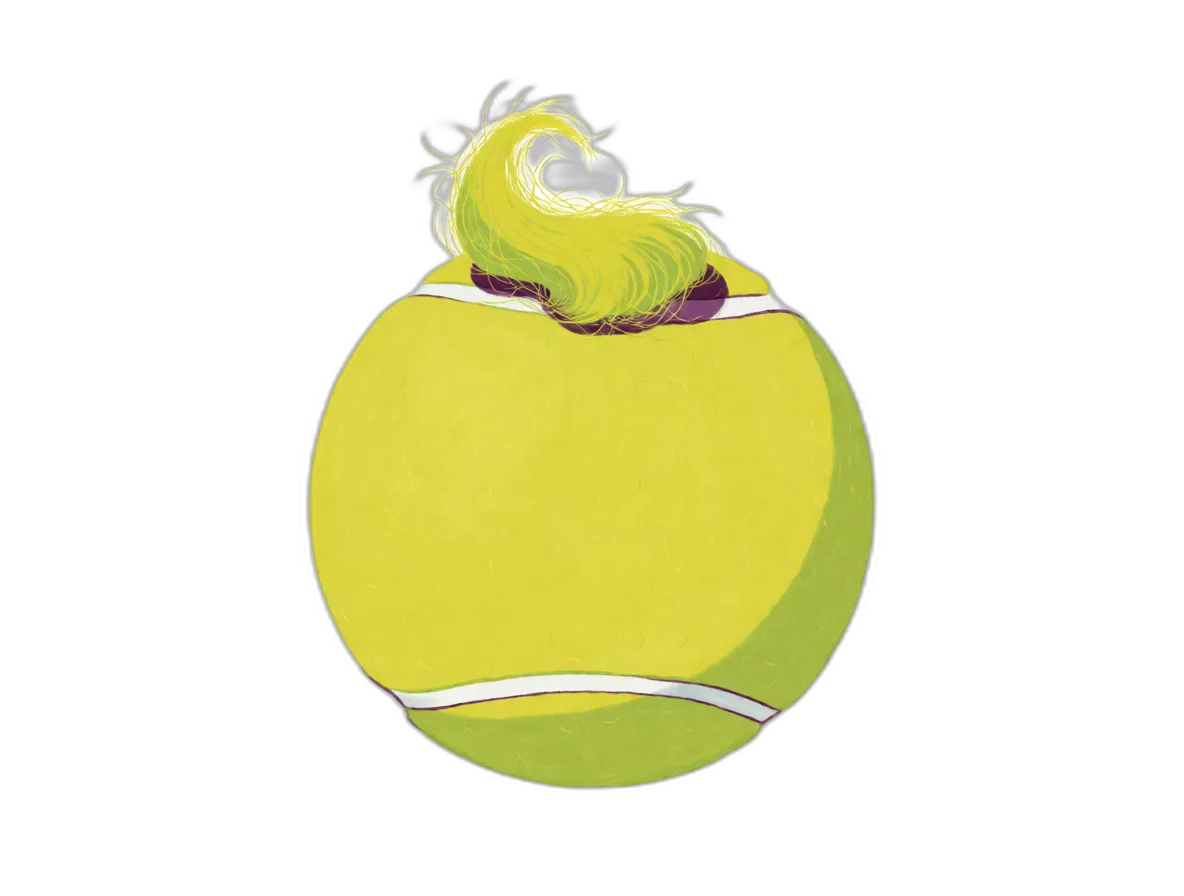
Take something round and covered in fuzz — a tennis ball about 6.7 cm(2⅔ in) across will do. Comb every hair flat against the surface, all lying down, with no partings and no crowns anywhere. You will get most of the way and then find a swirl left over. Start again from a different direction and you get a swirl somewhere else. It is not a lack of patience. It cannot be done, and there is a proof.
Some facts depend only on the shape of a thing, not on how clever you are. A ball is the wrong shape for this, and a doughnut is the right one.
What combing actually asks for
Write down carefully what you are trying to do, because the precise wording is where the answer lives. At every point on the surface you want to choose a direction for the hair to lie in.
A direction with a size attached is called a vector, and combing means putting one at every point, all lying flat against the surface rather than sticking out.
There is one more requirement, and it is the important one. The directions must change smoothly as you move across the surface: neighboring hairs must point almost the same way, with no sudden jumps. Mathematicians call that continuous.
A crown breaks that rule. Stand at the center of a swirl and the hairs around you point in every direction at once, so there is no single direction the hair at that exact point can lie in.
So the question becomes sharp. Is there a way of choosing directions all over a sphere, smoothly, with no point left undecided?
Try it on a ring first
Before the ball, try something easier. Draw a circle on paper and put an arrow at every point on it, each one pointing clockwise along the circle.
That works perfectly. Every arrow lies along the line, each is almost identical to its neighbor, and there is nowhere on the circle where the direction fails.
Now do the surface of a doughnut, which mathematicians call a torus. Comb every hair the way round the ring, all following each other nose to tail, and it works everywhere. A hairy doughnut combs flat.
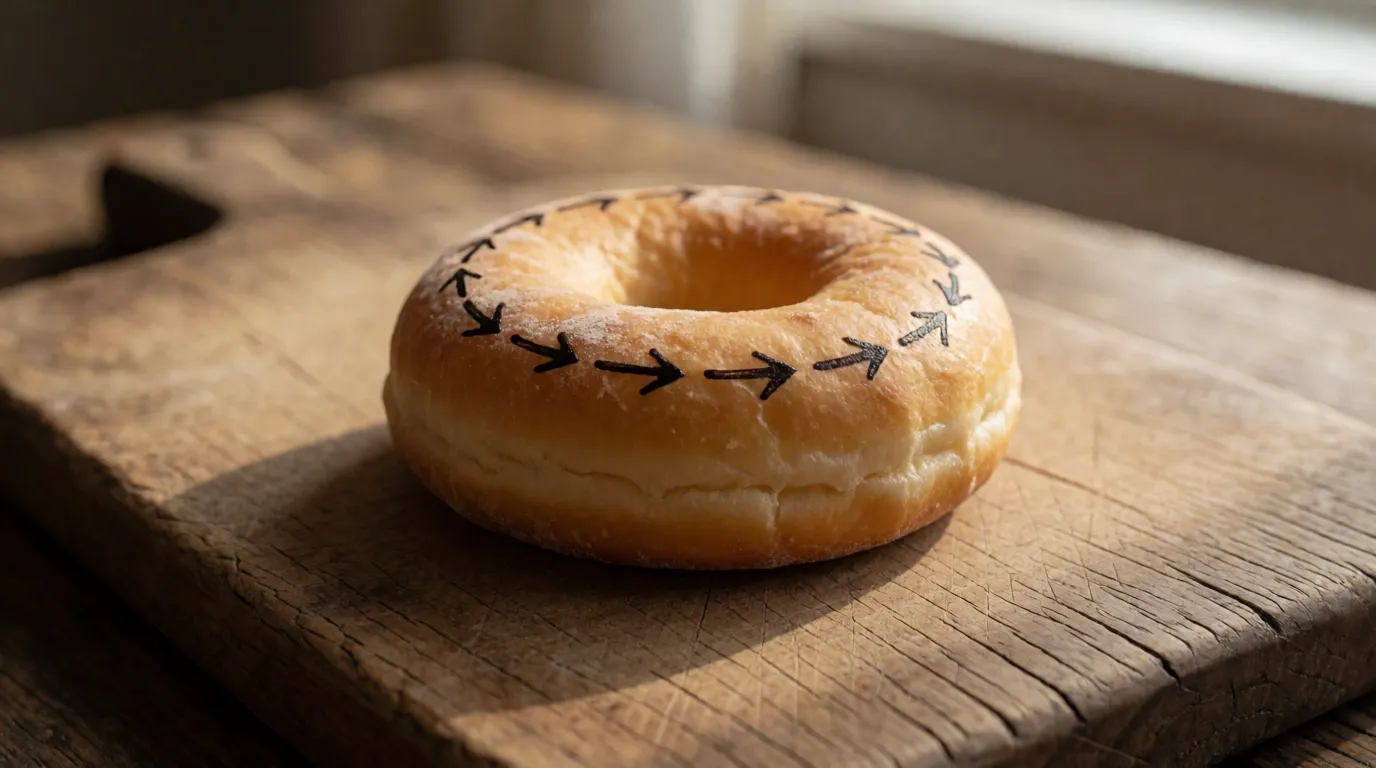
That should already feel odd. The doughnut is not simpler than the ball, and it is not smoother. It is just a different shape, and the difference turns out to be everything.
On a ball you always run out of room
Now the sphere. Start at the north pole and comb every hair southward, so they all flow down toward the equator like water off a dome.
That works beautifully everywhere except one place. At the south pole all those hairs arrive at once, from every direction, and pile into a crown.
Try to fix it by combing the bottom half northward instead and the crown simply moves. Comb them all round the equator like a spinning top and you get a crown at both poles. Every arrangement anybody has tried leaves at least one.
You never fail in the same place twice. You just never stop failing somewhere.
That every attempt fails is not a proof, of course. Plenty of things look impossible until somebody finds the trick. What makes this different is that somebody proved no trick exists.
Nobody is being unimaginative
The result is properly called the hairy ball theorem — a statement that has been proved beyond any possible exception — and it is one of the better names in mathematics. It belongs to topology: the study of what stays true about a shape when you stretch and bend it without tearing.
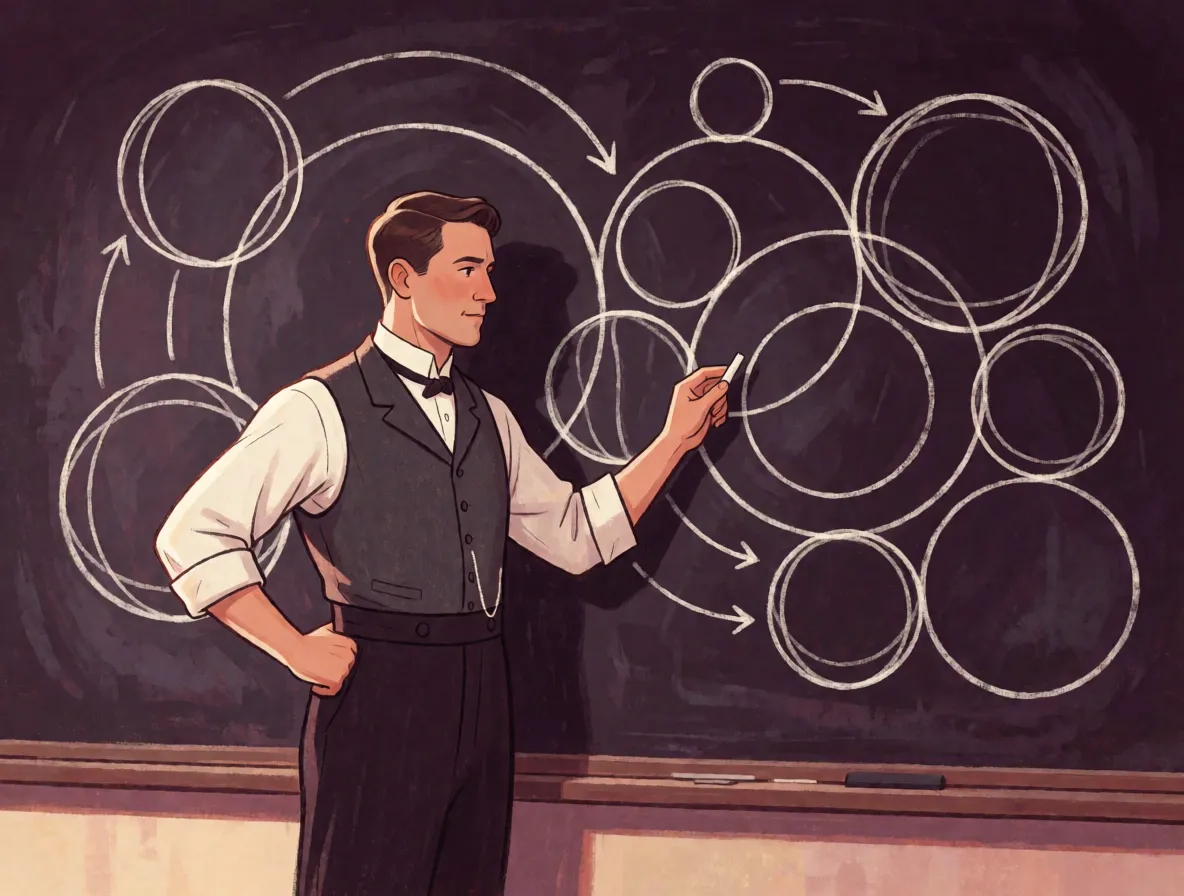
Topology explains the doughnut puzzle too. To a topologist a doughnut and a mug are the same object, because either could be molded into the other without tearing. A ball is genuinely a different thing, because it has no hole.
Henri Poincaré had reached the same conclusion for spheres by 1885, while studying something apparently unrelated: how flows and currents behave. The crown you cannot comb out is the same object as the eye of a storm.
Somewhere on Earth, no wind
That connection gives the theorem a consequence you can check against a weather map, and it is the reason people outside mathematics care.
Think of the wind at every point on the planet, ignoring any up-and-down part and keeping only the direction it blows along the ground. That is a direction at every point of a sphere, changing smoothly, which is exactly a combing.
So it cannot be complete. Across the whole 40,000 km(25,000 mi) of the Earth’s circumference, there must be at least one point at every moment where the horizontal wind is zero. That is what the still center of a cyclone is.
The general idea is much older than this proof. Leonhard Euler discovered in 1758 that any shape built from flat faces obeys a rule connecting its corners, edges and faces, whatever the shape happens to look like.
Euler’s count for a cube: corners minus edges plus faces.
Try it on a pyramid, a football or a cut diamond and you get two every time, provided the shape has no hole through it. Punch a hole through and the answer becomes zero. Shape decides, and rearranging the faces will not argue with it.
Comb one and count the crowns
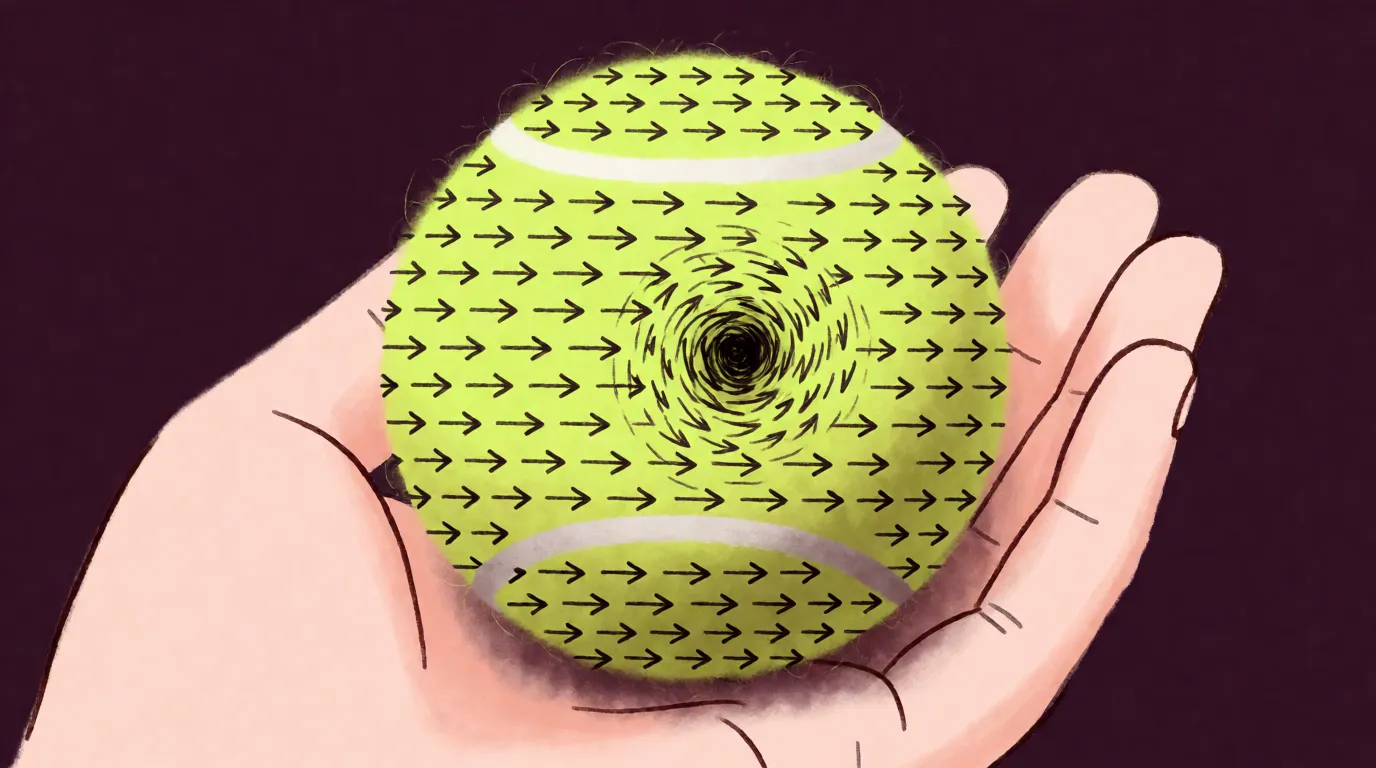
Your crown count will change between attempts, and it will never be zero. Some arrangements give one crown, some give two, and a determined person can produce several.
The doughnut is what makes the point land. It takes almost no effort, it works first time, and it proves that the difficulty was never about your combing.
A fact about shape, not about effort
Most impossible things are impossible because nobody has been clever enough yet. This one is a different kind of impossible, and that distinction is worth keeping.
Nothing about the hair matters. Nothing about the comb matters. The only thing that decides the answer is whether the surface has a hole in it, and a tennis ball does not.
So the swirl at the back of somebody’s head is not bad luck or bad hairdressing. It is a theorem, sitting on a scalp, and everybody in the room has one somewhere.