Why can’t you fold a piece of paper more than seven times?
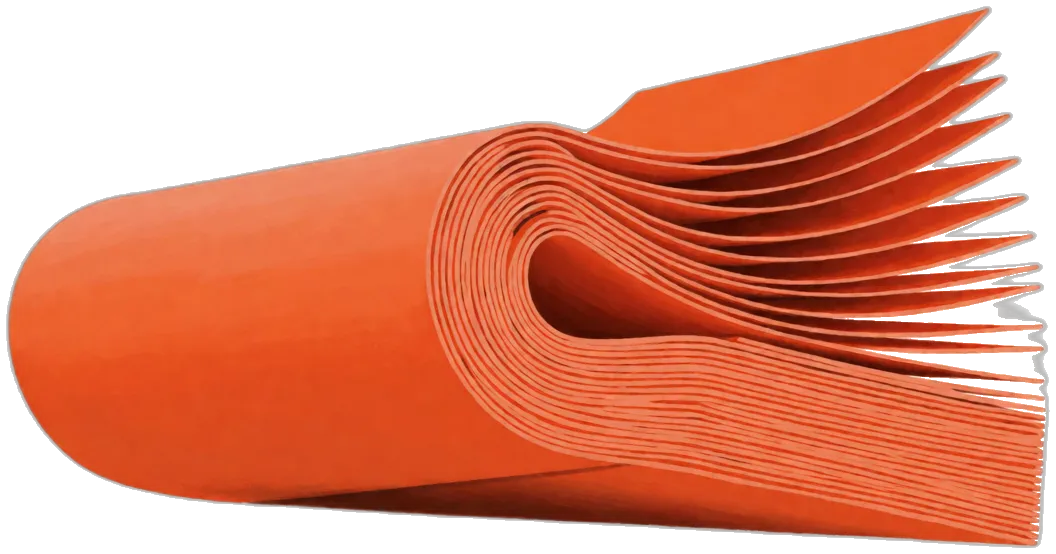
Take any sheet of paper in the house and fold it in half. Then in half again, and again. Somewhere around the sixth or seventh fold it becomes a stubborn little brick and refuses to close. Fetch a much bigger sheet and you get stuck in almost the same place. Something is stopping you, and your hands are not it.
Every fold swallows a strip of paper into its own folded edge. What it swallows grows much faster than the flat paper you have left, so the two race each other and the paper always loses.
Seven folds means 128 layers
Count layers rather than folds and the problem appears immediately. One fold gives two layers. The second doubles that to four, and the third to eight. Every fold doubles whatever the last one made, so seven folds leave you holding 128 layers of paper.
How thick is that? Printer paper is sold in a ream, a sealed pack of 500 identical sheets. A ream stands about 5 cm(2 in) tall, roughly the length of your thumb, so a single sheet is a tenth of a millimeter. Newspaper is thinner, cardboard several times thicker, but every material has its own number.
Multiply that out and 128 layers make a pad 12.8 mm(0.5 in) thick, roughly a slice of bread.
Check that against your shelf. A magazine holds far more paper than a slice of bread, and it is flexible enough to roll into a tube without hurting your hands.
So a pad that thick is nowhere near too stiff to bend, and squeezing gains you nothing either, because paper barely compresses. Thickness on its own is not the obstacle. Something else is running out, and it runs out at the folded edge.
Look along the folded edge
Fold a single sheet once and the edge it leaves is a crease, a sharp line pressed flat. Fold a whole pad and no such line is possible.
Think about the sheet lying on the outside of the pad. To reach the other side it has to travel around everything underneath it. The sheet on the inside has almost nothing to travel around. The edge cannot come out sharp, so it comes out as a rounded spine, the same fat curved back a thick paperback has.
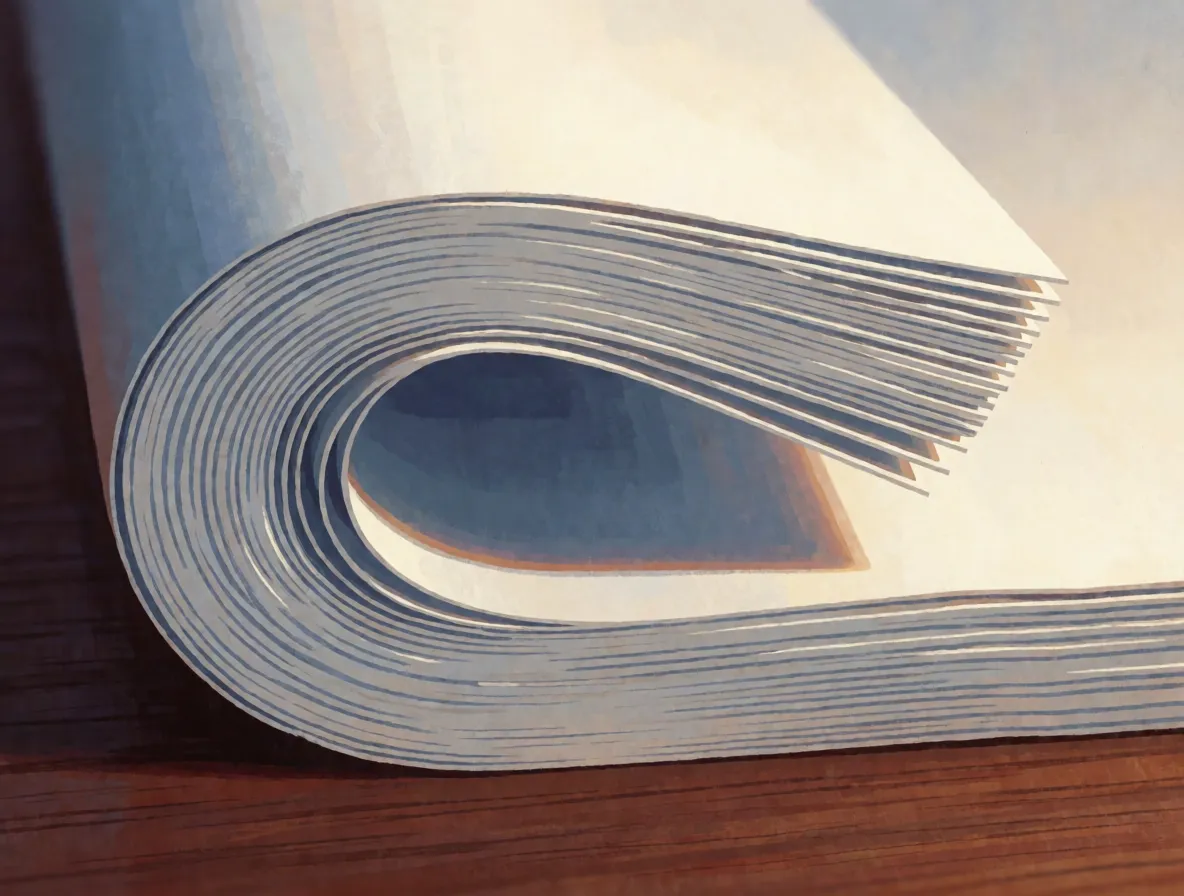
The size of that curve has a name. The radius of a circle is the distance from its middle out to its edge. The spine is half a circle, and the distance straight across it, its diameter, is the thickness of the whole pad. Its radius is half of that.
Try it now, anywhere you happen to be sitting. Fold a sheet five times, then look straight along the folded edge. It is a fat cylinder rather than a line. Look at the opposite end as well. The loose edges no longer finish evenly, because the outer sheets used up some of their length going round the bend.
Paper curved into that spine is gone for good. Only flat paper can be folded again, and curved paper is not flat. Every fold swallows some. The remaining question is how much.
Every fold swallows four times as much
The path a sheet takes around the spine is an arc, a curved slice of a circle. This particular arc is a semicircle, exactly half a circle, because the sheet arrives on one side and leaves on the other.
The distance all the way round a circle is its circumference. Half of that, measured round our semicircle, comes to a little over three times the radius. Double the radius, therefore, and you have doubled the arc.
Now fold the pad one more time. Two things change together, and both of them double.
First, the pad is twice as thick as it was, so the new spine has twice the radius, and every sheet going round it travels twice as far. Second, there are twice as many sheets making that journey.
Twice as far, twice as many. The paper swallowed quadruples: the new fold takes four times as much as the one before it.
Meanwhile the flat paper left in your hands has halved. That is the whole race. What the fold takes multiplies by four while what you have divides by two, and a race like that finishes quickly.
What one more fold costs
Put real numbers on it, using a long ribbon of ordinary printer paper folded end over end, always bringing the same end across.
That is not how you normally fold. Almost everybody turns a rectangular sheet a quarter turn each time, so the creases run in alternating directions, the way a letter goes into an envelope. That method is more wasteful still. Each additional fold then wants a sheet nearly three times as wide, which is eight times the area, so one long ribbon is the efficient way to do it.
To reach seven folds the ribbon has to start out at least 88 cm(35 in) long, a little shorter than a meter stick. Eight folds needs 3.5 m(11 ft), about two beds laid end to end. Nine needs nearly 14 m(46 ft), longer than most living rooms.
Four times as long a ribbon buys exactly one more fold.
Five folds past seven, each one costing four times the last. Check it on a calculator.
So twelve folds wants roughly 900 m(3,000 ft) of printer paper, nearly a kilometer, or a ten-minute walk. The real limit is a ratio: length measured against thickness. Thinner paper folds more times, and length is the part you can change.
That gives you the rule and the arithmetic. It does not give you anybody who actually did it. Until 2002, apparently nobody had.
The student who folded it twelve times
Britney Gallivan was born in 1985 and grew up in Pomona, California. For years people repeated that no sheet, however big, folds more than seven or eight times. Books printed it; classrooms taught it as fact.
In 2001, years before you were born, her math class offered extra credit for folding anything in half twelve times. She began with gold foil, beaten out until it is thinner than the aluminum foil in a kitchen drawer, and got her twelve folds. So the challenge was narrowed: it had to be paper.
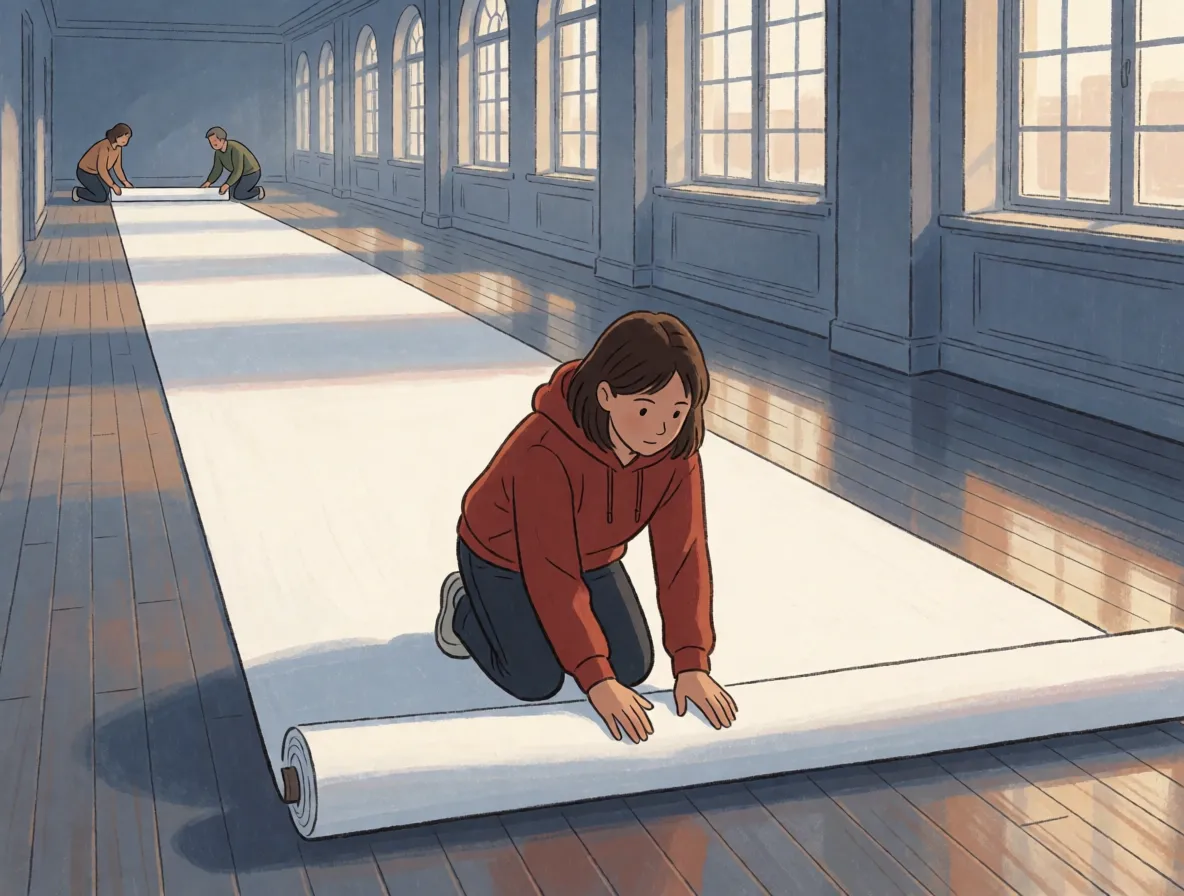
That December, still a junior in high school, she worked out where the limit actually comes from. She turned it into a calculation that adds up the paper swallowed by every fold in turn. Mathematicians examined her working and confirmed it; Thomas Hull sets the result out in his 2020 book on the mathematics of origami.
Then, in January 2002, she bought six rolls of extra-long toilet paper, unrolled about 1,200 m(4,000 ft) of it and folded it end over end twelve times. Toilet paper is thicker, so she needed more than the 900 meters. Nothing was taped or stacked, and the folds had to be documented and verified by somebody independent.
In a single day she became the first person to reach nine folds, then ten, then eleven, then twelve. All of it came down to a length you can measure yourself.
Find the four-times rule on your floor
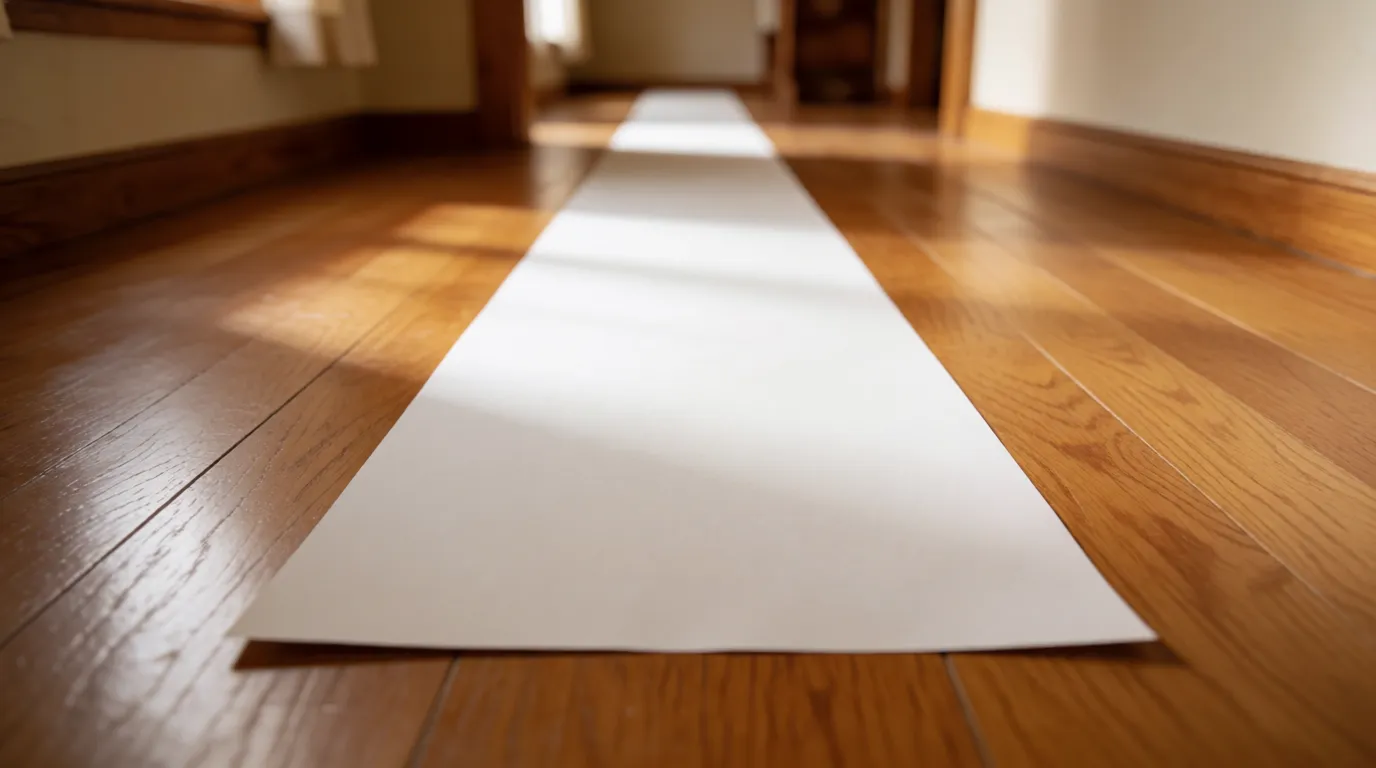
Whatever numbers you land on, the shape of the answer is the same. Four times the length wins you about one extra fold, and merely doubling the length usually wins you nothing at all. That is the four-times rule, discovered on a bathroom floor.
Seven was a fact about your sheet
Go back to the sheet you started with. A number was written into it already, the ratio of its length to its thickness, and six or seven is what that sheet happened to be worth.
A page torn from a magazine has a different number. A roll of wallpaper has a bigger one, and a thin ribbon running the length of your hallway is considerably bigger still. Paper itself has never had an opinion about how many times it can be folded.
The whole business belongs to the geometry of a curve, and that curve was in your hands all along. After three or four folds the edge of the pad stops being a line and starts being a small round spine. That spine is the paper you have lost. Each fold builds a fatter one, four times as hungry as the last, until there is nothing flat left to feed it.
Britney Gallivan needed a whole day and a very long corridor to reach twelve. Eight folds is waiting for you on the bathroom floor, about three and a half meters away.