biology
Why are there six kinds of corn?
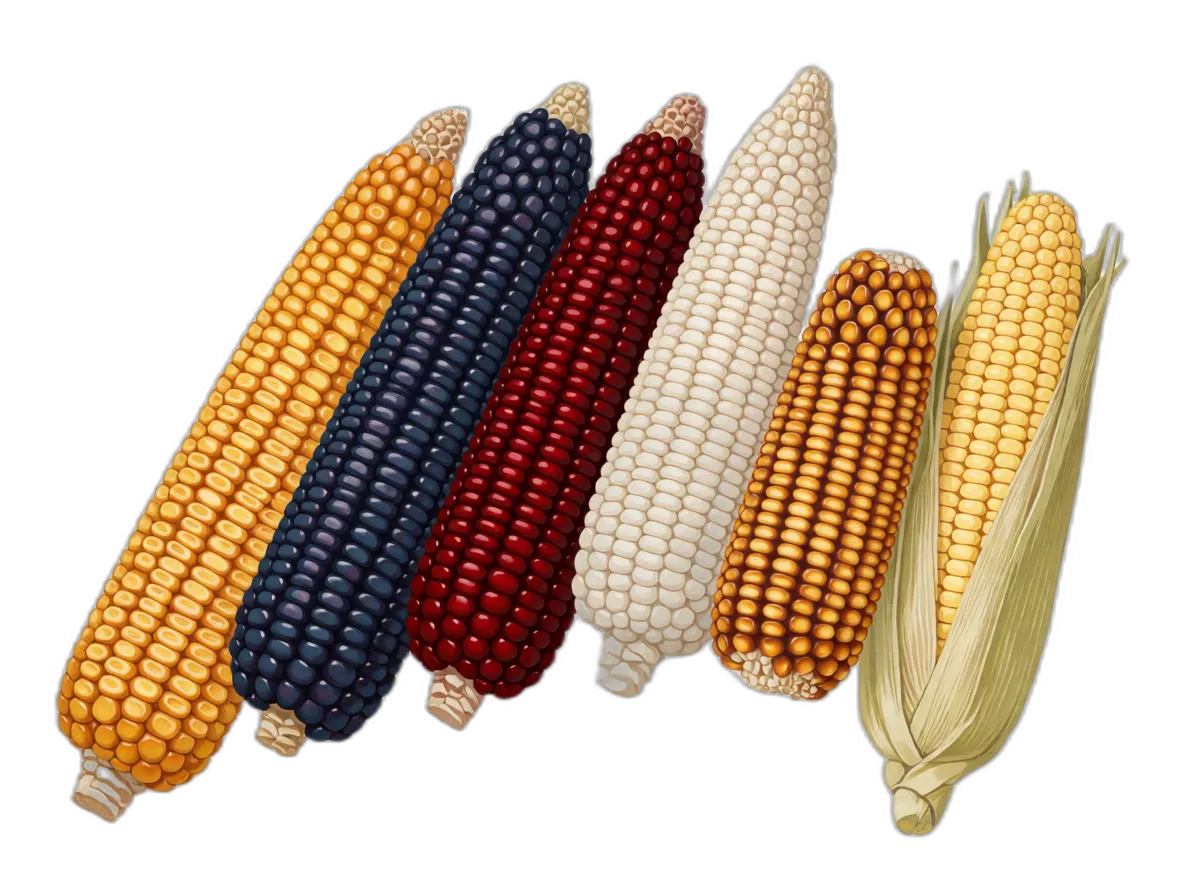
On one shelf of the supermarket: a bag of hard amber popcorn. On another: an ear of sweet corn so soft you can dent it with a thumbnail. In the baking aisle: cornmeal, cornstarch, corn syrup. All of it is the same plant — not the same family, not close cousins, but a single species, Zea mays. So what, exactly, is different inside those kernels?
Almost everything that separates one kind of corn from another happens in a space smaller than a lentil, in the last few weeks of the kernel’s life, and it comes down to a single question: what happens to the starch?
Only two things vary, and it is worth holding on to both of them, because every kind of corn is one or the other. Either the plant makes ordinary starch and packs it differently — that gives you flour corn, flint corn, dent corn and popcorn — or a gene breaks and the plant fails to make ordinary starch at all, which gives you waxy corn and sweet corn. Packing first.
The kernel is mostly one tissue
Peel away the glassy hull and the little embryo at the base, and about four-fifths of a maize kernel is endosperm — a block of stored food the plant packs for a seedling it will never meet. Think of the endosperm as concrete: millions of starch granules are the gravel, and a protein glue the plant lays down between them is the cement.
How much cement, and how tightly it dries, is the whole story.
Where the protein glue is thick, drying pulls it hard onto the granules and locks them into one solid block with no air left in it. That is vitreous endosperm — “vitreous” just means glassy, and that is exactly what it looks like when you cut it: amber, see-through at the edges, hard enough to blunt a knife.
Where the glue is thin, the opposite happens. Drying pulls the granules apart instead of together, opening microscopic air gaps between them. Light bounces off every gap, so the tissue turns chalky white — the same reason crushed ice is white while an ice cube is clear — and crumbles under a fingernail. That is floury endosperm.
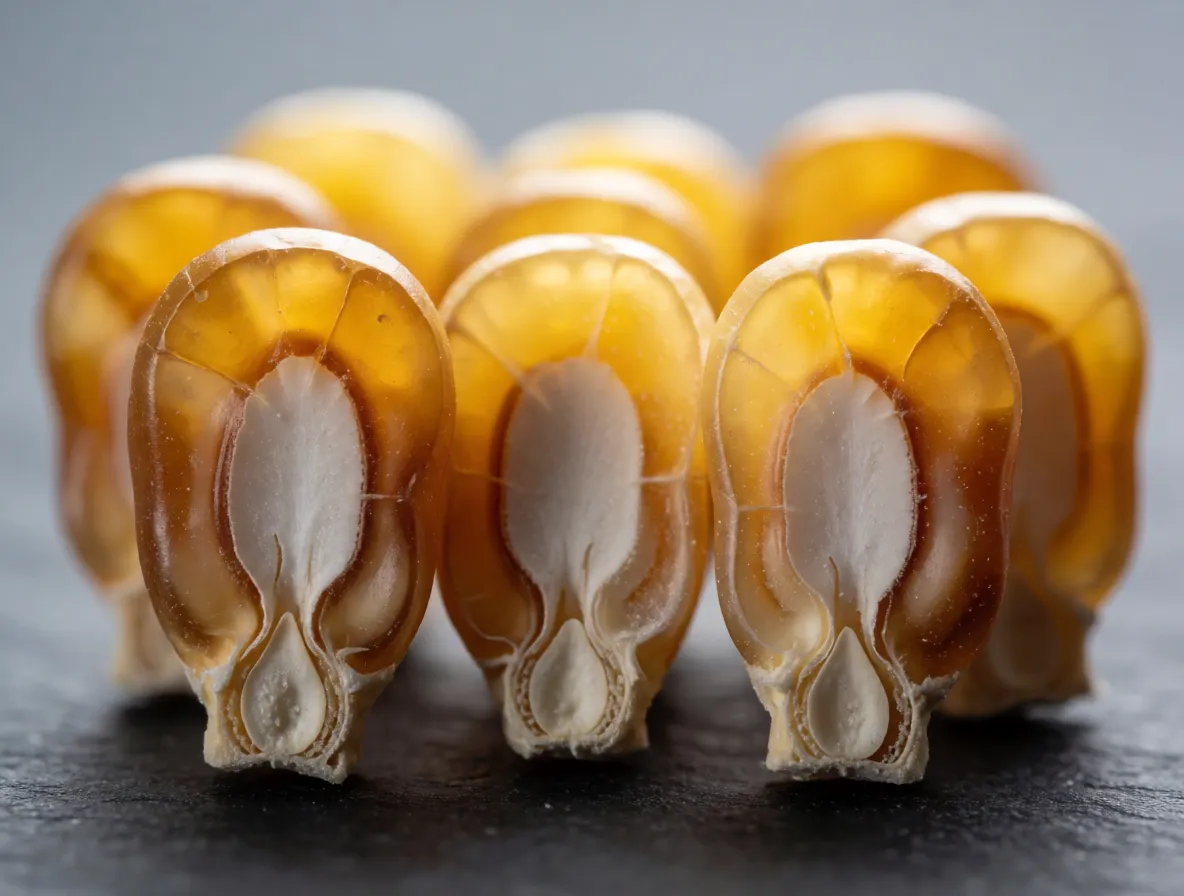
A kernel about 11 mm(0.4 in) across can hold both at once, and almost all field corn does — glassy sides and back, a soft column running up the middle to the crown. Which sets up the strangest thing about the world’s biggest crop.
The dent is a fight, frozen
Field corn is called dent corn because of a pucker in the top of each kernel, and that pucker is the two tissues disagreeing.
At harvest the kernel is roughly a third water. As it dries down toward storage moisture, both tissues lose water — but the glassy sides, already locked solid, barely change size, while the floury column, full of loosely packed granules, shrinks a great deal. The soft middle pulls inward, the hard walls refuse to follow, and the only unsupported surface is the crown at the top. So the crown caves in. The dent is not a feature the plant grew. It is a hole left behind by water that departed.
Now move the balance. Push the glassy fraction to almost nothing and you get flour corn, soft the whole way through — the corn of the Southwest and the Andes, which a person with a stone grinder can turn into meal by hand. Push it the other way, until the kernel is glassy nearly to its center, and you get flint corn: hard, dense, slow to spoil, and tough enough that insects struggle to bore in. Northern Flint carried New England through winters; blue and red flints are still the backbone of Mexican tortilla corn. Take flint further still — a thick sealed hull and a tiny floury core to hold water — and you have popcorn, whose entire trick is being a pressure vessel that does not leak.
The dent is not something the plant grew. It is a hole left behind by water that departed.
So that is three of the six, and the fourth. Flour corn is nearly all soft. Flint corn is nearly all hard. Popcorn is flint taken to an extreme. Dent corn is the one that holds both — which is why it, alone, dents.
Dent won the world for an unromantic reason: soft starch is cheap to mill and cheap for a pig to digest, hard starch keeps the kernel from shattering in a harvester, and dent has enough of each. It is about four-fifths of all the corn grown on Earth, and almost none of it is ever eaten off the cob by anybody.
When the machinery breaks instead
Flour, flint and dent are all the same starch, just packed differently. The last two kinds of corn are stranger. They come from a broken gene on the assembly line that builds the starch in the first place.
That line runs like any factory. Sugar arrives in the kernel from the leaves, an enzyme starts the line by preparing that sugar for building, and further enzymes down the line join the pieces into starch. Break the line at different points and you get different corn.
It helps to know that starch is really two shapes of the same thing. Amylose is a long straight chain of sugar units, like a rope, and ropes stack tightly against each other. Amylopectin is the same sugar units built into a bush — a chain that branches, and branches again — so it traps water and thickens without setting hard. Ordinary maize starch is about a quarter rope to three-quarters bush.
Break the enzyme that makes the ropes and you get waxy corn: starch that is all bush, no rope. It cooks into a clear, glossy paste that does not turn grainy in a freezer, which is why it ends up in pie fillings and frozen sauces rather than on a plate.
Break the first enzyme on the line instead and no starch gets built at all. The sugar arrives and simply stays sugar. That is sweet corn — a kernel that is sweet because it never finished its job. Two different breaks are common. The older, sugary1, is a partial break: some starch still gets made, so the kernel tastes moderately sweet and creamy. The newer, shrunken2, cuts the line at the very first step, and those kernels can carry four times the sugar. Because they never fill with starch, they dry into wrinkled scraps — which is what the gene is named after.
The corn nobody wanted
Broken genes make bad seeds, and that is why the two most useful breaks sat ignored for decades.
In 1908 an American missionary in China, J. M. W. Farnham, sent the United States Department of Agriculture seed for a local maize with an odd, glossy cut surface. It was catalogued, described, and shelved as a curiosity for more than thirty years. Only when the Second World War cut the United States off from Southeast Asian tapioca did anyone need an industrial-scale source of pure amylopectin — and there it was, in a drawer. Waxy maize went from botanical footnote to a crop grown on hundreds of thousands of hectares because a shipping lane closed.
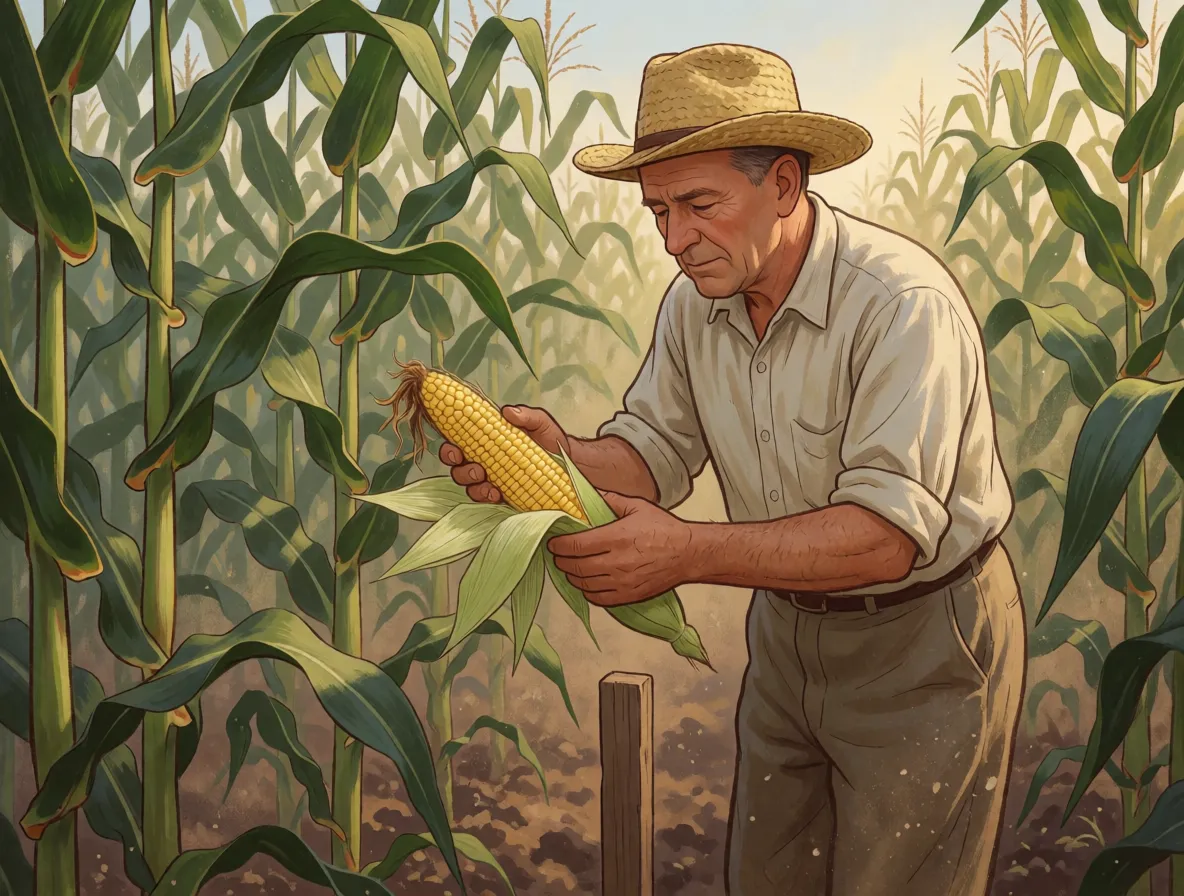
Sweet corn’s turn came in 1953, when John Laughnan, a maize geneticist at the University of Illinois, tasted kernels from the shrunken2 mutant — a line he was studying for reasons that had nothing to do with flavor — and found them startlingly sweet. He published the finding and told the sweet corn industry it could be useful. Almost nobody was interested. The objection was not about taste; it was that a shriveled kernel is a poor seed. It stores less energy for the seedling, it takes up water unevenly, and in cold spring soil a field of it comes up patchy — the one outcome a farmer cannot tolerate. The university eventually cut his funding, and Laughnan kept breeding on his own farm until the germination problem was manageable. His Illini hybrids went on sale through the Illinois Foundation Seed Company in 1961. Today shrunken2 is most of the sweet corn sold on Earth, and the eight years in between were spent not on the idea but on getting the seed to come up.
Six kinds, one ancestor
Every one of these — sweet, waxy, dent, flint, flour, pop — descends from teosinte, a Mexican grass whose seeds are locked inside stony cases and whose ears are shorter than your finger. Farmers in the Balsas River valley began selecting it about 9,000 years ago. Work by John Doebley’s group, published in 2005, traced the bare kernel to a single gene, teosinte glume architecture1: change that one gene and the plant stops building the stone case. That was the step that made the seed worth eating. Everything after it — a cob 20 cm(8 in) long, six different starches, a thousand colors — was people choosing, one harvest at a time.
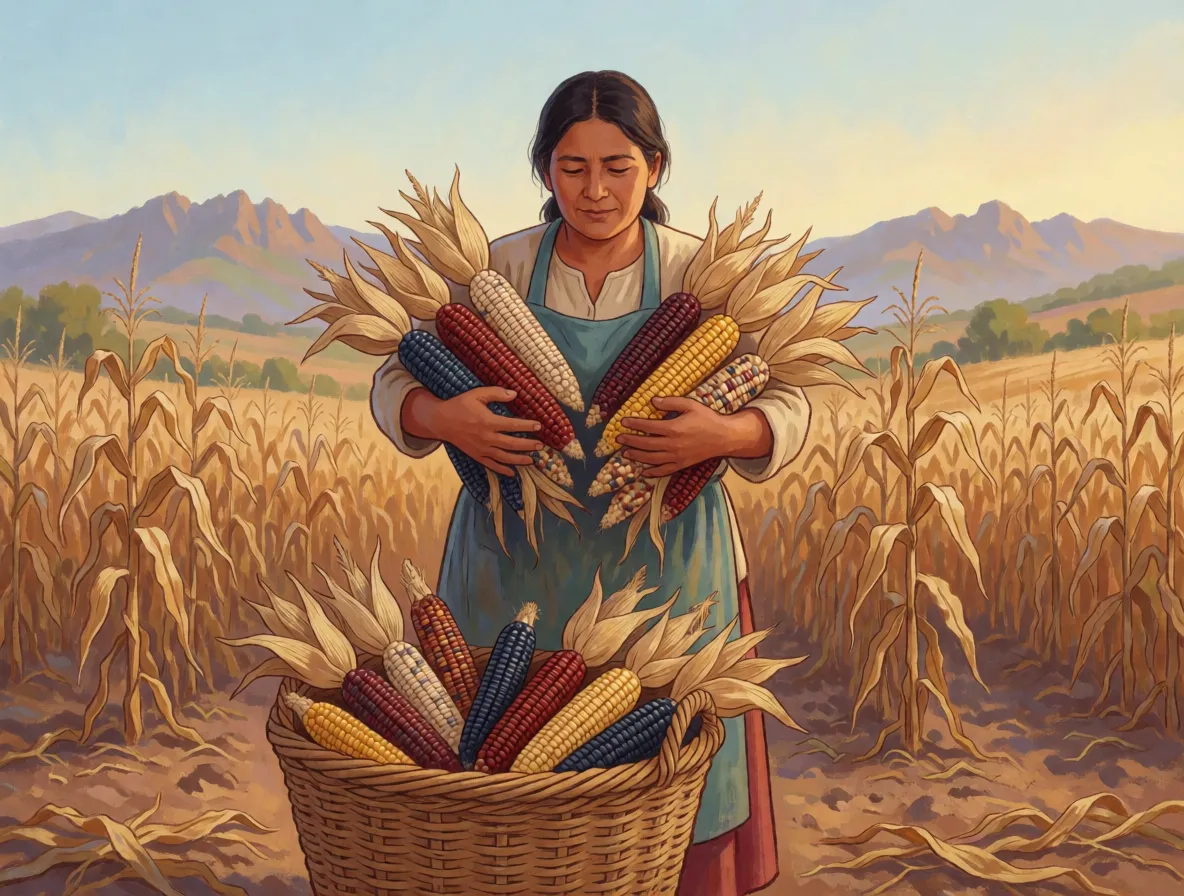
Sweet corn itself was one of those choices, made long before anyone knew what a gene was. The sugary1 mutation appears to have arisen independently several times in the Americas, and Indigenous farmers kept it. The first written record in English dates to 1779, when soldiers of the Sullivan expedition — sent to destroy Haudenosaunee towns and fields — carried home ears of a soft, sweet variety the usual telling calls Papoon. A crop that had been deliberately maintained for generations entered the English-language record as loot.
Read the kernel yourself
You do not need a laboratory to see the two starches. You need a knife, an adult, and the brown iodine in a first-aid kit — iodine stains starch a deep blue-black, and it stains the dense glassy tissue and the airy floury tissue at visibly different speeds.
vitreous fraction = (total width − floury width) ÷ total width
one number that sorts the corns: the share of the kernel that set glassy
Popcorn should come out around 0.9 — glassy almost through. Dent lands near the middle, which is precisely why it dents. If you can find true flour corn, it will barely reach 0.1, and it will not dent at all, because there is no rigid wall left to hold a shape while the middle shrinks. The sweet corn kernels on the windowsill make the same point from the other end: with no starch to fill them, they do not merely dent — they collapse completely.
Blue and red maize get their color from anthocyanins in the outer layer, not from the starch. A blue flint and a white flint can be identical inside.The dent was the answer all along
So there are six kinds of corn for the same reason there is only one species of corn: nothing about the plant had to change very much. Change how tightly the starch sets as it dries and you slide from flour to dent to flint to popcorn. Break one enzyme and you get waxy; break another and you get sweet. That notch in the top of a field-corn kernel — the one feature of the whole crop that anybody can spot from across a barn — is not a label stamped on a variety. It is the shape of two tissues drying at different rates, and it has been telling you the answer since before you asked the question.