technology
What happens inside a microwave?
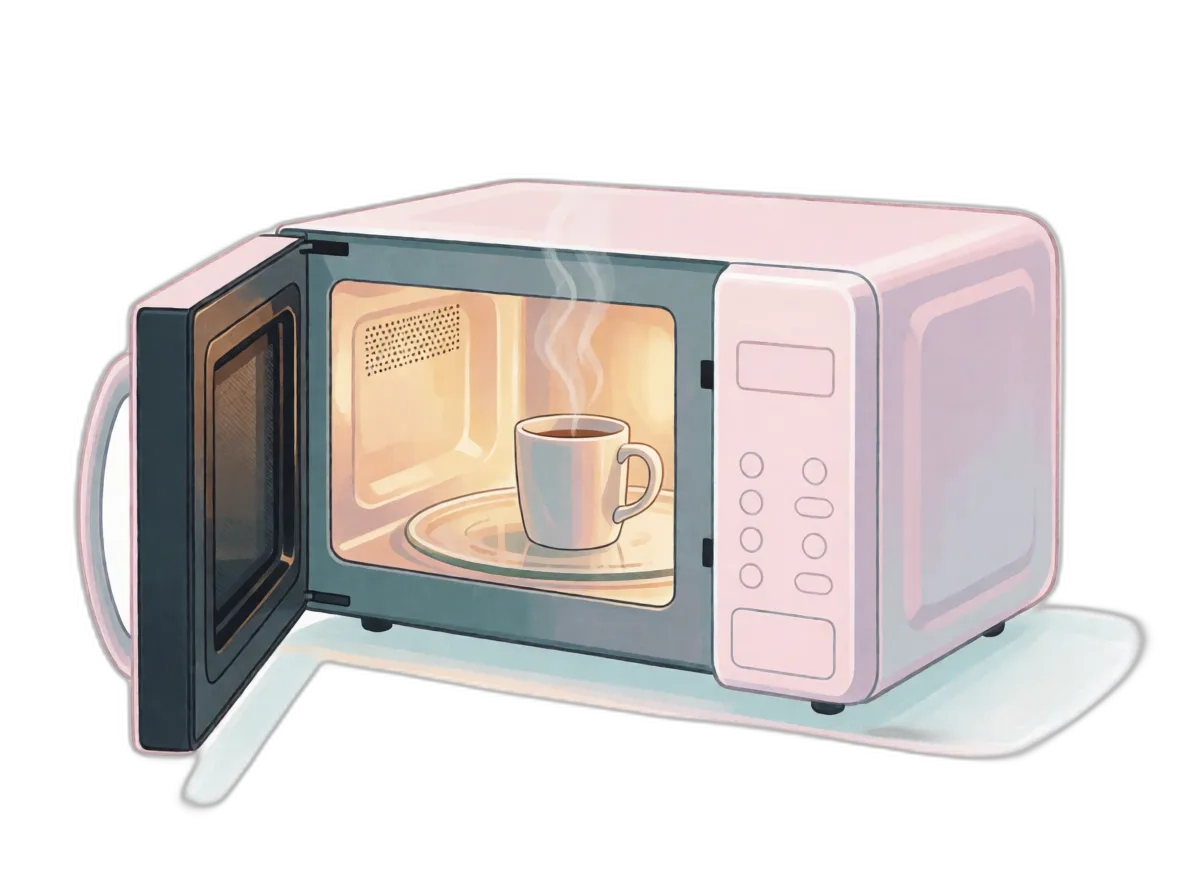
Push the button and a cold mug of cocoa is steaming in ninety seconds. No flame touches it. The oven’s walls stay cool, the mug is merely warm, and a paper towel comes out exactly as it went in. So what is doing the work — and how does the oven know the difference between cocoa and china?
The short answer is that a microwave oven does not make heat at all. It makes a radio wave — and the heat is something your food does to itself.
A field that flips five billion times a second
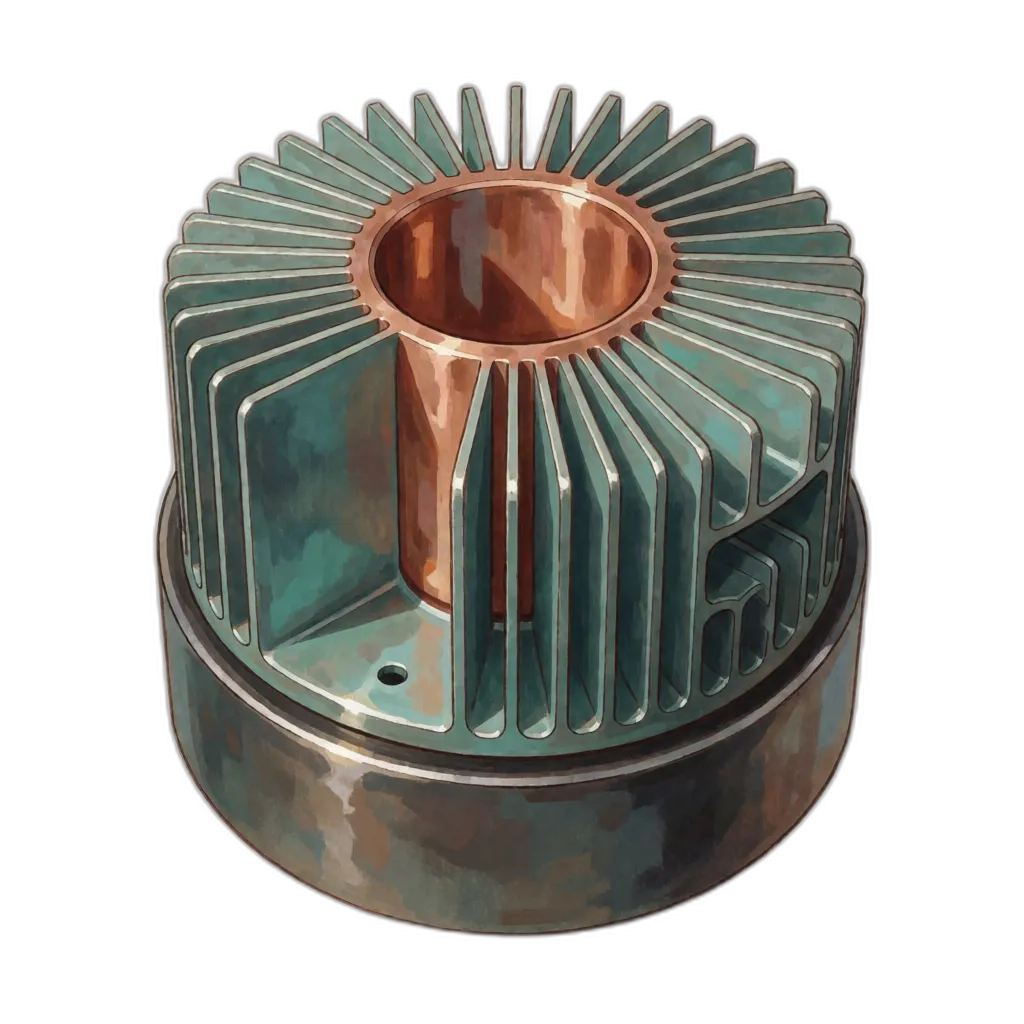
Deep in the back of the oven sits a magnetron, a vacuum tube that turns electricity into microwaves: radio waves with a frequency of 2.45 gigahertz and a wavelength of 12.2 cm(4.8 in) — about the width of your hand. The waves flood the metal cooking box, reflecting off the walls like light in a hall of mirrors.
A water molecule is a polar molecule — its oxygen end carries a slight negative charge and its hydrogen end a slight positive one, so it acts like a microscopic compass needle for electric fields. The oven’s wave is an electric field that reverses direction 4.9 billion times every second, and each reversal yanks every water molecule around to face the other way. Twisting molecules shove their neighbors; the shoving spreads; and that molecular jostling is heat. Physicists call the trick dielectric heating.
That is the whole secret of cocoa versus china. The drink is mostly water, so it seethes with spinning molecules. The dry mug and the paper towel hold almost none, so the wave passes through them and leaves them cold. The oven doesn’t know anything — it simply broadcasts a question only water can answer.
The oven makes no heat. It makes a wave — and the heat is something your food does to itself.
The engineer with a chocolate bar in his pocket
The magnetron was not invented for cooking. In 1940, at the University of Birmingham, John Randall and Harry Boot built the first cavity magnetron to power British radar — a tube so valuable it was carried to America that autumn in a locked metal box.
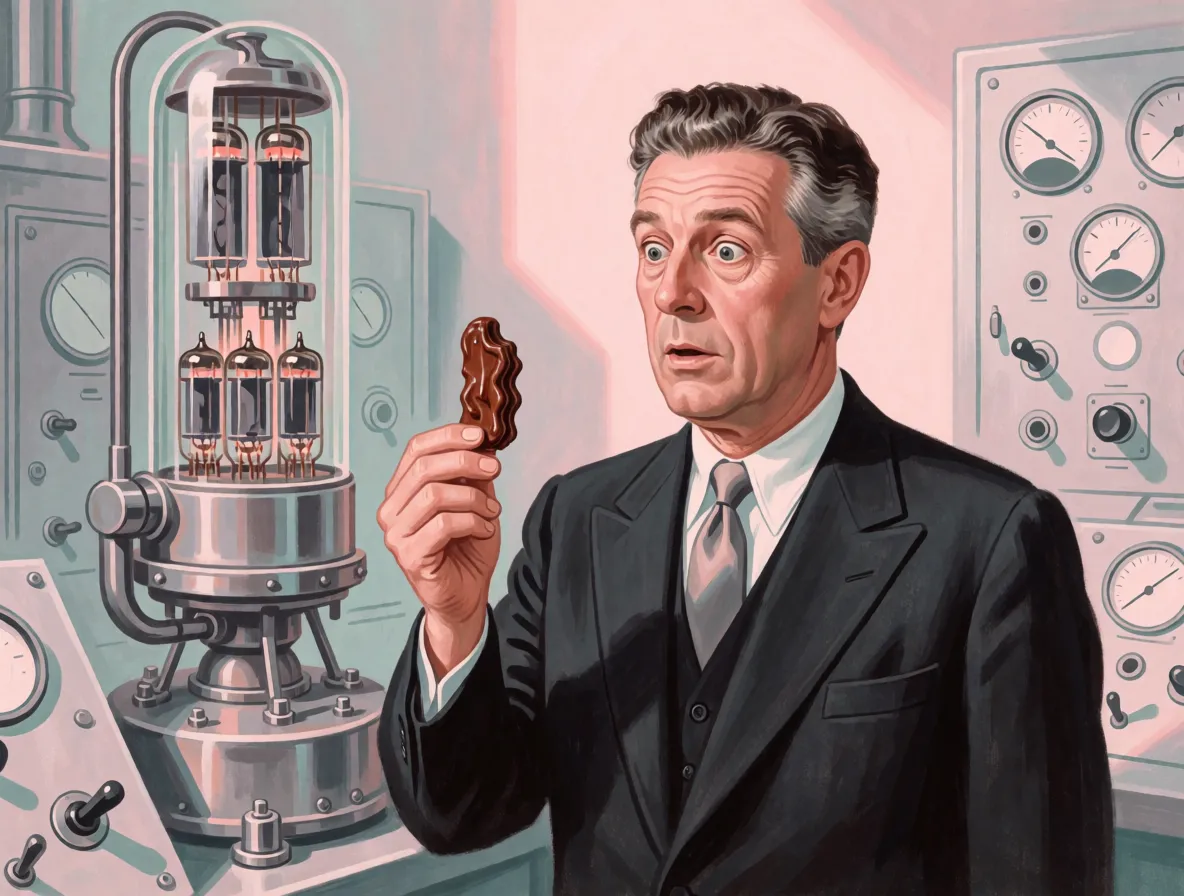
In 1945, a self-taught engineer at Raytheon named Percy Spencer was standing beside a live radar magnetron when he noticed the peanut-cluster bar in his pocket had melted into a mess. Others had felt the warmth before him; Spencer was the one who asked why. He aimed the tube at a bag of corn kernels, which popped, and then at an egg, which obliged by exploding in a colleague’s face. He filed a patent for microwave cooking that same year.
Raytheon’s first commercial oven, the 1947 Radarange, was not a countertop gadget. It stood nearly 1.8 m(6 ft) tall, weighed about 340 kg(750 lb), needed water cooling, and cost around $5,000 — in today’s money, roughly the price of a new car. Twenty years of cheaper parts, air cooling, and a door people could trust had to pass before the first popular home model appeared in 1967. Progress was slow for mundane reasons, not mysterious ones.
Why your oven has hot spots — and a turntable
The waves bouncing between the metal walls overlap to form a standing wave: a fixed pattern of loud spots and dead spots, like the still and sloshing points in a bathtub you push rhythmically. Where the field swings hardest, food cooks fast; at the calm points, it barely cooks at all. The hot spots sit half a wavelength apart — about 6.1 cm(2.4 in) — which is exactly why the turntable exists: it drags your food through the pattern so every part takes a turn in the loud spots.
Measure the speed of light with marshmallows
The standing-wave pattern is not just a nuisance — it is a ruler. Because the hot spots map the wave itself, you can use melted marshmallows to measure the fastest speed in the universe on your kitchen counter.
0.122 m × 2,450,000,000 Hz ≈ 299,000,000 m/s
wavelength × frequency = the speed of the wave
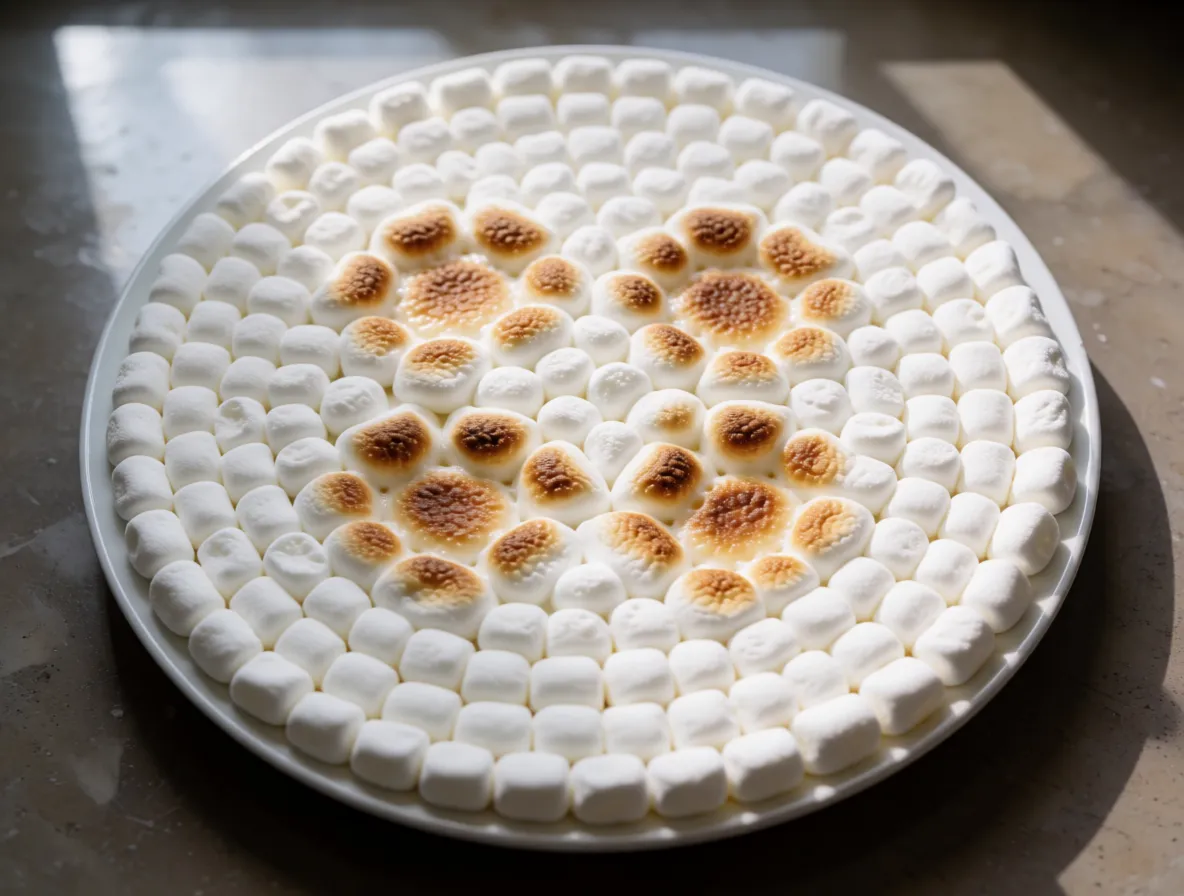
Your marshmallows just clocked light at within about one percent of the official value of 299,792,458 meters per second. Not bad for a bag of candy.
The answer in the door
So: the oven does no cooking. A war-surplus radar tube broadcasts a hand-width radio wave; water molecules spin themselves hot trying to follow it; china and paper, holding no water, are invisible to it. And the last puzzle piece has been hiding in plain sight all along — the metal mesh in the door window. Its holes are about 1 mm(1/25 in) across, more than a hundred times smaller than the wavelength, so to the wave the mesh is a solid mirror. Light slips through and shows you your cocoa; the microwaves stay locked in the box, spinning water until the steam rises.